
Lung cancer stories

Explore real stories honoring survivors and those remembered through their lasting legacy. Select a category to find stories that resonate most with you.
Learn about local and national events where you can connect, raise awareness, and support the lung cancer community.
Explore real stories honoring survivors and those remembered through their lasting legacy. Select a category to find stories that resonate most with you.
Find practical advice, emotional support, and resources to help you or your loved one cope with the challenges of living with lung cancer.
Stay informed about the policies that impact the lung cancer community and ways you can get involved.
Explore breakthroughs and ongoing studies in lung cancer research, from clinical trials to cutting-edge therapies and prevention.
Catch up on highlights from our newsletter, featuring stories, resources, and upcoming opportunities to engage.
Explore news and updates shaping the lung cancer landscape—from scientific breakthroughs and organizational milestones to awareness campaigns and community highlights.
June 5, 2026
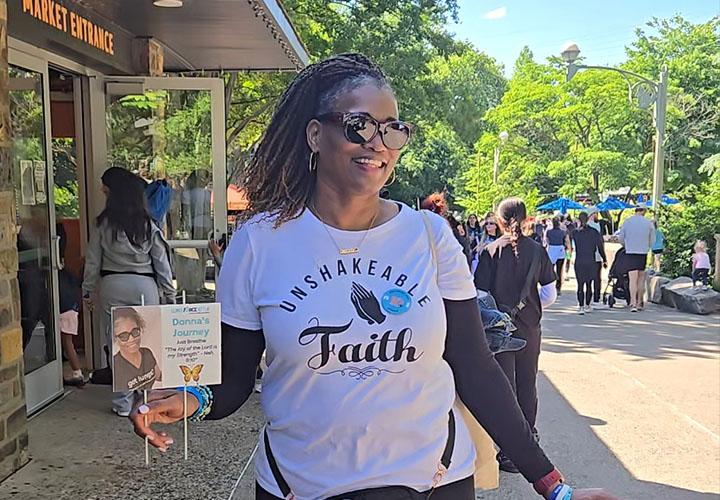
Donna Thompson is a 3-time survivor of early-stage, non-small cell lung cancer, thriving more than a decade since her first diagnosis. After 2 surgeries to remove portions of her right lung, she carries forward an experience that deepens her commitment to lung cancer awareness, mental health advocacy, and building supportive communities. Donna shares her story to inspire hope, reduce stigma, and elevate survivor voices. Her advocacy spans education, outreach, and research collaboration within the lung cancer community. She speaks at wellness and community events, using her experience to empower others navigating illness and recovery. Professionally, Donna is the director of Human Resources and a SHRM Certified HR leader, known for leading with empathy and practical insight, and supporting people through complex workplace challenges. She finds strength - literally and emotionally - through faith, fitness training, and time in nature. For her, movement is medicine, and advocacy is a calling rooted in compassion and resilience.
Donna remembers the exact moment everything changed. It was September 2015, and she went to the emergency room for something else entirely. Her blood sugar was dangerously high, and she wasn’t feeling right. They ran tests, monitored her, and sent her home. The next day, the ER doctor called her and said the radiologist saw a mass in her lung and that she should have it checked out right away.
At 45 years old, and having no smoking history, lung cancer wasn’t on her radar. It wasn’t on anyone else’s either.
“Everyone I talked to was like, ‘You’re too young. You’ve never smoked. This is probably not lung cancer.’”
But within 5 weeks, after scans, a biopsy, and what she still calls “the longest 5 weeks of my life,” Donna had her answer. It was lung cancer after all.
"The best possible situation”
Looking back, Donna sees the moments that led to her lung cancer diagnosis a little differently.
“I always say that was God getting my attention, whispering to me in the quiet, still moments," she said.
The tumor was stage 2 (II) and operable. In many ways, it was the best-case scenario for a diagnosis no one expected. Her surgical team moved quickly.
“She told me, ‘This is the best possible situation. It’s in a good location. We can take it out.’”
By the end of November, just 2 months after that ER visit, Donna had surgery, and for a moment, it felt like the worst might already be behind her.
When the plan changes
Initially, Donna was told she wouldn’t need chemotherapy. The surgery had been successful, her margins were clean, and everything pointed in the right direction.
Then the pathology report came back. It showed that her tumor was more complex than expected. It was an unusual form of adenocarcinoma that didn’t behave in typical ways. Her case was sent to multiple cancer centers, and the recommendation shifted.
“I remember my surgeon calling me herself,” Donna said. “She said, ‘I told you one thing, and now it’s changing, and I need to explain that to you.’”
A second opinion confirmed it: chemotherapy was recommended. Donna agreed, but her body had other plans.
When treatment becomes the crisis
“Every time I got chemo, I ended up in the ER,” she said. “Something was always going wrong.”
After just two treatments, it was clear that this wasn’t sustainable. Her oncologist made the call.
“He said, ‘Your body can’t handle this. We’re done.’”
It was a moment that carried both relief and uncertainty. The treatment meant to protect her was, instead, putting her in danger. And so, once again, Donna adjusted.
“I didn’t survive to be basic.”
In the months that followed, Donna made a decision that would shape everything that came next.
“I didn’t survive to be basic,” she said.
Instead, she poured herself into her health and started working with a trainer, changing her diet, and reclaiming a sense of control over her body.
“I got into the best shape of my life,” she said. “I came off medications. My A1C went back to normal. Everything changed.”
But the transformation wasn’t just physical. It was also about identity.
“The cancer gave me more than it took from me,” she said. “I learned who I am, how strong I can be, and what I really need in the world. I learned what and who are important to me. It put such a clear focus on what I want for my life.”
Finding community and belonging
Still, parts of the experience felt isolating.
“I kept meeting people, and they were all stage 4 (IV),” she said. “I felt like, am I even supposed to be here?”
She was grateful for her outcome, but that gratitude came with a quiet tension.
“I didn’t want to take up space in their groups,” she said. “But I still needed support too.”
And there was something else. “I didn’t see anyone who looked like me.”
It wasn’t until years later, through social media connections, introductions, and small group conversations, that Donna found what she had been missing: a close-knit circle of Black women who truly understood her experience.
“We started meeting regularly, talking, and supporting each other,” she said. “There’s something about being with people who understand you completely without you having to explain that changes everything. They know what they did for me, and what we do for one another. Finally, I had community.”

A second diagnosis, and a different reality
For nearly 7 years, Donna focused on moving forward, rebuilding, and holding onto the belief that she had come through something and grown because of it.
Then, in 2022, everything shifted again. This time, it wasn’t a symptom that sent her back to treatment. It was a scan.
“My scans went from showing nothing to showing a tumor the same size as my first diagnosis,” she said. “I was just so shocked because I wasn’t expecting anything.”
As Donna began to piece together what had happened, the story became even more complicated. The tumor hadn’t appeared overnight. When her new care team reviewed her prior scans, they discovered that the growth had been visible as far back as 2018, but it had been missed.
The radiologist who originally read the scan had not flagged it, and even more concerning, it became clear that her oncologist had never reviewed the images directly.
“That was the moment for me,” Donna said. “I realized no one had really been looking out for me the way they should have. I felt like a number, and I’m a relationship person. This matters to me.”
It was a turning point, not just medically, but emotionally. What initially felt like a sudden recurrence became something harder to process. It was a missed opportunity for earlier intervention.
Another treatment crisis
This time, Donna’s treatment plan included a targeted therapy designed specifically for EGFR-positive lung cancer that would allow her to take a lower dose of chemo, which they hoped she would tolerate better. It felt like progress and a better path.
But after a second surgery, adjuvant chemo, and introducing the new treatment, her body began to struggle again in a different and even more frightening way, this time in response to the targeted therapy.
After multiple attempts to adjust the dosage, the new medicine ultimately led to kidney failure, a serious complication that forced yet another shift in her care and another redefinition of what “moving forward” would look like.
It was also the moment that changed how Donna understood her own story.
“I used to say that cancer gave me more than it took from me,” she said. “And I believed that until my kidneys failed. Recovering from that took nearly all I had. I’m still trying to fully move on from how traumatic that year was.”
“I also have to remind myself how remarkable it was that I overcame this,” she said. “My nephrologist said my recovery was miraculous, and it does feel like a total miracle now.”
Living in the in-between
Today, Donna is once again in a place that many people with lung cancer know all too well: waiting.
In July 2025, after recovering from kidney failure, her care team radiated 2 new spots. They chose radiation because it was the gentlest option for her. Recent scans have shown new nodules that Donna and her care team are just watching, for now.
“They’re watching them and trying to decide what to do next,” she said. “And with my treatment history, not every option feels like a good one.”
It’s not a crisis. But it’s not clarity, either, and Donna finds herself struggling with living in this place of uncertainty.
“I like to have a plan, and I like to know what we’re going to do. I’m finding it very hard for me to just wait and see.”
Still choosing more
Through her diagnosis, treatment, recurrence, and all the unexpected turns in between, Donna has held onto a simple mindset:
“I didn’t survive to be basic.”
It’s a phrase that stuck with her early on and has continued to shape how she moves through each new chapter. And for Donna, that means continuing to choose a full life, even in the unknown.
If you or someone you love has been diagnosed with lung cancer, know that you're not alone. Our HelpLine provides free, one-on-one support to people impacted by the disease. Call 1-800-298-2436 or email support@go2.org to connect. Our team is available Monday-Friday from 9 a.m.-5 p.m. ET/6 a.m.-2 p.m. PT.
May 6, 2026
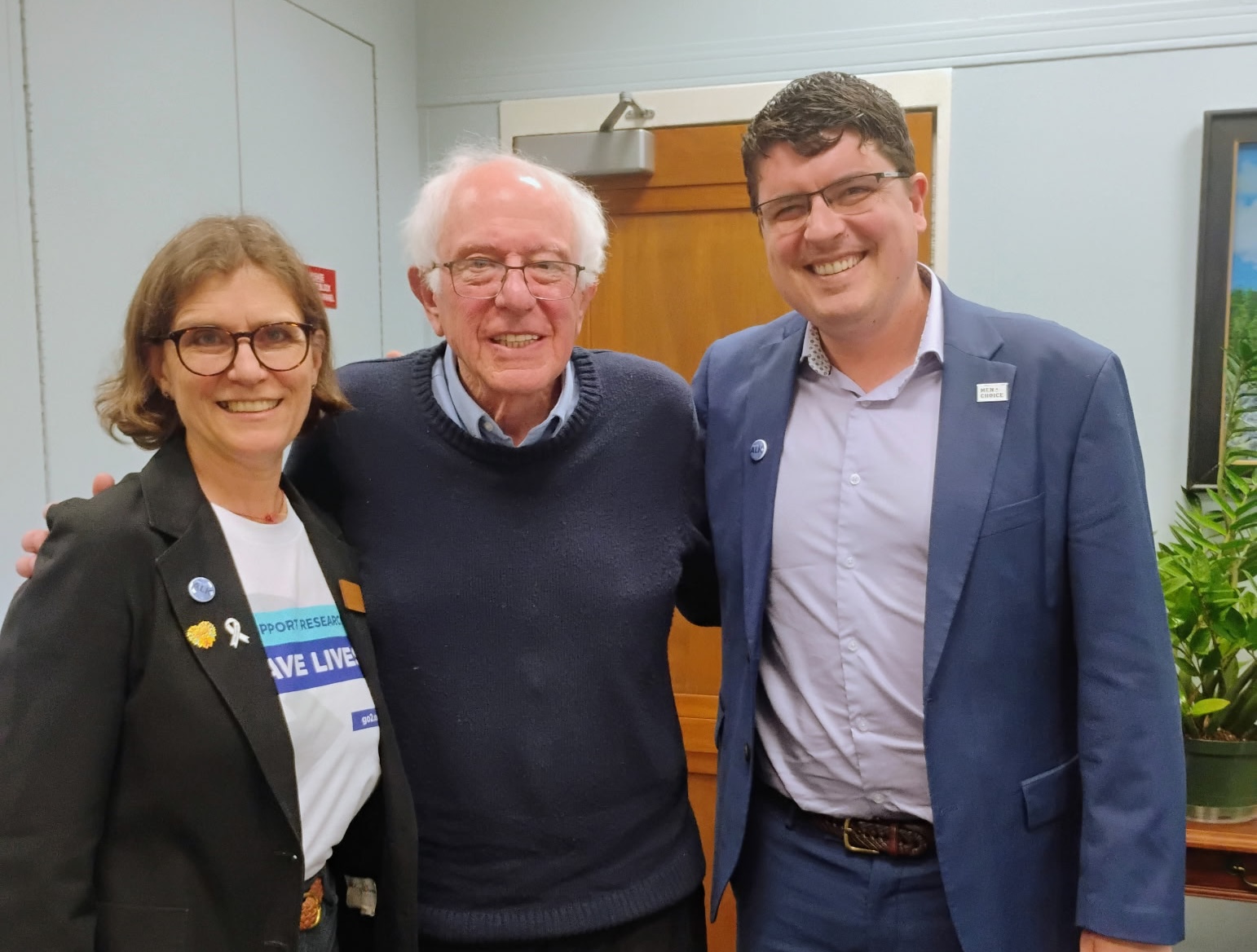
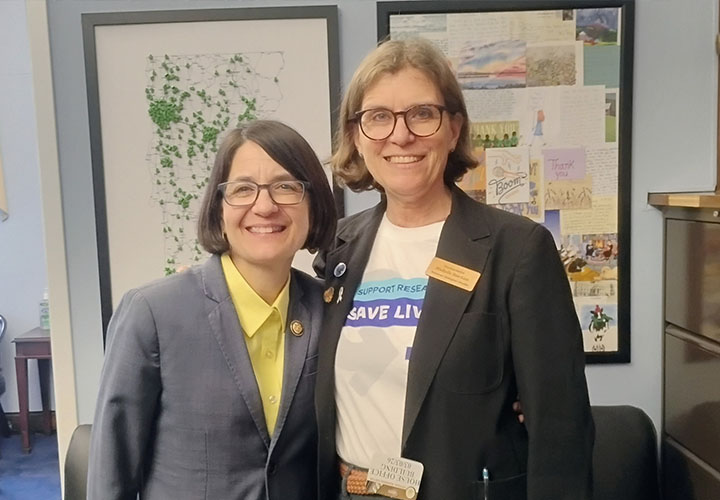
Michelle Bos-Lun is a third term state representative in the Vermont General Assembly. She lives in Westminster with her husband. She has 3 adult children and 2 grandchildren. Michelle is an enthusiastic vegan cook and baker, a mushroom forager, a hiker, and an advocate for lung cancer.
When Michelle returned home from a trip to Nepal last year, she soon found herself unable to get out of bed. At first, she thought she had jet lag, but when her symptoms worsened, she ended up in the hospital.
What followed was a whirlwind of tests and uncertainty that led to a diagnosis she hadn’t expected: scrub typhus, a rare and potentially life-threatening infection she had contracted while traveling.
But the story didn’t end there. In the process of trying to understand why she was so sick, doctors ordered a chest X-ray and saw something there that they couldn’t explain.
Three weeks and even more tests later, Michelle received a second surprising diagnosis: lung cancer.
A diagnosis she never expected
Like so many others, lung cancer wasn’t something Michelle imagined would happen to her until it did.
“Before my diagnosis, I knew of one person who had lung cancer without a smoking history,” she said. “So, while I knew it was possible, it didn’t seem at all likely. But lots of people aren’t good candidates for lung cancer, and yet it still finds us.”
Still, even in the face of a stage 3B (IIIB) diagnosis, her reaction was not what many might expect.
“I’m pretty pragmatic about things,” she said. “When something comes up, I want to learn all about it and figure out what I can do to have the best results with a situation that isn’t ideal.”
That instinct to learn, adapt, and move forward has shaped everything that’s followed
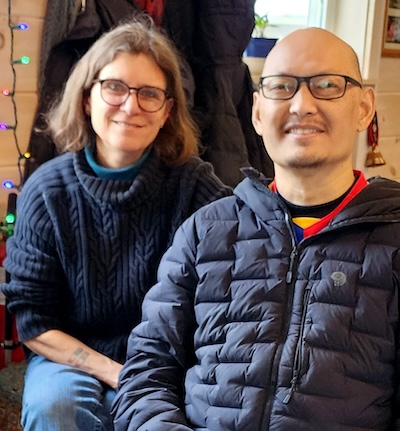
“I won the lottery”
After her initial diagnosis, Michelle entered a waiting period, one filled with a lot of questions, but few clear answers. Her oncologist couldn’t yet tell her what kind of lung cancer she had or how it would be treated. The outlook he shared at that point was sobering.
But there was one 1 possibility that offered hope, and that was a genetic mutation.
Her doctor told her, “If you have a mutation, there are some really good targeted therapies.”
Two weeks later, the call came. Michelle had ALK-positive lung cancer.
“He told me I won the lottery,” she said. “I had the best one with the best treatment.”
Within days of starting the targeted therapy, Lorbrena (loralatinib), her persistent cough, which was her only noticeable symptom, had disappeared. A few months later, her first scan showed her cancer had been reduced by nearly 50%.
“My doctor actually said, ‘This is even better than I would have expected,’” Michelle said.
A whole-person approach
From the beginning, Michelle approached her diagnosis the same way she has approached much of her life by integrating different perspectives, experiences, and tools. Having spent part of her adolescence in Taiwan, and as a long-practicing Buddhist, she was already comfortable holding multiple ways of thinking at once.
“My life has been a mixture of East and West since I was 12,” she said. “So, when I got cancer, it made sense to include a variety of different resources and approaches.”
Her treatment plan reflects that. Alongside her targeted therapy, Michelle has built a daily routine that supports her body in other ways:
- Tai Chi twice a day to improve circulation and manage neuropathy
- Walking several miles each day
- Bi-weekly acupuncture
- Regular lymphatic massage
- A nutrient-dense, plant-based diet including daily kale smoothies, large salads, and roasted vegetables with whole grains
“I feel as healthy as I’ve ever been. Except I have cancer,” she said.
It’s a paradox she doesn’t shy away from. And it’s one she’s actively working to sustain.
“The lorlatinib gets credit for 75% of my healing, and my kale smoothies get the other 25%,” she joked.
Choosing hope—on purpose
Michelle is quick to acknowledge that everyone responds to a diagnosis differently. But for her, hope is not something she has to force; it’s something she naturally gravitates toward.
“I think you can choose to look at the hardest parts, or you can look at the possible good outcomes,” she said. “For me, it’s more satisfying to look at the positive. I try to find the best-case scenarios and aim for those.”
Even before her diagnosis was confirmed, she made a conscious choice not to dwell in pessimism.
“Before my lung biopsy, I thought, I don’t think it’s very likely that this is lung cancer, so I’m not going to worry about it,” she said. “And then when it turned out to be cancer, I said, ‘Okay, so when can we figure out how to treat this?’ I could have spent that time scared, but being scared wouldn’t have changed the outcome, only how I experienced the time leading up to it. That’s sort of how I approach everything.”
Finding community and perspective
Like many people diagnosed with a biomarker-driven form of lung cancer, Michelle quickly found community among others living with ALK-positive disease.
“I feel like I’ve been welcomed into this club that none of us wanted to join,” she said. “But since we’re here, we’re there for each other.”
Through that community, she found not only information, but perspective, including examples of people living 10, 15, even 20 years after diagnosis. Their stories helped her understand the full range of what’s possible and where she might fit within it.
“Somebody would say, ‘my husband is 21 years out’, and I thought, what? We can live 21 years with this? Knowing that some people can live quite a long time made me feel like, okay, then I can make it too,” she said.
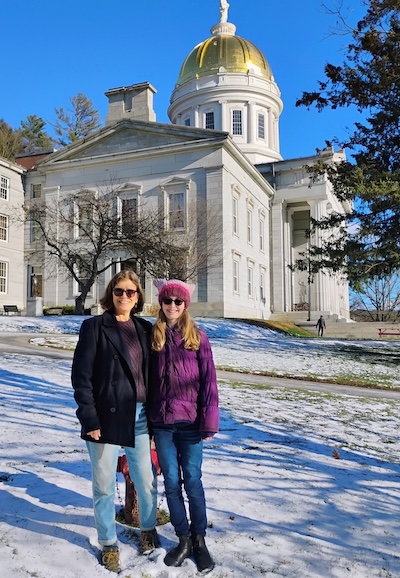
Not waiting anymore
If there is 1 theme that runs through Michelle’s story, it’s this: don’t wait.
After her diagnosis, she began thinking about the people she hadn’t seen in years and the friendships that had drifted with time and distance. She immediately set out to rectify that. Her first trip was to reconnect with a close friend she hadn’t seen in decades.
“I just thought, I don’t want to wait,” she said. “Why did I already wait 30 years? I’m not doing that again.”
Now, her “bucket list” isn’t about places; it’s about people – reunions, visits, and time spent together.
“I hope I’m going to be around for a long time,” she said. “But in case I’m not, I don’t want to wait to spend time with the people who matter most to me. I want to see them now.”
Turning experience into action
As a state legislator in Vermont, Michelle already had a platform. After her diagnosis, she chose to use it in a new way. From the very beginning, she has spoken publicly about her experiences, using them as an opportunity to raise awareness about lung cancer, and especially the importance of early detection.
“I thought, maybe I can help somebody else,” she said. “If I can help educate someone, then go ahead, use my story.”
After her story appeared on the front page of her local paper, she learned that at least two people went to their doctors to ask for chest X-rays. For Michelle, that was enough.
“That’s the whole point,” she said.
She is also working to connect her personal experience with broader public health efforts, including initiatives that emphasize nutrition as a core component of care.
“When people eat healthy food, it helps keep them healthy,” she said. “I’m a living example of that.”
Moving forward
Less than a year into her diagnosis, Michelle’s life looks both familiar and entirely new. She is still working, still advocating, and still showing up for her family.
But she is also living with a deeper sense of urgency and intention.
“When you get lemons, make lemonade,” she said. “Well, I’m making some lemonade.”
Only in Michelle’s case, it’s likely organic, and paired with a kale smoothie.
A lung cancer diagnosis can bring a lot of questions, emotions, and uncertainty. GO2 for Lung Cancer’s free HelpLine connects you with trained specialists who can provide support, answer questions, and help you find resources along the way. Whether you’re newly diagnosed, in treatment, or navigating survivorship, you don’t have to face it alone.
Call us at 1-800-298-2436 or email support@go2.org to learn more.

May 6, 2026
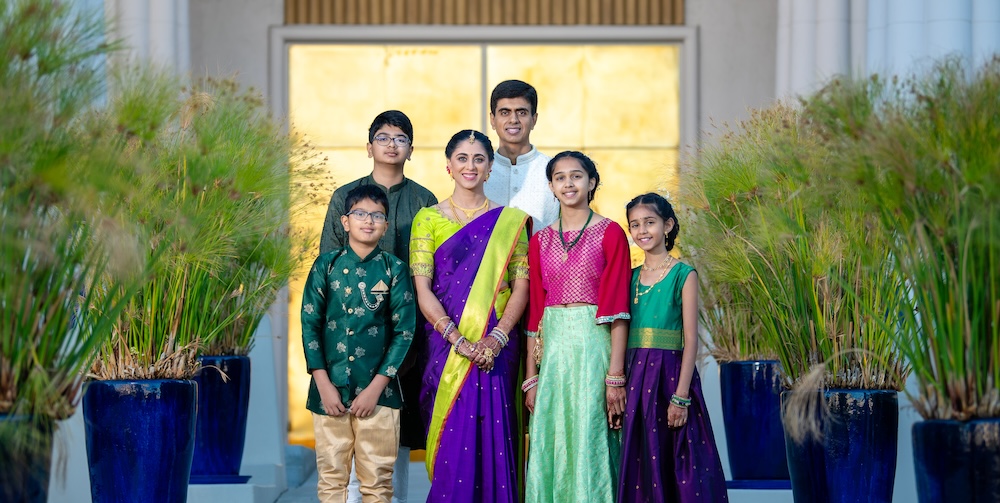
For Janaki and Harsha, their wedding wasn’t just about celebrating a new chapter together; it was also an opportunity to honor the past, give back, and make a meaningful impact for others facing lung cancer.
Janaki’s connection to lung cancer is deeply personal. Her late husband, Kartik, was diagnosed with stage 4 (IV) lung cancer at just 28 years old while he was still a third-year internal medicine resident. Through a targeted clinical trial for his EML4/ALK mutation, he was able to continue working for several years before passing in 2015 at the age of 34. His journey continues to inspire Janaki’s commitment to supporting others impacted by the disease.
This was a second marriage that brought together 2 families, not starting from scratch. Material gifts didn’t feel necessary, but they knew their loved ones would still want to give something. That’s when they decided to turn their wedding into a fundraiser in honor of Kartik. “Many of our friends and family were familiar with Kartik’s journey,” Janaki said. “They were more than happy to donate, and several told us they thought it was a great idea.”
Lessons learned along the way
While their fundraiser was a success, Janaki reflects on what she might do differently.
“We didn’t initially go through GO2 because we were trying to get donations matched through companies,” she explained. “But in retrospect, it would have been easier, and likely more effective, to set up a GO2 fundraising page and link it directly on our wedding website.”
Planning ahead, she noted, could have streamlined the process and avoided fees from other fundraising platforms.
But what surprised them most was the incredible generosity of their community. “We were amazed by how much money we were able to raise.”

Tips for turning your own wedding into a fundraiser
For couples considering a similar approach, Janaki offers practical advice:
- Start early. Wedding planning gets busy, so give yourself time to set things up properly.
- Keep it simple. A direct link to a fundraising page makes it easy for guests to contribute.
- Spread the word beyond the website. Share your fundraiser at pre-wedding events or gatherings. Many guests won’t check every page on a website.
- Create in-person opportunities. If you’re hosting events leading up to the wedding, like bridal showers, engagement parties, etc, consider setting up a donation box.
- Ask for help. Friends and family are often eager to support both your wedding and your cause.
Continuing the impact
Even beyond their fundraiser, Janaki continues to connect others to GO2’s resources and recently referred a family friend for support.
“I love seeing what the organization is doing for patients and in research,” she said. “It’s providing hope and that’s one of the most important things when facing lung cancer.”
Make your celebration count
Inspired by Janaki and Harsha’s story? You can turn your own milestone—whether it’s a wedding, birthday, or special event—into a powerful way to support people impacted by lung cancer.
Start your own fundraiser benefiting GO2 and help bring hope to patients and families who need it most.
Learn more about how you can create your own fundraiser for GO2 for Lung Cancer.
May 5, 2026
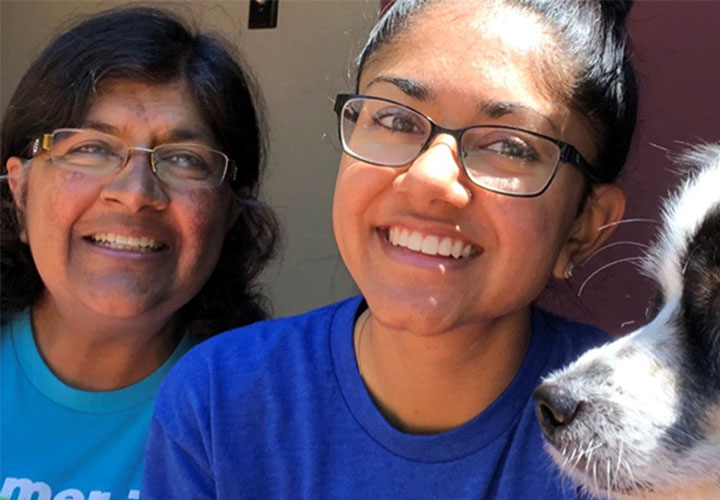
For Amita Jain, MD, lung cancer is not just a diagnosis. It’s a lived experience that has shaped her life across multiple roles as a physician, a patient, a daughter, a caregiver, and an advocate.
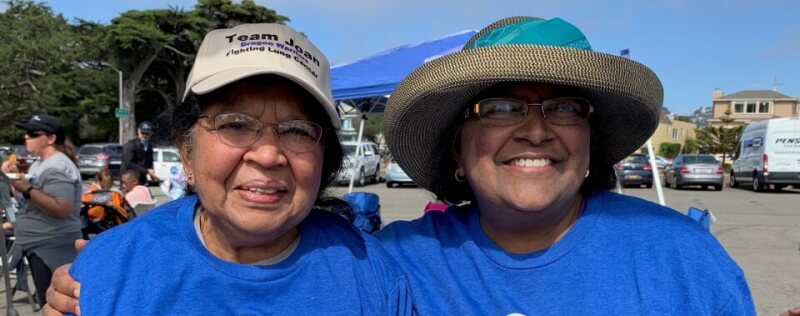
Her family’s lung cancer story spans generations. In July 2018, her mother, Usha Jain, a retired UC Berkeley professor, was diagnosed with stage 4 (IV) non-small cell lung cancer (NSCLC) despite having no smoking history. Just 6 months later, Amita herself would receive the same diagnosis.
While both women faced advanced disease, their treatment paths diverged. Usha underwent chemotherapy and immunotherapy for nearly 2 years before stopping treatment and transitioning to routine scans. That period (often described clinically as “watch and wait”) felt anything but passive to her family.
“It was hard to feel as though we were ‘doing nothing,’” Amita recalls.
Turning to navigation for answers
As both a physician and a caregiver, Amita understood medicine, but even she found the complexity of lung cancer care overwhelming.
Navigating next steps after treatment, understanding emerging options, and keeping up with rapidly evolving research can feel like a full-time job, especially for families already carrying the emotional weight of a diagnosis.
So, Amita reached out to GO2's LungMATCH navigation program.
“I called the navigators and furnished my mom’s tumor’s genetic profile,” she says. “They reached out a day later with information on some trials for which she might qualify.”
Although her mother ultimately chose not to pursue clinical trials, the impact of that interaction was profound.
“While we did not take action on the options that the navigator provided, the information was empowering,” Amita explains. “It really helped us understand the ‘lay of the land’ in her particular situation.”
Bridging the gap between information and understanding
Even for someone with medical training, the experience revealed an important truth. Access to information is not the same as understanding it.
“Navigating is complex and scary, and getting all the information is difficult if you are not an oncologist,” Amita says. “The navigator that I spoke with was both professional and prompt. That information made me feel as though we understood our options—and that was extremely reassuring.”
For patients and families, that reassurance can be transformative.
A lung cancer diagnosis often brings not only fear, but also a sense of powerlessness. Decisions feel urgent; stakes are high, and the volume of information can be paralyzing.
“The navigator can serve as a bridge to knowledge,” Amita says. “Knowledge is power. Having a diagnosis of lung cancer can be shocking, but more importantly you do feel a bit powerless and overwhelmed. The navigators serve as a resource and lifeline.”
The invisible work of navigation
What many patients don’t see is the depth of work happening behind the scenes.
Navigators are constantly reviewing evolving research, identifying clinical trials, interpreting biomarker data, and translating complex medical information into something patients can actually use to discuss with their care teams.
“Keeping up on the information is a full-time job that most of us are not trained to do,” Amita says.
That expertise becomes especially critical at moments of uncertainty, like when treatment ends, and the path forward is unclear.
In those moments, navigation doesn’t just guide decisions; it restores a sense of control.
Strengthening navigation for the future
Stories like Amita’s mother’s underscore the critical role navigators play, not just in coordinating care, but in empowering patients and families with clarity, confidence, and connection.
To support and strengthen this role, GO2 for Lung Cancer partnered with leading experts to develop a comprehensive resource for those on the front lines of patient care.
The Lung Cancer Navigator: A Guide for Nurses and Allied Health Professionals textbook is designed to equip health professionals with the knowledge and tools they need to guide patients through every step of the lung cancer experience, from diagnosis to survivorship.
By investing in navigator education, we can ensure that more patients and families experience what Amita describes so clearly: the shift from feeling overwhelmed and uncertain to being informed and empowered.
March 30, 2026
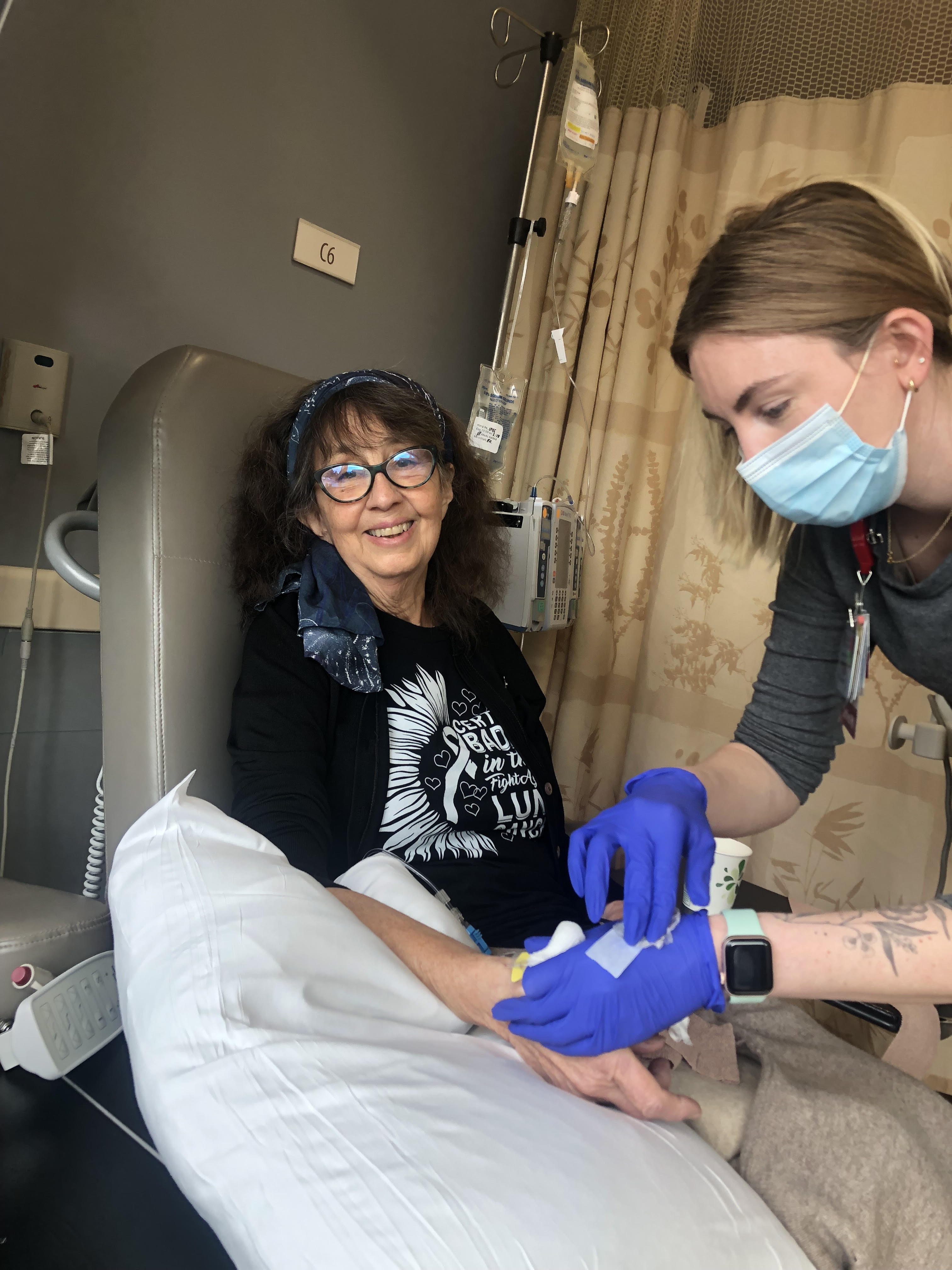
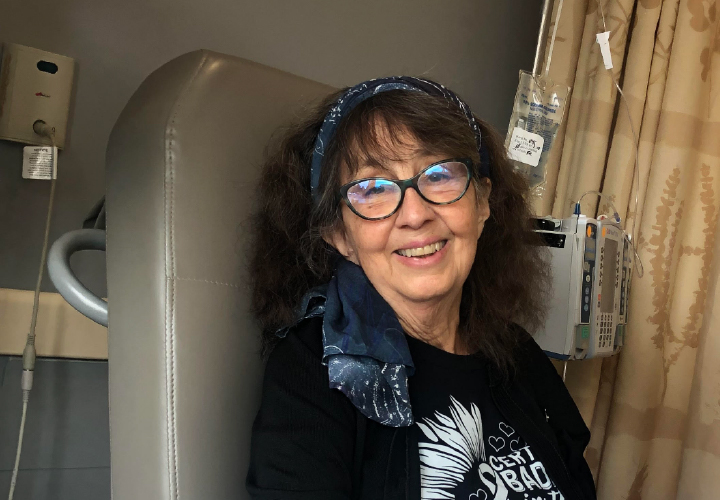
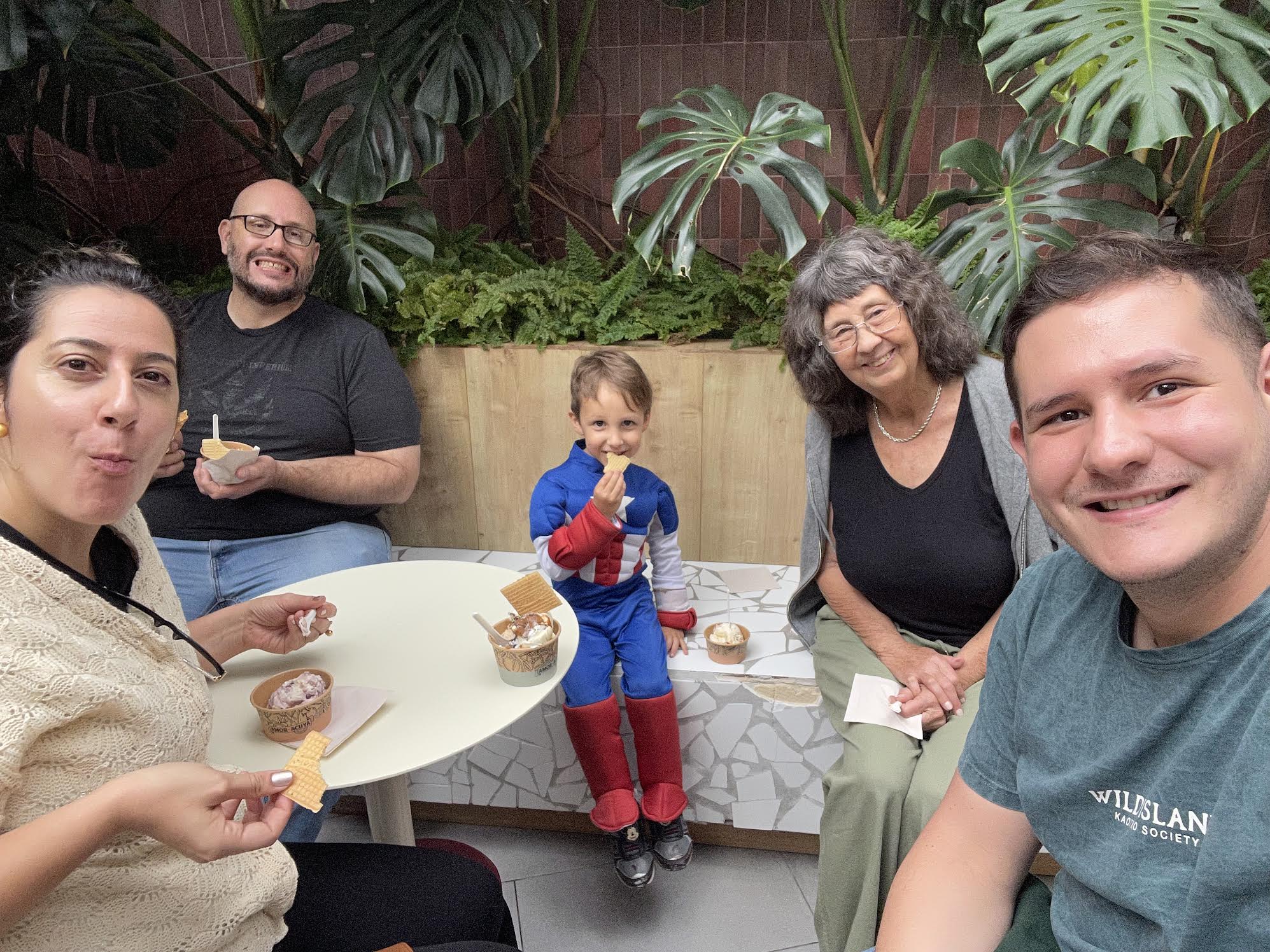
Jeanne A. lives in Hollister, CA where she is the proud guardian of her 7-year-old grandson, Joey, who she has been raising for the past 3 years. A lifelong adventurer who raised her children on Maui, HI where her grandmother was born, she still feels called to the islands, and Joey will make his first visit there this Easter. A retired social worker and current astrological teacher and counselor, Jeanne’s life is anything but quiet. She believes lung cancer may simply become 1 chapter in her story, and hopes that by sharing it, she can bring comfort to others.
An otherwise ordinary day
On a warm July afternoon in 2021, Jeanne was standing on a ladder in her backyard picking apricots when she coughed up blood. It startled her, and was unusual for her body, but she wondered if this was simply what she should expect at 72 years old since she otherwise felt just fine. Still, she called her closest friend, a nurse, and within an hour they were sitting together on Jeanne’s porch, talking it through.
Coughing up a blood clot, they ultimately agreed, was not something to ignore.
“You’d better get your affairs in order”
At the small local hospital, Jeanne was given a bed, a gown, and a long wait. Her bloodwork came back mostly normal, but hours later, when someone was finally available to read her CT scan, she was given much more shocking news: there was a 2.5-inch mass in the upper right lobe of her lung.
“You’d better get your affairs in order,” the doctor said.
Jeanne snapped back immediately, “my affairs are in order,” she said, but she was still stunned by the news. As she walked out of the ER with a brand-new diagnosis, she noticed the looks of pity on the staff’s faces — and felt something else take hold instead: resolve.
Finding the right team
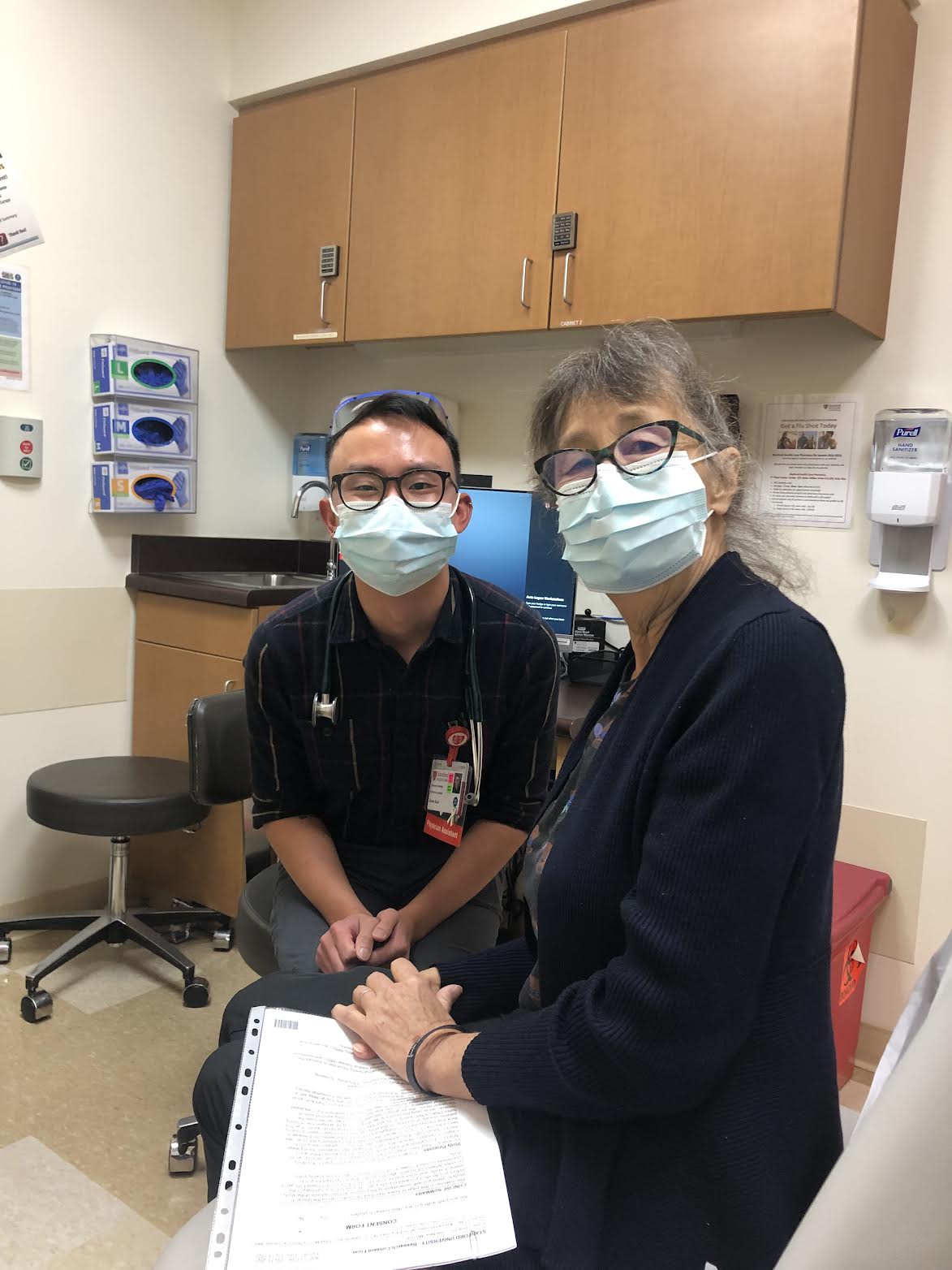
Jeanne was referred to an oncologist in Salinas, CA, but she opted to go to Stanford instead. There, she met with Dr. Joseph Shrager, Professor and Chief of Thoracic Surgery, and someone she found to be calm, direct, and skilled. Early imaging suggested that the tumor might be stage 3 (III) lung cancer. Given its size, doctors worried it had already spread. There was also a small chance it could be something else entirely like Valley Fever.
The wait was agonizing, made worse by Jeanne’s history with lung cancer. Her father had died of lung cancer before his 40th birthday when she was just 5 years old. The disease had hovered in the background of her life, but now it was inside her body.
When the results came back, the answer was clear. It was not Valley Fever.
“You will Heal. It will take a while.”
Jeanne cried for a week. Then, reaching for reassurance in a place that had brought her comfort in her life, she turned to tarot cards, a practice she viewed less as prediction and more as intuition. Each time she asked what would happen, the message was the same: You will heal. It will take a while.
She didn’t fully believe it. But it helped her get through the days.
By early August, there was even more clarity as scans showed that the cancer had not spread to her lymph nodes or brain. She did, however, have a massive tumor in her lungs which Jeanne had begun calling “the Death Star.” Surgery to remove the tumor and her upper right lung lobe was scheduled for September 1.
The operation lasted hours, and Jeanne woke up with an incision beneath her right breast and drain tubes emerging from her side. She spent 5 days in the hospital, watching light move across the coastal foothills through a massive window. Healing was slow, and when Jeanne finally went home, she took with her a cough that would linger for 18 more months.
A new reality: Stage 2 (II) lung cancer
Pathology confirmed a new diagnosis: stage 2 (II) non-small cell lung cancer. Jeanne started chemotherapy nearly immediately and completed 4 rounds between October 2021 and January 2022. It was brutal for her, and during that time, she was bedridden more often than not. Her weight dropped, and her hair fell out in clumps. “It kicked my ass,” she says plainly, and she remembers very little of that time now.
Her closest friend, Annie, was there through it all. Annie drove her the 90 minutes each way to Stanford, sat beside her during infusions, brushed out the tangles when Jeanne was too weak to do it herself, and bore witness to the physical and emotional toll with quiet steadiness.
All the while, the messages from her spiritual guides remained steady. You are healing.
A different kind of hope
In January 2022, Jeanne transitioned from chemotherapy to immunotherapy as part of a clinical trial led by Dr. Joel Neal. Part of what drew her to the trial was the promise of close monitoring for 5 years and follow up for the rest of her life.
Immunotherapy was easier on her body than chemotherapy, though not without its own challenges, including unrelenting fatigue. It was worth it, though. By March 2022, there was no detectable cancer DNA in her bloodstream. Clinically, Jeanne was cancer-free, even though she wasn’t yet ready to believe it herself.
Her final immunotherapy infusion took place in February 2023. By that spring, the fog began to lift. By summer, her hair and weight had returned. And slowly, finally, Jeanne began to come back to herself.
Learning to believe it
For a long time, Jeanne practiced saying the words before she ever fully believed them. “I survived lung cancer.”
Some people say survivorship begins the moment you’re diagnosed. Jeanne understands the sentiment, but for her, accepting it took time. “Just like healing, embracing this took a while,” she says.
Then, 1 day, she looked in the mirror and finally believed it. By June, she had started telling friends, strangers, and especially the staff at Stanford Oncology, “I survived lung cancer.”
“Saying this gives real joy to people working in the field,” she noticed.
Now, Jeanne describes herself as having been “washed ashore from a wave I did not see coming and never imagined I would survive.” Her scans continue to look good. Her strength is still building. Her guides remain close. You will heal. It will take a while.
She knows now that they were right.
A lung cancer diagnosis can bring a lot of questions, emotions, and uncertainty. GO2 for Lung Cancer’s free HelpLine connects you with trained specialists who can provide support, answer questions, and help you find resources along the way. Whether you’re newly diagnosed, in treatment, or navigating survivorship, you don’t have to face it alone.
Call us at 1-800-298-2436 or email support@go2.org to learn more.
March 10, 2026
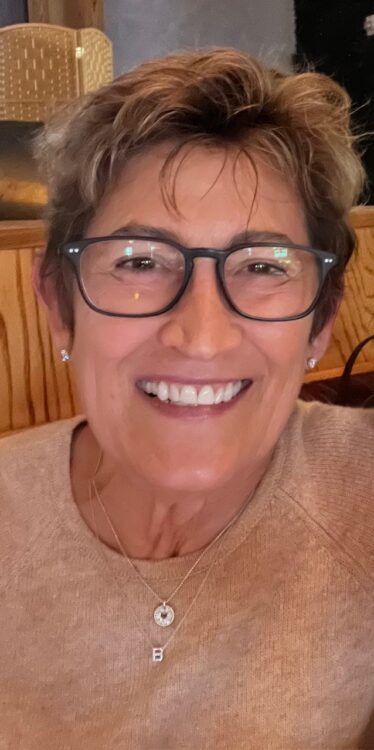
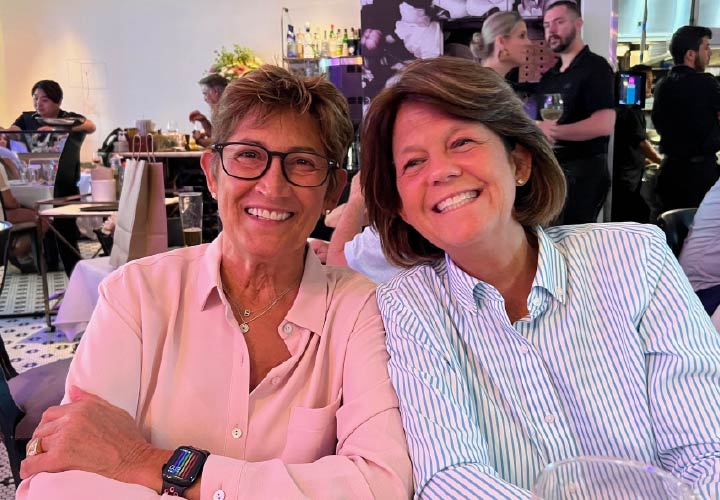
Brenda S. didn’t expect anything unusual from her visit to her primary care physician. It was the kind of routine appointment she had done many times before. It was a standard check-in, familiar questions, nothing out of the ordinary. Brenda had lived with multiple sclerosis (MS) for years and understood what it meant to manage a chronic illness, but aside from that, she considered herself healthy. Lung cancer was not on her radar.
And yet, that appointment marked the beginning of an experience that would change her life.
“You better get another opinion.”
Brenda’s experience with lung cancer stands out because it didn’t follow the path so many others know too well.
“A lot of times people are diagnosed at a pretty late stage,” she explained. “I was one of the lucky ones to get diagnosed early.”
That early diagnosis, however, didn’t come easily or immediately, and it didn’t come without persistence.
During that initial visit, something caught her doctor’s attention. Tests followed, and eventually, her doctor discovered a nodule. Brenda was told that it was benign. On the surface, that should have been the end of the story. Relief is the word most people would expect to describe that moment.
But relief wasn’t the whole truth.
“I remember just saying, please, please don’t let it be cancer,” Brenda recalled. And when she heard the word benign, she wanted to believe it completely. Yet underneath the reassurance, there was a feeling she couldn’t shake. “Deep inside, it was nagging,” she said. “It was like… I don’t know, sister, you’d better get another opinion.”
Brenda tried to move forward. Life went on. But that quiet inner voice didn’t disappear.
A gut feeling and rare early diagnosis
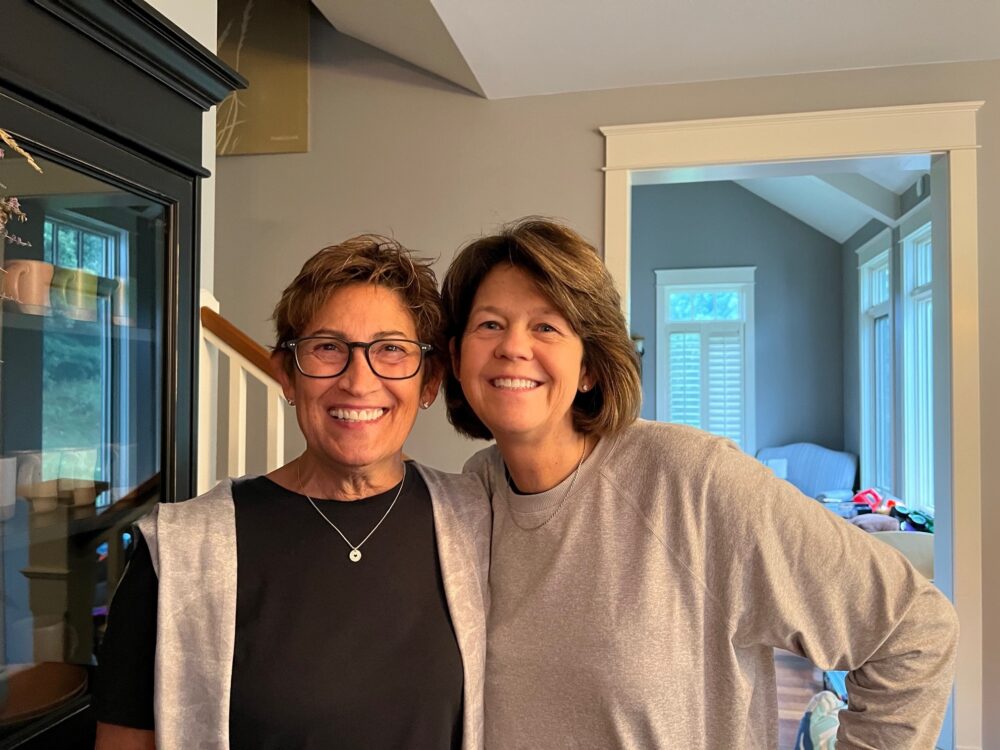
Brenda and her partner, Alice.
Nearly a year later, she developed a cough. It might have been easy to dismiss. After all, coughs are common, especially when life is busy and family visits. But that timing turned out to matter. Among the relatives in town was a nurse, someone trained to notice what others might overlook. She pulled Brenda’s partner Alice aside and said plainly: “This needs to be checked.”
That moment was pivotal.
Brenda listened. She followed up. And this time, the outcome was different.
The cancer was found early, something Brenda doesn’t take lightly. Early detection gave her options, time, and the ability to approach treatment without the urgency and limitations that come with a late-stage diagnosis. She knows how rare that is in lung cancer, and she doesn’t call herself lucky casually.
Her story is a reminder that diagnosis is not always a single moment, but a series of decisions—some small, some difficult—that add up. It’s about trusting medical expertise, yes, but also trusting yourself. Brenda’s experience underscores how critical self-advocacy can be, especially when something doesn’t sit right, even if the initial answer seems reassuring.
Living fully
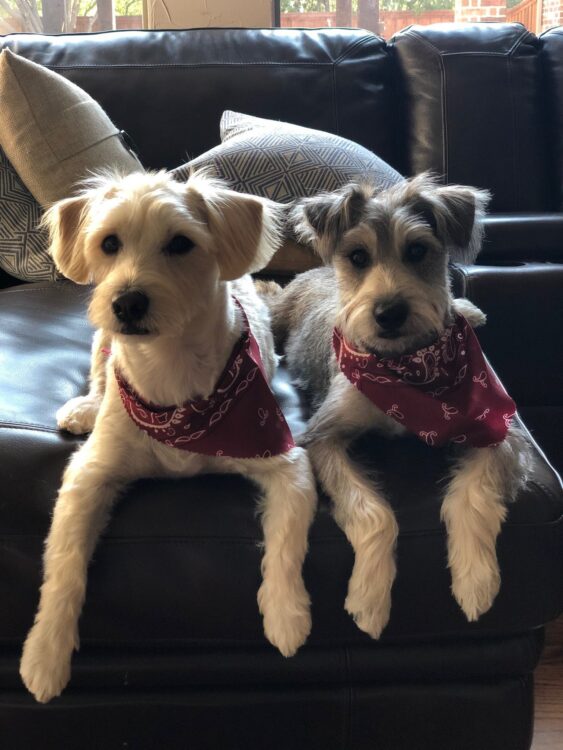
Beyond her diagnosis, Brenda is someone defined by far more than cancer. One of the joys woven throughout her life has always been singing. Whether performing when she was younger or sharing music in more personal settings, singing has long been part of who she is. Today, Brenda has found her way back to jazz singing, a return that feels especially meaningful. Being back in that space, reconnecting with music and performance, has brought her renewed joy and vitality. Singing is an expression of creativity, resilience, and presence, qualities that carried her through uncertainty and continue to ground her now.
Cancer has a way of narrowing focus, of making life feel smaller. Brenda’s story pushes back against that. It’s not just about what she faced, but about how she continues to live fully, with gratitude and purpose. Returning to jazz is not about going back to who she was before but embracing who she is now. She speaks openly, not because the moments leading to her diagnosis were easy, but because she hopes her experience might help someone else pause, ask another question, or seek a second opinion when something feels off.
She’s also quick to express appreciation for her doctors, for her family, and for the advocates and organizations working to change the lung cancer narrative. “Thank you to GO2 for Lung Cancer for the work you are doing,” she said. “I’m here, whatever I can do.”
Brenda’s experience is a powerful reminder that early detection saves lives, that listening to your instincts matters, and that sometimes the most important voice to hear is the quiet one telling you to look again.
GO2’s HelpLine is a free, one-on-one service that connects patients and caregivers with experienced staff who can provide guidance, resources, and, most importantly, hope. Whether it’s questions about getting a second opinion, biomarker testing, screening, treatment options, or simply needing someone to listen, the HelpLine is here to make sure you know you are not alone. Call 1-800-298-2436 or email support@go2.org to get started.
March 3, 2026
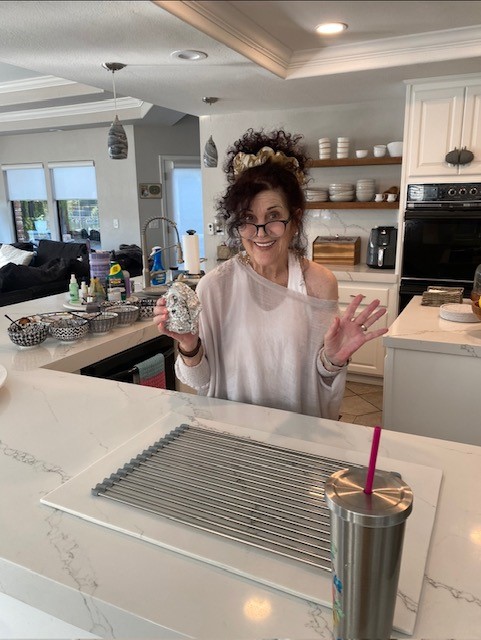
When Rachel S. talks about her mom, Jan, you can still feel the energy she brought into every room. Jan was hilarious, dramatic in the best way, endlessly curious, and deeply kind, the type of person who made everyone feel special. She loved through food, through knitting, and through gathering people together.
In late September 2024, Rachel and her family were blindsided by a stage 4 (IV) lung cancer diagnosis. Just months later, on January 17, 2025, Jan passed away. The loss was sudden and devastating, but her spark never faded.
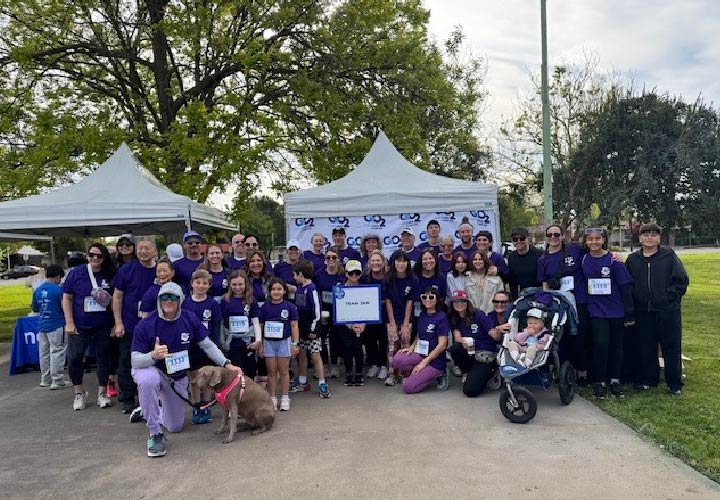
Today, Rachel and her family honor Jan’s life by coming together each year at GO2’s Sacramento 5K Walk/Run in her memory, turning grief into connection and action. We sat down with Rachel to learn more about her mom’s life, legacy, and the impact she continues to have on everyone who loved her.
Tell us about Jan
If I were introducing my mom at a gathering, there’s a strong chance people would already know her – or she would have already made herself known. She was genuinely hilarious. The kind of person who could tell a story and have an entire table crying with laughter. She was loud in the best way, dramatic, animated, obsessed with true crime, and completely unafraid to strike up a conversation with anyone. People loved her. I mean truly loved her. She had fans. But underneath all of that personality was someone deeply kind and interested in people. She made you feel special. That was her magic.
What were some of the things she was most passionate about – hobbies, traditions, routines, or little quirks that made her her?
After I left for college, her best friend taught her to knit. That turned into hundreds of beanies and blankets for family, friends, grandchildren – even cancer organizations. She was also the quintessential Jewish mom – an incredible cook and host. Holidays and gatherings at our house were sacred. Feeding people was how she loved them.
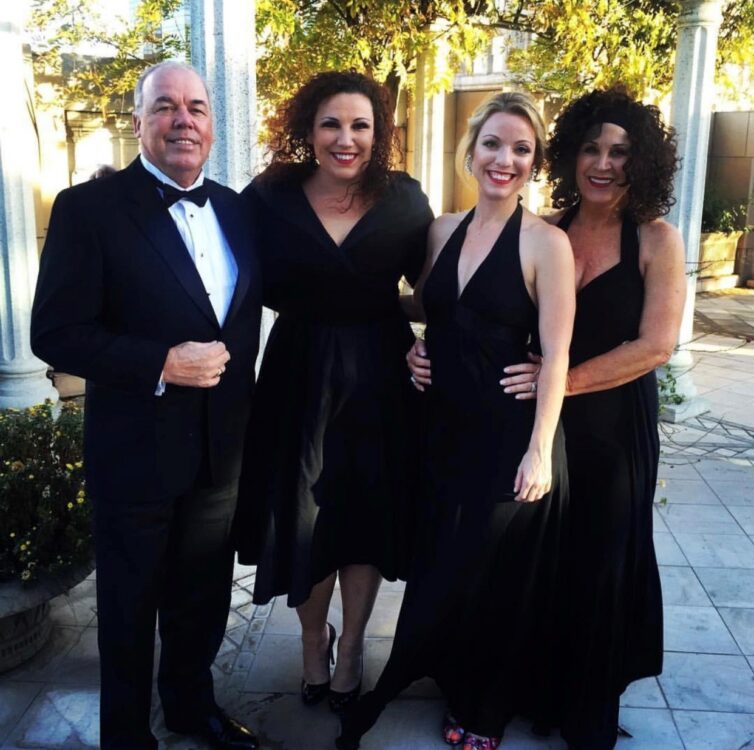
Can you share a moment or memory that feels especially representative of who she was?
My mom would move mountains for my sister and me. In 1998 she surprised us with Backstreet Boys tickets and a trip to Las Vegas – and then surprised us again with a second night and front row seats. That kind of over-the-top joy was so her. After she passed, they announced a Vegas residency, and my dad, sister, and I went. It felt like she made it happen.
When she was diagnosed, what do you remember most about that time – emotionally or practically — for your family?
It was a living nightmare. One day she was healthy, and the next we were told it was stage 4 (IV) lung cancer. By the time we had answers in late September, tumors had fractured her spine, and she was in bed until she passed on January 17, 2025.
Everything was hard. She couldn’t move, so every appointment required enormous coordination. We were incredibly fortunate to have neighbors and lifelong friends who stepped up in extraordinary ways.
Even with that support, it was overwhelming. There are so many unknowns with a diagnosis like this, which is why guidance and community around lung cancer matter so much.
How did she approach life in the months that followed her diagnosis?
She was still herself. Sassy. Funny. Curious. Even from bed, she wanted to know all of the gossip. She still made jokes. That spark never left her.
What kind of impact did she have on her family, friends, and neighbors?
The number of people who showed up for her and for us told me everything I needed to know about her impact.
She built real relationships. With neighbors. With lifelong friends. With our friends. With people she met once and somehow remembered forever. She made people feel seen and important. That kind of energy doesn’t disappear.
Since her passing, how have you seen her legacy live on in your family or community?
Her knitting is everywhere. Her recipes are still in rotation. We still host. We still gather.
But more than anything, she changed how we live. There’s a depth now. A perspective you don’t get unless you’ve experienced loss like this. We don’t sweat the small stuff the same way anymore.
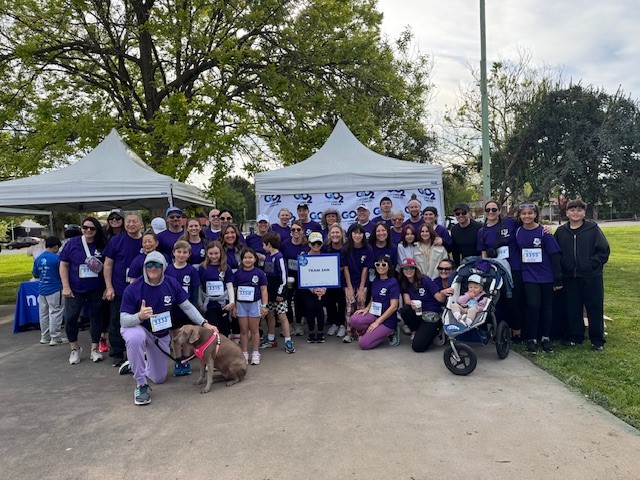
Can you describe what motivated you to participate in GO2’s Sacramento 5K Walk/Run in her honor?
Grief is disorienting. I needed community and I needed direction. I needed to turn heartbreak into action. If I couldn’t save my mom, I wanted to help save someone else’s. Leading the 5K in her honor felt like the most meaningful way to do that.
What does it mean to you to have family and friends come together at this event to celebrate her life?
We formed our team just a month after she passed. It was still so raw, but we needed it.
Seeing that many people show up for her – walking, donating, wearing her name – was incredibly healing. It reminded us how much she meant and that we were helping fund real progress in her honor.
How does this event help shift the narrative around lung cancer from loss and stigma to community, celebration, and hope?
Cancer is everywhere. It’s happening younger. It’s happening to nonsmokers. It’s happening to people who “did everything right. “Events like this help dissolve isolation. They replace stigma with community. They remind families that they are not alone. And, they fund real progress.
Grief can be incredibly lonely. This makes it collective, and collective grief can become collective hope.
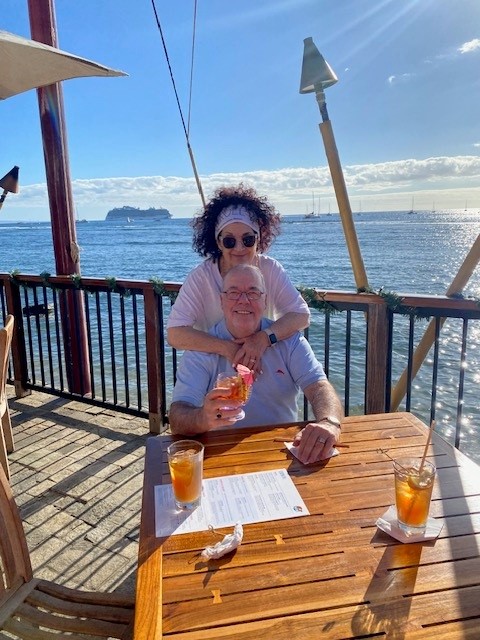
If you had to sum up what you hope readers understand about your mom, what would you want them to take away?
There will never be enough time with the people we love. My mom lived loudly, generously, and with joy. I hope people step away from the noise of daily life and remember that right now is what we have. Don’t wait to show up. Don’t wait to say the thing. Live bigger while you can.
Honor your loved ones by joining a GO2 5K Walk/Run near you, or by starting your own team. Every step helps fund programs, research, and resources that ensure no one faces lung cancer alone. Find an event and join us!
March 3, 2026
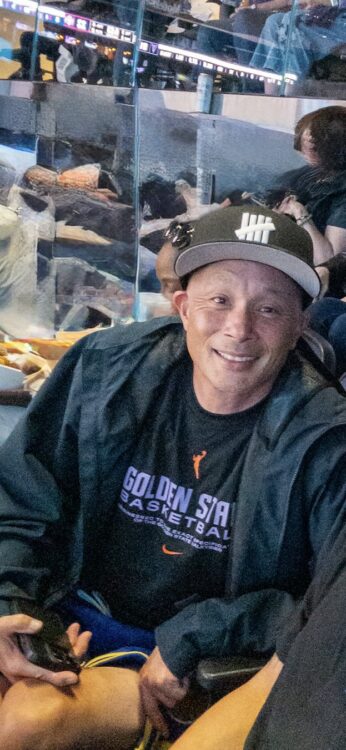
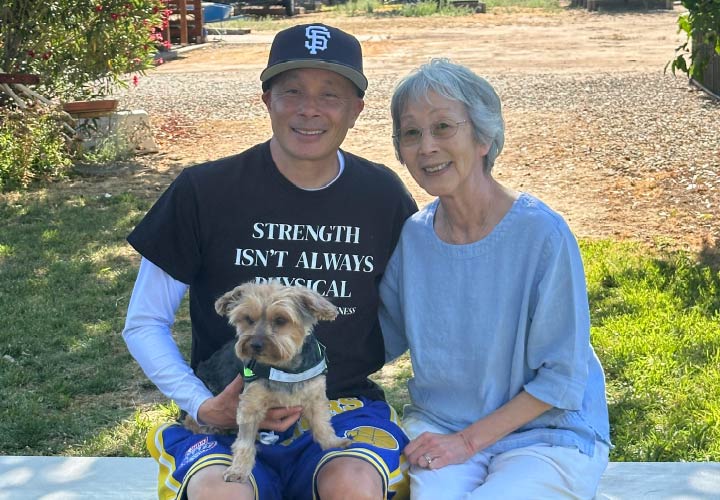
Glen lives in Hercules, CA with his Yorkie, Kuma, where he moved in 2021 to be closer to family and friends. After nearly 20 years working in the probation department, he retired at the beginning of the pandemic and began volunteering at the East Bay SPCA. What started as a way to give back quickly turned into a full-time job. These days, you’ll often find him on his daily walk to Starbucks or visiting his mom, who lives just 15 minutes away.
Jeffrey B. Velotta, MD, FACS is a thoracic surgeon at Kaiser Permanente’s Oakland Medical Center, a Clinical Professor in the Department of Clinical Science at Kaiser Permanente’s Bernard J. Tyson School of Medicine, and a clinical assistant professor in the Department of Surgery the UCSF School of Medicine. Dr. Velotta went to medical school at George Washington University. He then completed his general surgery residency at UCLA Medical Center. During this time, Dr. Velotta also completed his postdoctoral research in the Department of Cardiothoracic Surgery at Stanford University School of Medicine. Following this, he completed his training in Cardiothoracic Surgery at Brigham and Women’s Hospital and Harvard Medical School. Dr. Velotta’s clinical and research interests involve innovative techniques and regionalization pathways for all thoracic cancers and improving lung cancer screening in at-risk populations.
When Glen first noticed chest pain in the fall of 2024, lung cancer wasn’t on his radar. He was in physical therapy at the time and assumed the discomfort was muscular and temporary. But 1 test led to another, and by December, an X-ray raised concerns that couldn’t be ignored.
On December 24, 2024, Glen had a biopsy. Four days later, he received a phone call confirming cancer.
“I didn’t know what stage I was or much about what I was even being diagnosed with,” Glen recalls. “I just know it turned my world upside down.”
Glen didn’t have a smoking history, and there was no history of lung cancer in his family. Yet here he was, grappling with a diagnosis he never expected and didn’t yet fully understand.
Hearing the worst news, but not much else
Glen remembers little of the conversation that followed his diagnosis. His oncologist delivered the news with compassion, giving him permission to react however he needed.
“She said, I’m telling you the worst news I could possibly tell you. It’s okay if you get upset, scream, or cry. I’m here,” he says.
But like many patients in that moment, Glen fixated on 1 question: How long do I have to live? “I wasn’t really hearing anything else,” he says. “My best friend was with me, taking notes. I’m glad she was there because I don’t remember much of what was said. I could only think about my prognosis.”
In the days that followed, Glen did what so many people do, he went online. And almost immediately, he regretted it. “That was the worst thing I could do,” he says. “You Google stage 4 (IV) lung cancer and life expectancy, and the first article you see tells you that this is really bad news. You don’t even need to read the rest.”
Treatment, side effects, and a growing sense of fear
Glen began treatment quickly. His first regimen included radiation to his brain and chest and an infusion therapy that caused repeated breathing reactions. After 4 reactions across 2 sessions, his care team stopped the drug. He later transitioned to Tagrisso (osimertinib), which he is still on today and has tolerated much better.
But emotionally, Glen was spiraling. He describes himself as generally relatively pessimistic by nature, and the statistics he’d read didn’t help. He began quietly preparing for the end, updating legal documents, organizing passwords, and making sure his affairs were in order.
A parking lot, a 5K, and an unexpected meeting
Everything began to shift at GO2’s San Francisco 5K Walk/Run. Glen attended the event almost on a whim after finding information about it online. He arrived early, sat in his car, and debated leaving. Eventually, he got out and walked toward the event, unsure why everyone seemed so happy. “This is a cancer walk,” he remembers thinking. “Why is everyone smiling?”
A volunteer noticed he wasn’t okay and introduced him to GO2’s Senior Manager, Support Programs and Events, Michele Zeh. As Glen shared how bleak he was feeling, she pointed around the room. “This person has 10 years since their diagnosis. That person has 8,” she told him.
“And I’m thinking, how is that possible? I thought people never lived that long,” Glen says.
Then Michele asked a simple question: “Do you know Dr. Velotta?”
Glen didn’t. But meeting him was about to change his life.
“Let’s get rid of the mothership”
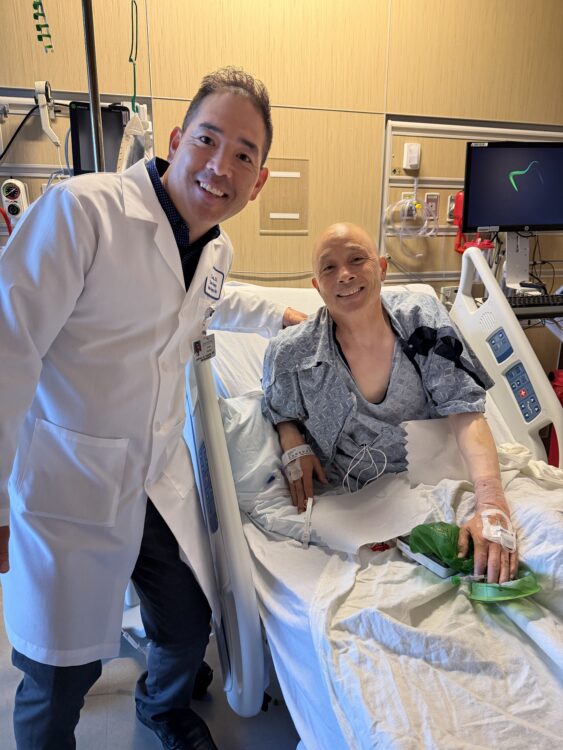
Dr. Jeffrey Velotta is a thoracic surgeon at Kaiser Permanente in Northern California, and one of only a small number of surgeons in the country willing to seriously consider surgery for patients with stage 4 (IV) lung cancer.
When Glen met him, the conversation felt different immediately. “He really cared,” Glen says. “I could tell right away how passionate he was about lung cancer and about the people who have it. It made me feel good.”
Dr. Velotta reviewed Glen’s scans and told him that he could be a good candidate for surgery, a treatment that might help his prognosis despite his stage 4 (IV) diagnosis. He explained his thinking using an analogy that stuck.
“We’ll get rid of the mothership,” he said.
The primary tumor, Dr. Velotta explained, was like a command center that was sending cancer cells elsewhere. If Glen’s metastatic disease was controlled with medication, removing the original tumor could still slow or stop future progression.
“The approach made sense to me,” Glen says. “You’re radiating my brain and my bones but you’re leaving where it all started? Why not get rid of that, too?”
Why surgery for stage 4 (IV) is still so controversial
Dr. Velotta is blunt about how unusual his approach still is. “I don’t think every patient with stage 4 (IV) lung cancer should have surgery,” he says. “But I absolutely believe that some should, including many more than most doctors currently consider.”
In addition to being younger, healthier, and generally fit, the key factor that makes someone a good candidate, he explains, isn’t the extent of the disease or the number of metastases, but whether disease outside the lung is controlled.
“Glen had multiple spots in his brain, bones, and elsewhere,” Dr. Velotta explains. “But his cancer was well-controlled through a tyrosine kinase inhibitor (TKI). That’s what people call ‘polymetastatic’ disease. Most surgery trials exclude patients like that. But that’s actually the majority of people with stage 4 (IV) lung cancer.”
Clinical trials, he notes, tend to focus on patients with 1 or 2 metastases, not because others can’t benefit, but because trials are designed to show clean, easily publishable results. This disconnect, he believes, is 1 of the reasons surgery remains underused for people with advanced disease. “That leaves most patients out,” he says. “And it leaves surgeons hesitant.”
A lonely position in the field
Even today, Dr. Velotta says the prevailing mindset around surgery for stage 4 (IV) lung cancer hasn’t shifted much. “The thinking is that it’s too little, too late. We’ve missed the chance to help these patients surgically. The idea is that the cat’s already out of the bag,” he says.
That assumption, that surgery can’t help once cancer has spread, is something he pushes back against constantly. “People get freaked out by polymetastatic disease,” he says. “They see multiple spots and think, ‘Oh my God, they’re everywhere.’ But if those spots are controlled, it doesn’t matter how many there are. Those patients can still benefit.”
Dr. Velotta acknowledges that his willingness to operate in these cases often puts him at odds with colleagues. “There is a stigma associated with operating on stage 4 (IV) lung cancer,” he says.
Even within his own health system, he is frequently the only surgeon willing to consider surgery for patients like Glen. “I feel very alone in this world sometimes,” he admits. “If these patients were all doing terribly, I would stop. But they’re actually doing really well.”
Instead, he says, many of his patients are living longer — and living well. “I’ve done this for 5 or 6 years. I’ve operated on many,” he says. “A lot of them are still alive. And even the ones who passed didn’t pass 3 months later. Some lived 6 plus years.”
Surgery as more than survival statistics
For Glen, surgery wasn’t just about controlling the disease. It was about reclaiming a sense of control over his own life. Surgery felt proactive to him, like taking control of his treatment and his future.
Dr. Velotta sees that psychological impact again and again. “You can’t quantify that on a spreadsheet,” he says. “But mentally, it matters a lot.”
Glen agrees. “I felt better from the moment I knew I was going to have surgery,” he says. “I can’t put that on paper, but I felt different. Better. It has helped my mindset immeasurably.”
Glen had surgery on November 12, 2025. It was minimally invasive, and he went home 2 days later. Within weeks, he was walking hills near his house. Then jogging. Then biking.
“I’m not back to where I was yet,” he says. “But I’m close. And I really don’t mind putting in the work.”
Pathology from his surgery showed just .5 millimeters of active cancer remaining in the tumor that was removed. “All I cared about was that it wasn’t inside me anymore,” Glen says.
NED — and what hope looks like now
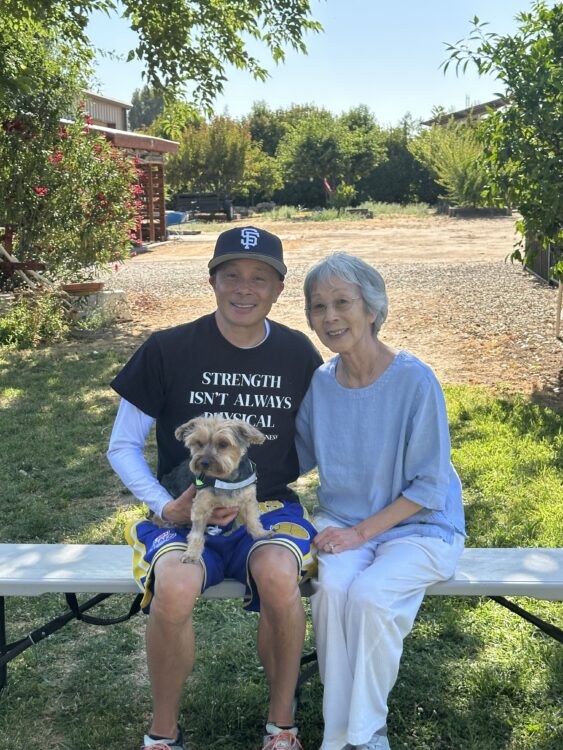
When Dr. Velotta emailed Glen with the words “NED” or “no evidence of disease,” Glen didn’t fully grasp what it meant, but others did. “When I told people at GO2, they got really excited,” he says. “That’s when I realized, oh, this is a big deal.”
Hope, he says, is everything. “Sometimes I’m still pessimistic at heart,” he admits. “But the surgery has given me so much more reason to have hope for the future, and hope is what keeps me going.”
On sharing his story
Glen hesitated before agreeing to speak publicly about his experiences with lung cancer. Talking about cancer can still pull him into dark places. But ultimately, he agreed for 1 reason.
“If this helps 1 person,” he says. “If someone like me hears this and thinks, ‘Maybe surgery is an option for me, maybe I should ask’, then it’s worth it.”
Dr. Velotta agrees. “I just want people to know that they can ask,” he says. “That’s huge progress.”
GO2’s HelpLine is a free, one-on-one service that connects patients and caregivers with experienced staff who can provide guidance, referrals, resources, and, most importantly, hope. Whether it’s questions about biomarker testing, treatment options, or simply needing someone to listen, the HelpLine is often the first step toward feeling less alone after a lung cancer diagnosis. Call 1-800-298-2436 or email support@go2.org to get started.

February 3, 2026
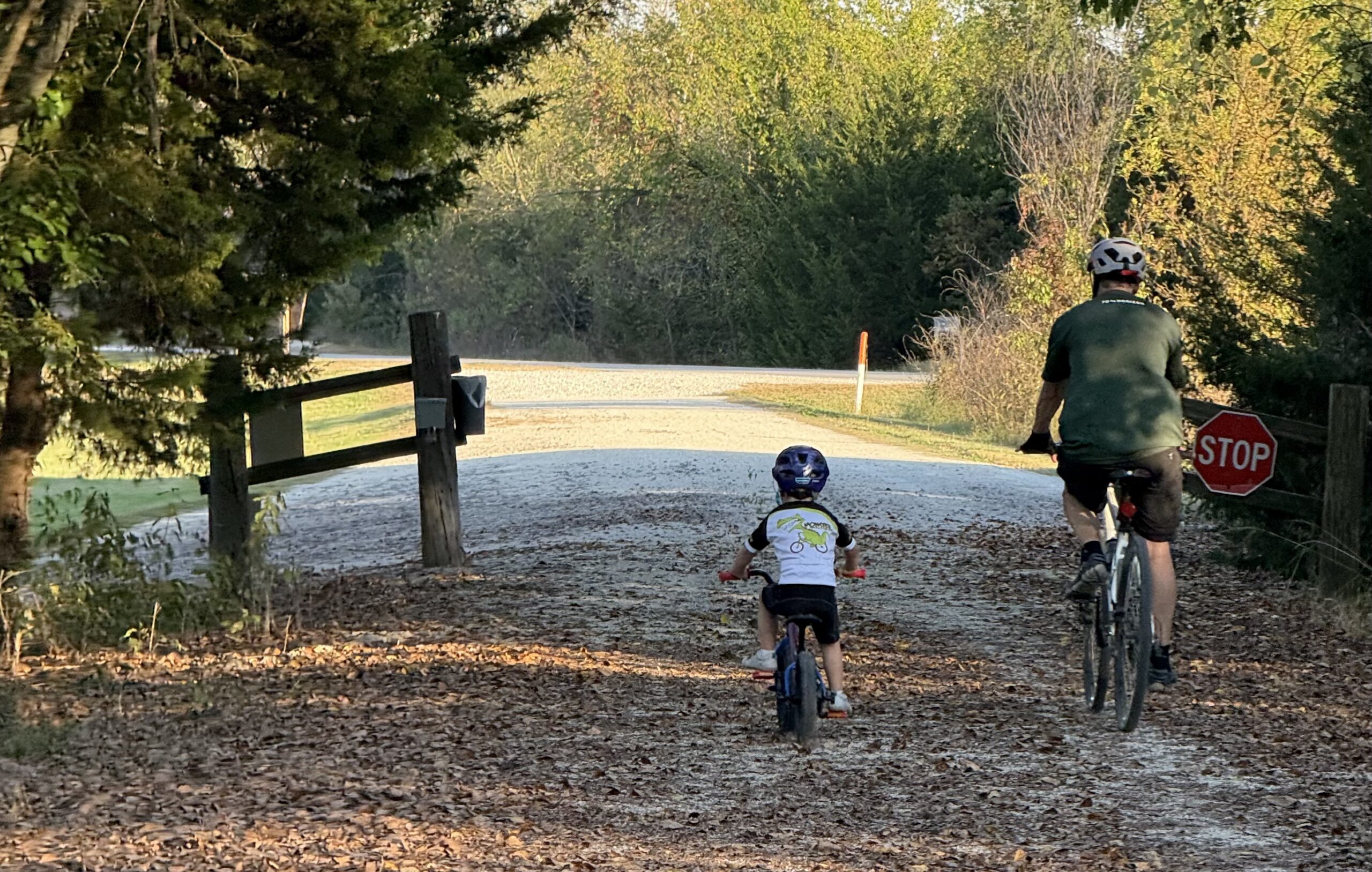
When Mike Scanlon set out on a 30-day, 700-mile bike ride across Kansas, the journey ahead of him was daunting. He had 60 trails, 50 towns, and what felt like endless gravel roads ahead of him. But for Mike, who is living with stage 4 (IV) non-small cell lung cancer (NSCLC), this ride was about more than just the distance. It was about purpose and about transforming his diagnosis into something bigger.
At the heart of Mike’s journey was a principle that has guided his work and his life for years: the Athenian Oath, a commitment to leave things “not less, but greater, better, and more beautiful than they were transmitted to us.” Turning his ride into a fundraiser for GO2 for Lung Cancer and Kansas Trails Inc. was a natural extension of that belief. “I’ve always tried to live in a way that gives back,” Mike shared. “This ride felt like a way to do that — to take something personal and make it meaningful for others.”
Choosing “even if” over “only if”
Mike often described the Ride for Resilience tour as a lesson in mindset. It was one shaped deeply by his cancer diagnosis. Living with stage 4 (IV) NSCLC, he explained, can trap people in “only if” thinking: “I’ll have peace only if treatment works. Only if scans stay clear. Only if life goes back to normal.”
But the road taught him another way.
“The power of an ‘even if’ perspective is that it frees you to live with purpose no matter what happens,” Mike said. “Even if the road is uncertain. Even if outcomes aren’t guaranteed. Even if this journey reshapes your life.”
For Mike, resilience wasn’t about controlling the outcome. It was about choosing courage anyway. Pedal after pedal, day after day, that mindset carried him forward.
Trails, towns, and the strength of small places
Kansas is home to more than 4,000 miles of trails, and Mike wanted to experience as much of that diversity as possible. Riding 60 trails across 50 towns allowed him to connect not just with landscapes, but with people — especially in small, rural communities.
“I wanted to see how adaptable and resilient these towns are,” he said. “A lot of them don’t have much, but they keep showing up.”
That resilience came into sharp focus in places like Copeland, KS, population 251. A stop at the town library became a powerful reminder of shared values and of communities that quietly live out the Athenian Oath and the “even if” mentality every day. These towns, like people facing cancer, keep moving forward despite uncertainty.
Sharing the road and stories
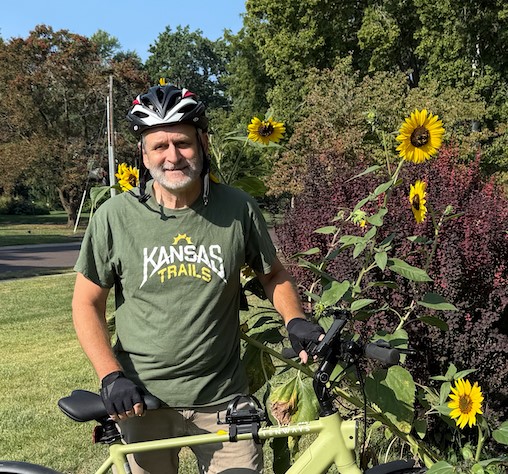
Along the way, survivors, caregivers, and families found Mike. Sometimes it was literally on the trail, sometimes through word of mouth. They rode beside him and shared their stories.
Over the course of the ride, Mike connected with people across Kansas, creating space for honest conversations about cancer, treatment, and hope. He shared information about GO2 for Lung Cancer, including resources available to individuals and families at every stage of the disease.
“Cancer is deeply personal,” Mike reflected. “The courage it takes for people to open up always floored me.”
From a sales director at a Salina radio station to an administrative assistant at a high school in Wamego — who happened to share Mike’s same lung cancer mutation and treatment — these conversations became some of the most meaningful moments of the ride.
Hard miles and harder questions
The ride tested Mike in ways he didn’t expect, including fast farm dogs on gravel roads (most of which he could outpace, except one). But the hardest challenges weren’t physical. They were mental.
“I’ve been given an opportunity many people with NSCLC don’t get,” he said. “And I can’t waste it.”
A note from a donor, a message of encouragement, or simply the mantra JKP — Just Keep Pedaling — helped him find the answer.
The ride of a lifetime
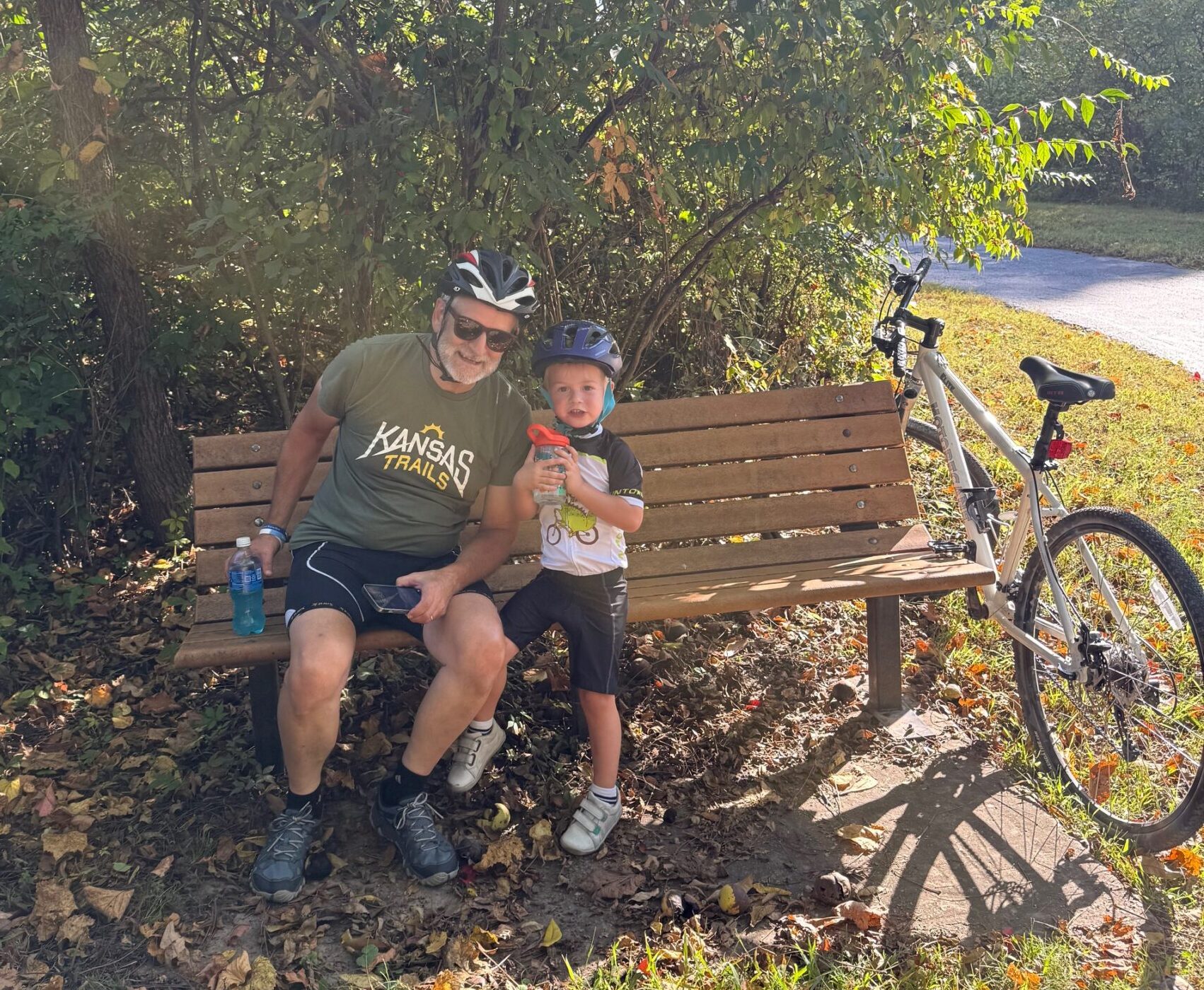
The final day was a 93-mile ride along the Flint Hills Trail from Council Grove to Osawatomie felt symbolic. Mike saw the day as a reflection of life itself: starting early, uncertain, learning as you go, growing stronger, then feeling your body push back near the end.
And then, 2 miles from the finish, everything changed.
“I saw my grandson, Augie,” Mike said. “He wanted to ride the last 2 miles with me. And I knew his little brother PJ was waiting at the finish line with my daughter Megan.”
As Mike’s journey that day ended, his grandsons’ life journeys were just beginning, bringing the Athenian Oath full circle. “My obligation,” Mike said, “is to transmit Kansas trails — and this life — not less, but greater.”
Your turn to find your “Ride for Resilience”
Mike’s advice to anyone considering a fundraiser for GO2 for Lung Cancer is simple: define your reason.
“Mine was the Athenian Oath,” he said. “Once you know your why, invite others to help.”
Through his 700-mile journey, Mike raised more than $24,000, helping fuel GO2 for Lung Cancer’s work to increase lung cancer survival by supporting cutting-edge research, legislative advocacy, and patient support services for individuals and families nationwide.
Whether it’s a ride, a walk, a creative challenge, or something uniquely yours, your fundraiser can make a difference. As Mike’s journey shows, resilience isn’t about what happens only if everything goes right — it’s about choosing to act, even if the road ahead is uncertain.
And sometimes, all it takes is the courage to start pedaling.
Learn more about how you can create your own fundraiser for GO2 for Lung Cancer.