
The stage of lung cancer is used to describe the size of the primary tumor (the first tumor) and where cancer may have spread, including lymph nodes or other organs. Your healthcare team uses multiple tests, including your scans and biopsy results, to determine the stage. The most common staging system uses a number (1, 2, 3, or 4) or numbers and letters combined (1A1, 3B, etc.) to describe the stage.
.svg)
The stage of lung cancer is determined by looking at 3 key factors:
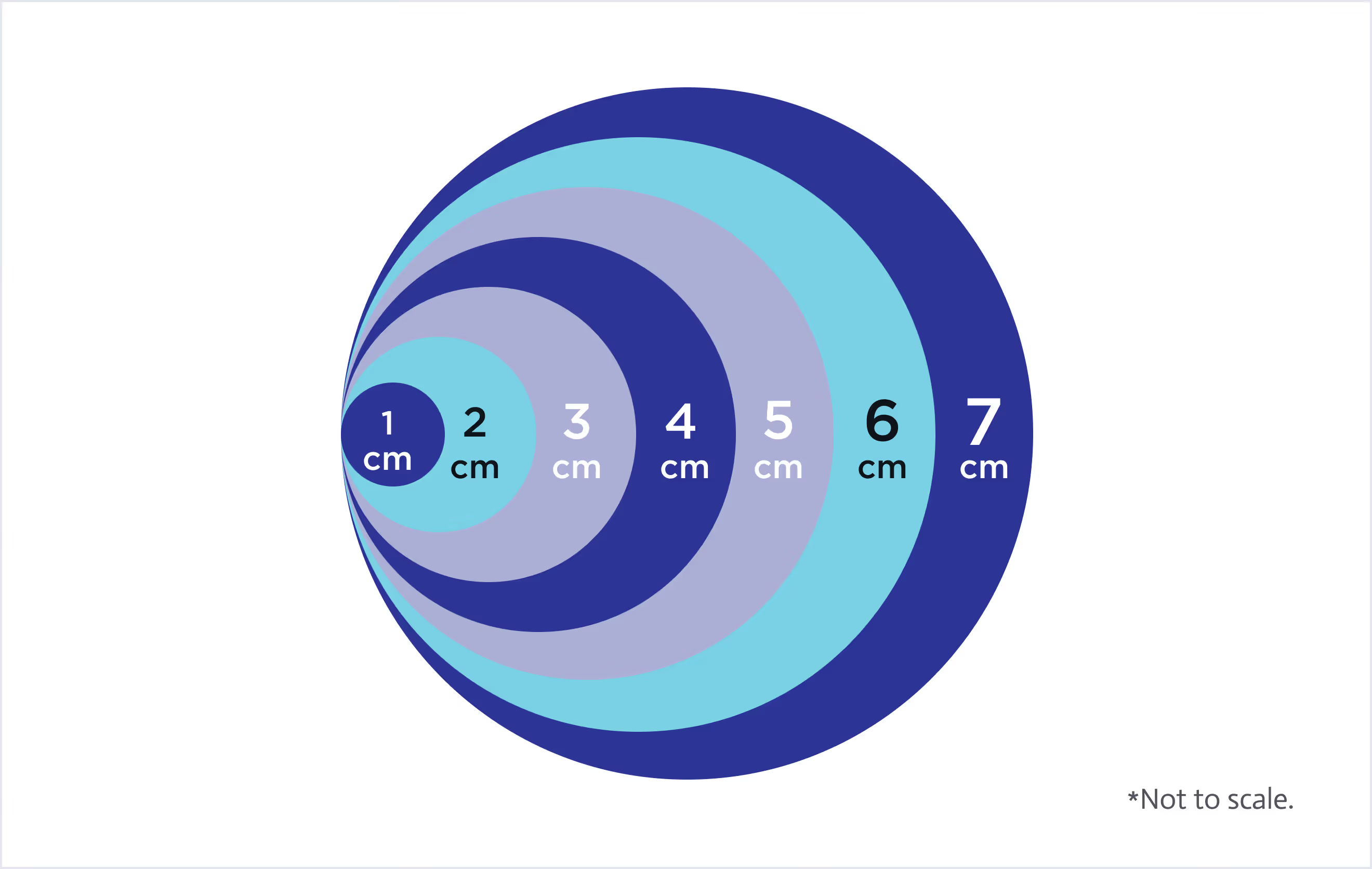
The size of the primary tumor is measured in millimeters (mm) or centimeters (cm). Ten mm equals 1 cm. One cm is about the length of a staple.

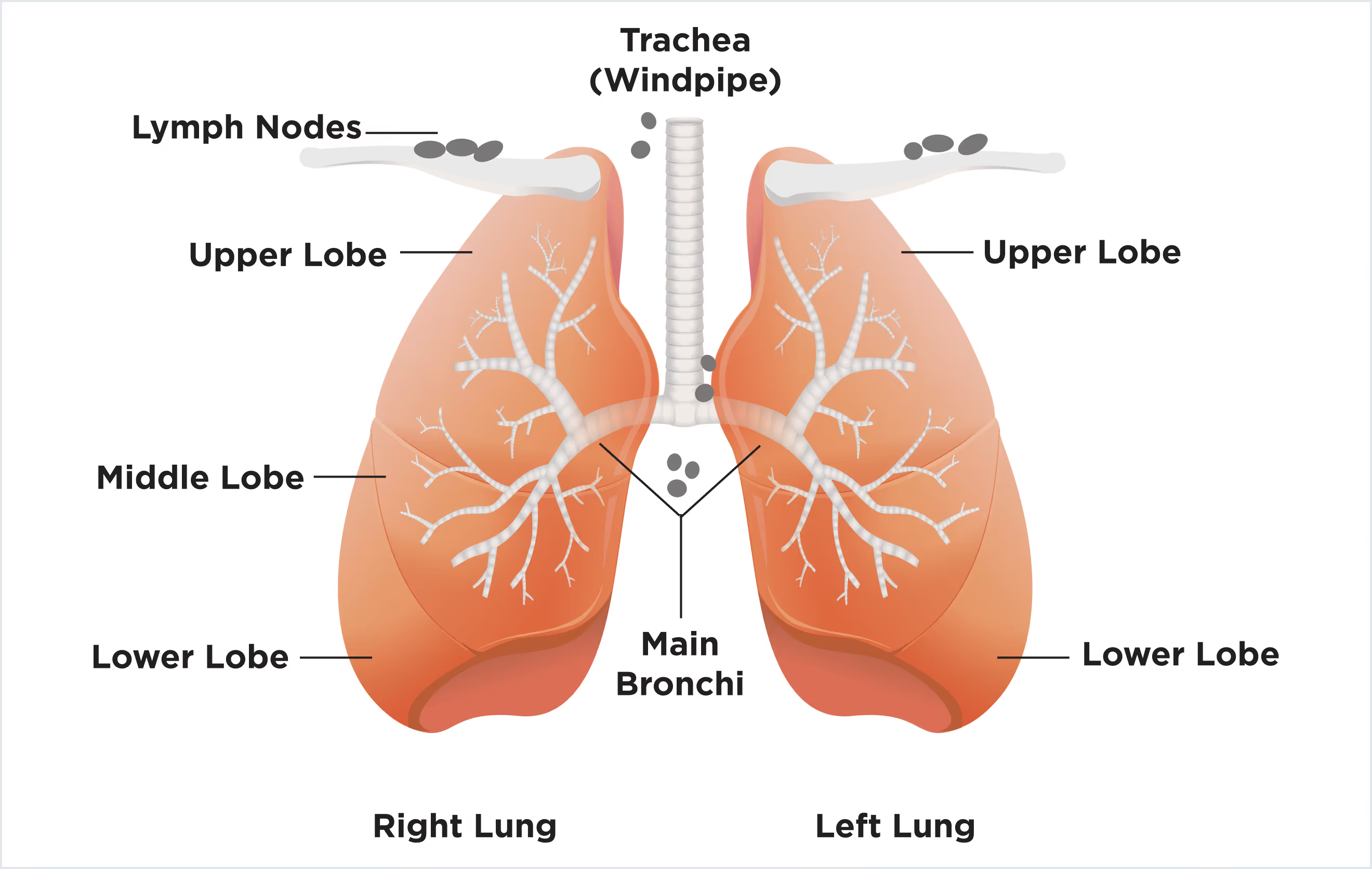
The lymph system has groups of small, pea-sized lymph nodes that clean the waste out of the fluid that passes through them. These groups are found in many different parts of your body, like the armpits, chest, neck, and groin. When waste collects in a node, it can swell, and it may feel sore.
A large group of lymph nodes in the chest drain fluid from the lungs. Cancer cells can break off from a lung tumor and travel to other parts of your body through the blood or lymph system. Sometimes, cancer cells can become trapped in the lymph nodes and start to grow there. If cancer is found in the lymph nodes, the number of lymph nodes with cancer cells inside them is used to stage cancer.

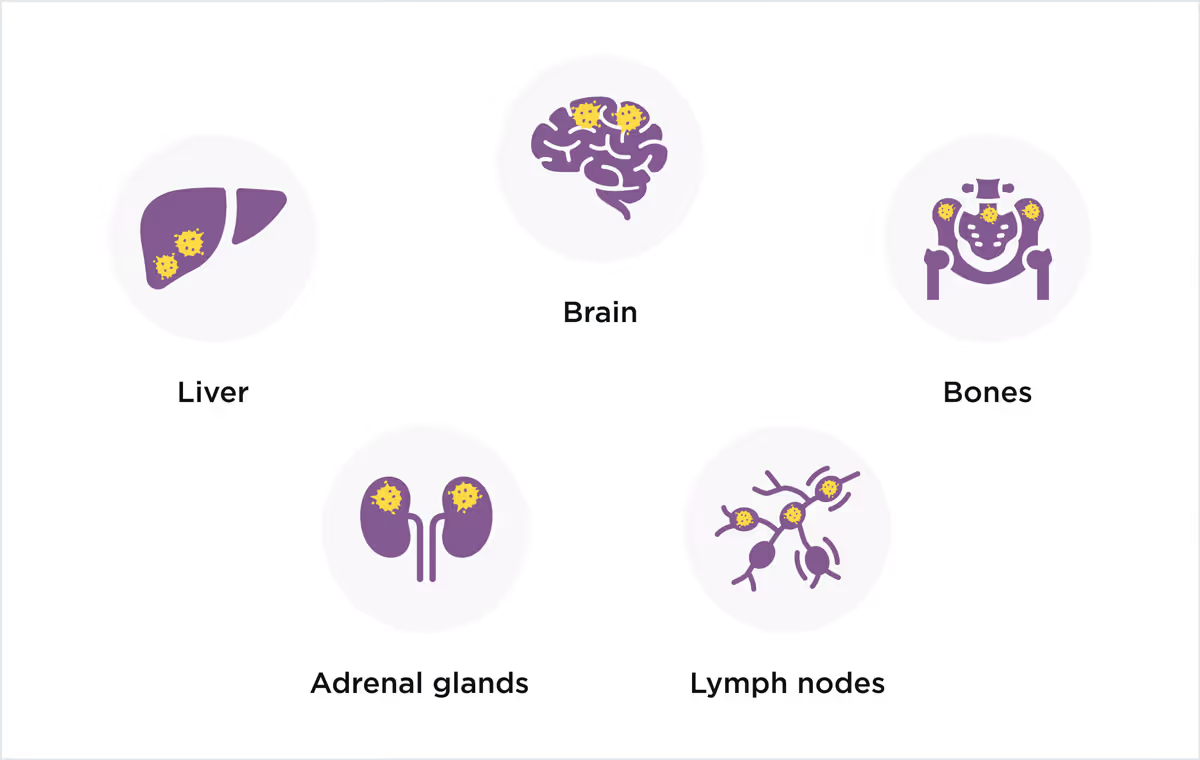
Lung cancer commonly spreads to the liver, adrenal glands, bones, lymph nodes and/or brain. When cancer spreads to other parts of the body through the lymph system or blood vessels, it is called metastasis or mets.
The size of the primary tumor
The size of the primary tumor is measured in centimeters. One centimeter (cm) is about the length of one staple.
Whether cancer has spread to any lymph nodes
The lymph system has groups of small, pea-sized lymph nodes that clean the waste out of the fluid that passes through them. These groups are found in many different parts of your body, like the armpits, chest, neck, and groin. When waste collects in a node, it can swell, and it may feel sore.
A large group of lymph nodes in the chest drain fluid from the lungs. Cancer cells can break off from a lung tumor and travel to other parts of your body through the blood or lymph system. Sometimes, cancer cells can become trapped in the lymph nodes and start to grow there. If cancer is found in the lymph nodes, the number of lymph nodes with cancer cells inside them is used to stage cancer.
Whether cancer has spread to other parts of the body
Lung cancer commonly spreads to the liver, adrenal glands, bones, lymph nodes and/or brain. When cancer spreads to other parts of the body through the lymph system or blood vessels, it is called metastasis or mets.

If you have questions about the stages of lung cancer, contact our HelpLine at 1-800-298-2436 or support@go2.org.
Non-small cell lung cancer staging
Non-small cell lung cancer (NSCLC) is usually staged using a number, such as 1, 2, 3, or 4 or a number and a letter combined, such 1A or 3B. In this type of staging, a higher number means the cancer is more advanced and the letter provides more detail within each stage.
Learn more about NSCLC and its staging:
Stages of non-small cell lung cancer and treatments
Treatments for stages 1A1, 1A2, 1A3, and 1B include:
- Surgery is often the first treatment choice at this stage. Your surgeon may remove a part or the whole lung, based on your needs.
- Wedge resection: Removes a small wedge-shaped piece of the lung.
- Segmental resection or segmentectomy: A piece of the lung is removed that is larger than in a wedge resection but smaller than a lobectomy.
- Lobectomy: Removes 1 lobe of the lungs.
- Bilobectomy: Removes 2 lobes of the lungs.
- Pneumonectomy: Removes the entire lung. Your surgeon will often remove nearby lymph nodes for further testing to ensure cancer has not spread.
Treatments for stage 1B only could include:
- Targeted therapy kills cancer by attacking a “target” on cancer cells. The target is found through biomarker testing. The type of targeted therapy used is based on which biomarkers you have.
- Radiation therapy uses high-energy beams aimed at the tumor to kill or shrink cancer cells. There are different types of radiation therapy that may be used based on the location of the cancer and other health factors.
- Immunotherapy helps your body’s own immune system slow or stop cancer from growing.
- Chemotherapy kills cells that grow and divide very fast, like cancer cells. Often, 2 types of chemotherapy drugs are given at the same time every 3 weeks for several cycles.
- Clinical trials are a type of research that is done to find new and better ways to treat lung cancer safely. Talk to your healthcare team about whether a clinical trial is right for you.
Ask your healthcare team about palliative care. Palliative care is given to prevent or ease lung cancer symptoms and manage treatment side effects. It can help reduce pain, improve quality of life, and help people live longer.
Treatments for stage 2 NSCLC could include:
- Surgery is often the first treatment choice at this stage. Your surgeon may remove a part or the whole lung, based on your needs.
- Lobectomy: Removes 1 lobe of the lungs.
- Bilobectomy: Removes 2 lobes of the lungs.
- Pneumonectomy: Removes the entire lung. Your surgeon will often remove nearby lymph nodes for further testing to ensure cancer has not spread.
- Targeted therapy kills cancer by attacking a “target” on cancer cells. The target is found through biomarker testing. The type of targeted therapy used is based on which biomarkers you have.
- Radiation therapy uses high-energy beams aimed at the tumor to kill or shrink cancer cells. There are different types of radiation therapy that may be used based on the location of the cancer and other health factors.
- Immunotherapy helps your body’s own immune system slow or stop cancer from growing.
- Chemotherapy kills cells that grow and divide very fast, like cancer cells. Often, 2 types of chemotherapy drugs are given at the same time every 3 weeks for several cycles.
- In stage 2B, chemotherapy can be given with radiation, called chemoradiation.
- Clinical trials are a type of research that is done to find new and better ways to treat lung cancer safely. Talk to your healthcare team about whether a clinical trial is right for you.
Ask your healthcare team about palliative care. Palliative care is given to prevent or ease lung cancer symptoms and manage treatment side effects. It can help reduce pain, improve quality of life, and help people live longer.
Treatments for stage 3 NSCLC could include:
- Surgery is more likely to be an option in stage 3A. Your surgeon may remove a part or the whole lung, based on your needs.
- Lobectomy: Removes 1 lobe of the lungs.
- Bilobectomy: Removes 2 lobes of the lungs.
- Pneumonectomy: Removes the entire lung. Your surgeon will often remove nearby lymph nodes for further testing to ensure cancer has not spread.
- Targeted therapy kills cancer by attacking a “target” on cancer cells. The target is found through biomarker testing. The type of targeted therapy used is based on which biomarkers you have.
- Radiation therapy uses high-energy beams aimed at the tumor to kill or shrink cancer cells. There are different types of radiation therapy that may be used based on the location of the cancer and other health factors.
- Immunotherapy helps your body’s own immune system slow or stop cancer from growing.
- Chemotherapy kills cells that grow and divide very fast, like cancer cells. Often, 2 types of chemotherapy drugs are given at the same time every 3 weeks for several cycles.
- Clinical trials are a type of research that is done to find new and better ways to treat lung cancer safely. Talk to your healthcare team about whether a clinical trial is right for you.
Ask your healthcare team about palliative care. Palliative care is given to prevent or ease lung cancer symptoms and manage treatment side effects. It can help reduce pain, improve quality of life, and help people live longer.
Possible treatments for stage 4 NSCLC:
- Surgery is rarely an option. It may be considered if the size and location of the cancer are causing further risks.
- Targeted therapy kills cancer by attacking a “target” on cancer cells. The target is found through biomarker testing. The type of targeted therapy used is based on which biomarkers you have.
- Radiation therapy uses high-energy beams aimed at the tumor to kill or shrink cancer cells. There are different types of radiation therapy that may be used based on the location of the cancer and other health factors.
- Immunotherapy helps your body’s own immune system slow or stop cancer from growing.
- Chemotherapy kills cells that grow and divide very fast, like cancer cells. Often, 2 types of chemotherapy drugs are given at the same time every 3 weeks for several cycles.
- In stage 2B, chemotherapy can be given with radiation, called chemoradiation.
- Clinical trials are a type of research that is done to find new and better ways to treat lung cancer safely. Talk to your healthcare team about whether a clinical trial is right for you.
Ask your healthcare team about palliative care. Palliative care is given to prevent or ease lung cancer symptoms and manage treatment side effects. It can help reduce pain, improve quality of life, and help people live longer.
Stage 1 (I)
Stage 1 NSCLC has sub-stages that are named using the letters A and B. The stage of NSCLC is determined by the size and number of tumors found and where the cancer has spread.
Treatments for stage 1A and 1B include:
- Surgery is often the first treatment choice at this stage. Your surgeon may remove a part or the whole lung, based on your needs.
- Wedge resection: Removesa small wedge-shaped piece of the lung.
- Segmental resection or segmentectomy: A piece of the lung is removed that is larger than in a wedge resection but smaller than a lobectomy.
- Lobectomy: Removes 1 lobeof the lungs.
- Bilobectomy: Removes 2 lobes of the lungs.
- Pneumonectomy: Removes the entire lung. Your surgeon will often remove nearby lymph nodes for further testing to ensure cancer has not spread.
Treatments for stage 1B only could include:
- Targeted therapy kills cancer by attacking a “target” on cancer cells. The target is found through biomarker testing. The type of targeted therapy used is based on which biomarkers you have.
- Radiation therapy uses high-energy beams aimed at the tumor to kill or shrink cancer cells. There are different types of radiation therapy that may be used based on the location of the cancer and other health factors.
- Immunotherapy helps your body’s own immune system slow or stop cancer from growing.
- Chemotherapy kills cells that grow and divide very fast, like cancer cells. Often, 2 types of chemotherapy drugs are given at the same time every 3 weeks for several cycles.
- Clinical trials are a type of research that is done to find new and better ways to treat lung cancer safely. Talk to your healthcare team about whether a clinical trial is right for you.
Ask your healthcare team about palliative care. Palliative care is given to prevent or ease lung cancer symptoms and manage treatment side effects. It can help reduce pain, improve quality of life, and help people live longer.
Stage 2 (II)
Stage 2 NSCLC has sub-stages that are named using the letters A and B. The stage of NSCLC is determined by the size and number of tumors found and where the cancer has spread.
Treatments for stage 2 NSCLC could include:
- Surgery is often the first treatment choice at this stage. Your surgeon may remove a part or the whole lung, based on your needs.
- Lobectomy: Removes 1 lobe of the lungs.
- Bilobectomy: Removes 2 lobes of the lungs.
- Pneumonectomy: Removes the entire lung. Your surgeon will often remove nearby lymph nodes for further testing to ensure cancer has not spread.
- Targeted therapy kills cancer by attacking a “target” on cancer cells. The target is found through biomarker testing. The type of targeted therapy used is based on which biomarkers you have.
- Radiation therapy uses high-energy beams aimed at the tumor to kill or shrink cancer cells. There are different types of radiation therapy that may be used based on the location of the cancer and other health factors.
- Immunotherapy helps your body’s own immune system slow or stop cancer from growing.
- Chemotherapy kills cells that grow and divide very fast, like cancer cells. Often, 2 types of chemotherapy drugs are given at the same time every 3 weeks for several cycles.
- In stage 2B, chemotherapy can be given with radiation, called chemoradiation.
- Clinical trials are a type of research that is done to find new and better ways to treat lung cancer safely. Talk to your healthcare team about whether a clinical trial is right for you.
Possible treatments for NSCLC stages 1A and 1B include:
Surgery is often the first treatment choice at this stage. Your surgeon may remove a part or the whole lung, based on your needs.
- Wedge resection: Removes a small wedge-shaped piece of the lung.
- Segmental resection or segmentectomy: A piece of the lung is removed that is larger than in a wedge resection but smaller than a lobectomy.
- Lobectomy: Removes 1 lobe of the lungs.
- Bilobectomy: Removes 2 lobes of the lungs.
- Pneumonectomy: Removes the entire lung. Your surgeon will often remove nearby lymph nodes for further testing to ensure cancer has not spread.
Ask your healthcare team about palliative care.
Stage 3 (III)
Stage 3 is divided into stages 3A, 3B, and 3C based on the size and number of tumors, the location and types of lymph nodes found to have cancer, and exactly where the cancer has spread in the chest area.
Treatments for stage 3 NSCLC could include:
- Surgery is more likely to be an option in stage 3A. Your surgeon may remove a part or the whole lung, based on your needs.
- Lobectomy: Removes 1 lobe of the lungs.
- Bilobectomy: Removes 2 lobes of the lungs.
- Pneumonectomy: Removes the entire lung. Your surgeon will often remove nearby lymph nodes for further testing to ensure cancer has not spread.
- Targeted therapy kills cancer by attacking a “target” on cancer cells. The target is found through biomarker testing. The type of targeted therapy used is based on which biomarkers you have.
- Radiation therapy uses high-energy beams aimed at the tumor to kill or shrink cancer cells. There are different types of radiation therapy that may be used based on the location of the cancer and other health factors.
- Immunotherapy helps your body’s own immune system slow or stop cancer from growing.
- Chemotherapy kills cells that grow and divide very fast, like cancer cells. Often, 2 types of chemotherapy drugs are given at the same time every 3 weeks for several cycles.
- In stage 2B, chemotherapy can be given with radiation, called chemoradiation.
- Clinical trials are a type of research that is done to find new and better ways to treat lung cancer safely. Talk to your healthcare team about whether a clinical trial is right for you.
Ask your healthcare team about palliative care. Palliative care is given to prevent or ease lung cancer symptoms and manage treatment side effects. It can help reduce pain, improve quality of life, and help people live longer.
Stage 4 (IV)
Stage 4 NSCLC has sub-stages that are named using the letters A and B. The stage of NSCLC is determined by the size and number of tumors found and where the cancer has spread.
Possible treatments for stage 4 NSCLC:
- Surgery is rarely an option. It may be considered if the size and location of the cancer are causing further risks.
- Targeted therapy kills cancer by attacking a “target” on cancer cells. The target is found through biomarker testing. The type of targeted therapy used is based on which biomarkers you have.
- Radiation therapy uses high-energy beams aimed at the tumor to kill or shrink cancer cells. There are different types of radiation therapy that may be used based on the location of the cancer and other health factors.
- Immunotherapy helps your body’s own immune system slow or stop cancer from growing.
- Chemotherapy kills cells that grow and divide very fast, like cancer cells. Often, 2 types of chemotherapy drugs are given at the same time every 3 weeks for several cycles.
- In stage 2B, chemotherapy can be given with radiation, called chemoradiation.
- Clinical trials are a type of research that is done to find new and better ways to treat lung cancer safely. Talk to your healthcare team about whether a clinical trial is right for you.
Ask your healthcare team about palliative care. Palliative care is given to prevent or ease lung cancer symptoms and manage treatment side effects. It can help reduce pain, improve quality of life, and help people live longer.
Small cell lung cancer staging
Small cell lung cancer (SCLC) is sometimes staged using a number, such as 1, 2, 3, or 4 or a number and a letter combined, such 1A or 3B. In this type of staging, a higher number means the cancer is more advanced and the letter provides more detail within each stage. More often, SCLC is divided into 2 broad stages: limited stage which includes stages 1-3, or extensive stage, which includes stage 4.
Learn more about SCLC and its stages:
Stages of small cell lung cancer and treatments
Limited stage SCLC includes:
- Stage 1: The tumor is in 1 lung and has not spread to lymph nodes.
- Stage 2: Cancer is found early but has spread inside or just outside of 1 lung and may have spread to nearby lymph nodes on the same side of the body.
- Stage 3: Cancer is in 1 lung and has spread to the chest and to lymph nodes further away from the lungs, but the cancer still remains close to its initial tumor site.
Treatments for limited stage SCLC may include one or more of the folliowing:
SCLC treatment can vary depending on the size, spread of the cancer, and your overall health.
- Surgery to remove cancer may be an option if it is found very early. The surgeon will often remove nearby lymph nodes for further testing to make sure there was no spread.
- Chemotherapy is a common treatment for SCLC that kills cells that grow and divide very fast, like cancer cells. Often, 2 types of chemotherapy drugs are given at the same time every 3 weeks for several cycles, followed by a rest period to allow recovery time.
- Radiation therapy uses high-energy beams to kill or shrink cancer cells or prevent them from spreading. There are different types of radiation therapy that may be used based on the location of the cancer and other health factors
- Chemoradiation combines chemotherapy and radiation therapy and is the most common way to treat limited stage SCLC.
- Immunotherapy helps your body’s own immune system slow or stop cancer from growing.
- Clinical trials are a type of research that is done to find new and better ways to treat lung cancer safely. They are an important option for people diagnosed SCLC. Talk to your healthcare team about whether a clinical trial is right for you.
Ask your healthcare team about palliative care. Palliative care is given to prevent or ease lung cancer symptoms and manage treatment side effects. It can help reduce pain, improve quality of life, and help people live longer.
Extensive stage SCLC is also called stage 4:
- Stage 4: Cancer is advanced and has spread to the lining or fluid around the heart or lungs or has spread to distant parts of the body. Having tumors in both lungs, no matter the size of the tumors, is stage 4.
Possible treatments for extensive stage SCLC:
Your first treatment usually includes a combination of chemotherapy and immunotherapy with or without radiation, depending on where the cancer is in your body.
- Chemotherapy is a common treatment for SCLC that kills cells that grow and divide very fast, like cancer cells. Often, 2 types of chemotherapy drugs are given at the same time every 3 weeks for several cycles, followed by a rest period to allow recovery time.
- Radiation therapy uses high-energy beams to kill or shrink cancer cells or prevent them from spreading. There are different types of radiation therapy that may be used based on the location of the cancer and other health factors
- Chemoradiation combines chemotherapy and radiation therapy.
- Immunotherapy helps your body’s own immune system slow or stop cancer from growing.
- Clinical trials are a type of research that is done to find new and better ways to treat lung cancer safely. They are an important option for people diagnosed SCLC. Talk to your healthcare team about whether a clinical trial is right for you.
Ask your healthcare team about palliative care. Palliative care is given to prevent or ease lung cancer symptoms and manage treatment side effects. It can help reduce pain, improve quality of life, and help people live longer.
Extensive stage SCLC
Cancer is found early and the total area of your body where cancer is found, is small enough to fit into one radiation field. Limited stage SCLC includes stages 1, 2,3
Limited stage SCLC includes:
- Stage 1: The tumor is in 1 lung and has not spread to lymph nodes.
- Stage 2: Cancer is found early but has spread inside or just outside of 1 lung and may have spread to nearby lymph nodes on the same side of the body.
- Stage 3: Cancer is in 1 lung and has spread to the chest and to lymph nodes further away from the lungs, but the cancer still remains close to its initial tumor site.
Treatments for limited stage SCLC may include one or more of the folliowing:
SCLC treatment can vary depending on the size, spread of the cancer, and your overall health.
- Surgery to remove cancer may be an option if it is found very early. The surgeon will often remove nearby lymph nodes for further testing to make sure there was no spread.
- Chemotherapy is a common treatment for SCLC that kills cells that grow and divide very fast, like cancer cells. Often, 2 types of chemotherapy drugs are given at the same time every 3 weeks for several cycles, followed by a rest period to allow recovery time.
- Radiation therapy uses high-energy beams to kill or shrink cancer cells or prevent them from spreading. There are different types of radiation therapy that may be used based on the location of the cancer and other health factors
- Chemoradiation combines chemotherapy and radiation therapy and is the most common way to treat limited stage SCLC.
- Immunotherapy helps your body’s own immune system slow or stop cancer from growing.
- Clinical trials are a type of research that is done to find new and better ways to treat lung cancer safely. They are an important option for people diagnosed SCLC. Talk to your healthcare team about whether a clinical trial is right for you.
Ask your healthcare team about palliative care. Palliative care is given to prevent or ease lung cancer symptoms and manage treatment side effects. It can help reduce pain, improve quality of life, and help people live longer.
Extensive stage SCLC
Cancer is found after it has spread, or metastasized, to the other lung, the liver, the brain, or another part of the body. This means the cancer has spread to a distance outside of 1 radiation field. Extensive stage SCLC cannot be cured. It can, however, be controlled with treatment for a length of time that is unique to you.
Extensive stage SCLC is also called stage 4:
- Stage 4: Cancer is advanced and has spread to the lining or fluid around the heart or lungs or has spread to distant parts of the body. Having tumors in both lungs, no matter the size of the tumors, is stage 4.
Possible treatments for extensive stage SCLC:
Your first treatment usually includes a combination of chemotherapy and immunotherapy with or without radiation, depending on where the cancer is in your body.
- Chemotherapy is a common treatment for SCLC that kills cells that grow and divide very fast, like cancer cells. Often, 2 types of chemotherapy drugs are given at the same time every 3 weeks for several cycles, followed by a rest period to allow recovery time.
- Radiation therapy uses high-energy beams to kill or shrink cancer cells or prevent them from spreading. There are different types of radiation therapy that may be used based on the location of the cancer and other health factors
- Chemoradiation combines chemotherapy and radiation therapy.
- Immunotherapy helps your body’s own immune system slow or stop cancer from growing.
- Clinical trials are a type of research that is done to find new and better ways to treat lung cancer safely. They are an important option for people diagnosed SCLC. Talk to your healthcare team about whether a clinical trial is right for you.
Ask your healthcare team about palliative care. Palliative care is given to prevent or ease lung cancer symptoms and manage treatment side effects. It can help reduce pain, improve quality of life, and help people live longer.
Other types of cancer staging
The TNM staging system is another commonly used staging system.
- T = Tumor
This describes the size of the tumor, where it is located, and whether it has spread. - N = Lymph Node
This describes whether cancer has spread to the lymph nodes in and around the lungs. - M = Metastasis
This describes whether cancer has spread to areas outside the lymph nodes.
After information about the Tumor (T), Lymph Nodes, (N) and Metastasis (M) are known, numbers are added to further describe the stage.
TX
Tumors are too small for testing, or their exact location cannot be found with tests.
T0
No primary or original tumor has been found.
Tis
There are abnormal or cancer cells in the top layer of cells in the breathing tubes that have not spread to other lung tissue.
T1
Tumors are only in the lungs and are smaller than 3 cm(the size of 1 grape).
T1mi
Tumors grow only along the surface of lung tissue and are less than 0.5 cm deep into the tissue of the lung.
T1a
Tumors are smaller than 1cm (the size of a pea) and has not reached the tissues that surround lungs, or the main branches of the airways.
T1b
Tumors are between 1cm (size of a pea) and 2cm (size of a peanut) and have not reached the tissues that surround the lungs or the main branches of the airways.
T1c
Tumors are between 2cm (size of a peanut) and 3cm (size of a grape) and has not reached the tissues that surround the lungs, or the main branches of the airways.
T2
Tumors are between 3cm (size of a grape) and 5cm (size of a lime) and/or has grown into the main bronchus (the 2 airway tubes that split off of the windpipe) and/or has grown into the lining on the surface of the lung (visceral pleura) and/or has caused lung collapse (atelectasis) or swelling (pneumonitis).
T2a
Tumors are between 3cm (size of a grape) and 4cm (size of a walnut) and has grown into the main airways and/or the tissue around the lungs.
T2b
Tumors are between 4cm (size of a walnut) and 5cm (size of a lime) and has grown into the main airways and/or the tissue around the lungs.
T3
Tumors are between 5cm (size of a lime) and 7cm (size of a peach) and/or has grown into the chest wall, or nearby sites and/or there are other tumors are in the same lobe of the lung.
T4
Tumors are larger than 7cm (size of a peach) and/or has grown into the center of the chest, to the diaphragm, heart or its major blood vessel, windpipe, area where the windpipe divides, esophagus (food tube), or spine (backbone) and/or there are other tumors are in the same lobe of the lung.
N0
There is no cancer in lymph nodes near the cancer.
N1
Cancer has spread to the lymph nodes near the area where the windpipe divides and/or to nodes in the center of the chest and in the same the lung with the primary tumor.
N2
Cancer has spread to other lymph nodes in the center of the chest near the same lung with the original tumor.
N2a
Cancer has spread to only 1 lymph node in the centerof the chest on the same side of the lung with the original tumor.
N2b
Cancer has spread to more than 1 lymph node in the center of the chest near the lung with the original tumor.
N3
Cancer has spread to nodes in the center of the chest (mediastinal or hilar) near the lung without the primary tumor OR to any nodes in the neck or near the collarbone (supraclavicular or scalene nodes).
M0
Cancer has not spread to far away sites.
M1
Cancer has spread to far away sites.
M1a
Cancer has spread from 1 lung into the other OR into the lining and has formed nodule(s) OR into the lining of the heart and has formed nodule(s) OR into the fluid around the lungs or the heart.
M1b
Cancer has spread to 1 site outside the chest area.
M1c
Cancer has spread to more than 1 site outside the chest area.
M1c1
Cancer has spread to more than 1 site outside the chest area, but only in 1 other organ.
TNM stages
After the Tumor (T), Lymph Nodes (N) and Metastasis (M) are known, the cancer then is staged:
Frequently asked questions
Where can I find more resources and support?
Contact the GO2 HelpLine at 1-800-298-2436 or email support@go2.org to connect with caring and highly trained staff who listen, answer your questions, and provide support. We offer many free programs and educational resources to meet your needs.
Why is SCLC staged as limited and extensive stages instead of stages 1-4 like NSCLC?
The stage of lung cancer defines where the cancer is located in the body and guides which treatment options would be most effective. SCLC has treatment options based on whether the cancer is stage 1,2,3 (limited stage) or stage 4 (extensive stage). For that reason, using the simple staging system is an efficient way to stage this cancer type.
Can the stage of lung cancer change over time?
Yes, the stage of lung cancer can change over time based on whether cancer grows and spreads or shrinks. If cancer fully responds to treatment and no cancer is found anywhere in your body, your healthcare team may say there is “no evidence of disease” or NED. You’ll continue to have scheduled scans to monitor your health and the status of cancer.
Non-small cell lung cancer staging