
Research

Explore breakthroughs and ongoing studies in lung cancer research, from clinical trials to cutting-edge therapies and prevention.
Learn about local and national events where you can connect, raise awareness, and support the lung cancer community.
Explore real stories honoring survivors and those remembered through their lasting legacy. Select a category to find stories that resonate most with you.
Find practical advice, emotional support, and resources to help you or your loved one cope with the challenges of living with lung cancer.
Stay informed about the policies that impact the lung cancer community and ways you can get involved.
Explore breakthroughs and ongoing studies in lung cancer research, from clinical trials to cutting-edge therapies and prevention.
Catch up on highlights from our newsletter, featuring stories, resources, and upcoming opportunities to engage.
Explore news and updates shaping the lung cancer landscape—from scientific breakthroughs and organizational milestones to awareness campaigns and community highlights.
September 17, 2026
A rare inherited mutation in the Epidermal Growth Factor Receptor (EGFR) gene is associated with a 25-fold increased risk of lung cancer, according to a study by investigators at Dana-Farber Cancer Institute and 23andMe Research Institute. The findings included de-identified, aggregated genetic data from more than 3.3 million 23andMe research-consented participants.
Among people who never smoked, carriers of the mutation were more than 60 times as likely to develop lung cancer as people without it. Researchers identified EGFR T790M as one of the strongest inherited risk factors for lung cancer discovered to date. This could have important implications for genetic testing and future lung cancer screening strategies for people who carry the mutation.
The findings were published in Science.
"Today, lung cancer screening is driven almost entirely by smoking history,” says Jaclyn LoPiccolo, M.D., Ph.D., attending physician and lung cancer researcher at Dana-Farber Cancer Institute, who co-led the study. “Our findings raise the possibility that, in the future, screening could also be dictated by inherited genetic risk. If further studies confirm the benefit, people with EGFR T790M could be identified through genetic testing and offered personalized CT screening to identify lung cancers when they are at their most curable stage."
Although most lung cancers are associated with tobacco use or exposure, the proportion diagnosed in people who have never smoked has been rising. Yet the genetic factors underlying these cancers, particularly the role of inherited risk, aren’t well understood.
In 2005, researchers identified a rare inherited mutation called EGFR T790M in a European family with multiple cases of lung cancer. Since then, the mutation has been reported in other families with unusually high rates of the disease.
"For years we've known that some families inherit a markedly increased risk of lung cancer, but because this variant is so rare, we've never been able to accurately measure that risk,” said co-senior author Pasi A. Jänne, M.D., Ph.D., Senior Vice President for Translational Research and a lung cancer specialist at Dana-Farber. “By studying more than three million people, we were able to demonstrate just how strongly this inherited mutation is associated with lung cancer."
Comparing people with lung cancer to those without the disease, the researchers examined whether EGFR T790M was more common among those who had developed lung cancer. They also analyzed people who had never smoked separately to determine whether the association persisted in the absence of tobacco use. Additional data supporting the association came from participants in the INHERIT Study (NCT05587439), led at Dana-Farber by Drs. LoPiccolo and Jänne, in partnership with GO2 for Lung Cancer (GO2) and the Addario Lung Cancer Medical Institute (ALCMI).
The researchers expected EGFR T790M to increase lung cancer risk, but they had not anticipated the magnitude of the increased risk.
“One of the remarkable findings here is just how strong an effect a single mutation can have,” said co-senior author Alexander Gusev, Ph.D., a quantitative geneticist at Dana-Farber. Dr. Gusev continued, “To my knowledge it's one of the strongest, if not the strongest, cancer risk increasing mutations that has ever been found.”
Among people who smoked, carriers of the mutation were about 10 times as likely to develop lung cancer as noncarriers. Among people who never smoked, carriers were more than 60 times as likely to develop lung cancer. This relative risk does not mean smoking is protective, the researchers explained. Because smoking already greatly increases lung cancer risk, the mutation’s effect appears smaller by comparison.
“Smoking is bad for lung cancer. This mutation is bad for lung cancer. When you do both, your risk is the sum of those two risks,” Dr. Gusev said. “So, you definitely don't want to smoke.”
The mutation was not linked to any of 17 other common cancers studied, suggesting that its effects may be largely limited to lung cancer.
Dr. LoPiccolo noted that the prevalence of the mutation in the U.S. population is about 1 in 15,000. But in certain areas of the Southeastern U.S., it can be as frequent as 1 in 2,000 people.
“We found that the vast majority of carriers inherited the mutation from the same ancestral lineage,” she said. “We could trace that lineage to British and Irish settlers in the United States and show that the mutation became enriched after a founder event and genetic bottleneck in Southern Appalachia about 200 years ago. It's a fascinating example of how human migration and genealogy can shape disease risk, generations later.”
The researchers recommend that people with several family members who have had lung cancer, multiple lung nodules, multifocal lung cancers, or ancestral roots in areas of the southeastern U.S., where the variant is more common, consult a genetic counselor. A counselor can help determine whether genetic testing and regular lung cancer screening may be appropriate.
23andMe members who participate in research were essential in driving these discoveries. The size and scale of the 23andMe database allowed researchers the opportunity to analyze data from more than 10 million 23andMe research-consented participants. They then focused on 3.3 million participants for whom both genetic and lung cancer data were available.
“We’ve built a research community where millions of people consent to take part and answer questions about their health year after year to accelerate meaningful discoveries,” said Joyce Tung, Ph.D., Vice President of Research at 23andMe. “Finding a variant this rare, measuring what it does, and tracing where it came from are three different scientific challenges, and addressing all three takes genetic and health information in one place, at scale. We're grateful for what our participants made possible here.”
“This groundbreaking discovery builds on a body of research into inherited lung cancer risk that GO2 and ALCMI helped advance,” said David Benson, Chief Executive Officer of GO2. “The more we understand about inherited risk, the more knowledge patients, families, and clinicians have to make informed decisions. For people with a family history of lung cancer, that knowledge can be incredibly powerful. We are excited to see this science continue to grow and open new possibilities for earlier detection and, ultimately, saving lives.”
As next steps, researchers hope to learn why some EGFR T790M carriers develop lung cancer while others do not, why the mutation increases the risk of lung cancer but not other common cancers, and how environmental exposures and additional genetic changes influence risk. Future studies will include more diverse populations and investigate other inherited EGFR mutations that may predispose people to lung cancer. Meanwhile, Drs. LoPiccolo and Jänne are continuing to recruit participants for the INHERIT Study to further understand the genetic risk and predispositions for developing lung cancer.
Data analyzed in the study includes participants in the Lung Cancer Genetics Study, which is funded by the Susan Wojcicki Foundation and powered by 23andMe. The Susan Wojcicki Foundation is continuing to recruit for the Lung Cancer Genetics Study, which investigates how genetics, environment, and other factors impact lung cancer risk and disease progression. Enrollment is open to anyone in the US aged 18 or older who has been diagnosed with lung cancer.
Funding for this study was provided by the LUNGevity Foundation (Career Development Award to J.L.); the Elaine & Gerald Schuster Fund for Lung Cancer Research (J.L.); the National Institutes of Health (NIH grant R01 HG012133 to A.G., NIH/National Cancer Institute grant U01 CA209414 to D.C., and NIH grant R35 CA220497 to P.A.J.); the American Cancer Society (grant CRP-17-111-01-CDD to P.A.J.); the Chen-Huang Center for EGFR-Mutant Lung Cancers (J.L. and P.A.J.); GO2 for Lung Cancer (INHERIT Study); the Addario Family; Sam and Janet Bain; the Burns Family; the Jain and Patkar Family; David Lefkowitz and Julie Persily; the Smita and Pankaj Patel Family; SITA Foundation; The Van Auken Private Foundation; the Ray B. Marglous Family Foundation in memory of Lindsey Rae Marglous; the Michele Simeone Abrecht Memorial Fund, established by Charlotte and Clifford Abrecht; the Cammarata Family Foundation Research Fund; the Zhen-Quan Xu and Lin Yuan Fund for Lung Cancer Research; and the Gohl Family Lung Cancer Research Fund.
September 14, 2026
Research highlights real-world opportunities to improve equitable screening, biomarker testing, and clinical trial access
GO2 for Lung Cancer (GO2) presented 10 research studies at the IASLC 2026 World Conference on Lung Cancer hosted by the International Association for the Study of Lung Cancer, taking place September 12-15 in Seoul, Republic of Korea. The research reflects GO2’s collaborative, cross-departmental approach to identifying real-world barriers and developing practical solutions across lung cancer screening, diagnosis, treatment, smoking cessation, clinical trial participation, patient education, and psychosocial support.
The portfolio includes findings generated through GO2's Centers of Excellence network, LungMATCH program, and community-based initiatives, as well as a shared decision-making study conducted with Fred Hutch Cancer Center and the University of Washington. Together, the posters elevate the perspectives of patients, health care professionals, and community partners and point to actionable ways to make high-quality lung cancer care more accessible and equitable.
“Research matters most when it changes what people experience,” said GO2 For Lung Cancer CEO David Benson. “These studies identify barriers that prevent people from receiving the care they need and benefiting from scientific advances. More importantly, they offer practical solutions for overcoming those barriers and improving outcomes.”
GO2 research presented at WCLC 2026:
Integrating Restorative Practices to Enhance Shared Decision-Making and Lung Cancer Screening Uptake in Black Communities
Led by GO2 in partnership with Fred Hutch Cancer Center and the University of Washington, this 12-month equity grant study assesses the feasibility and acceptability of “SDM Circles,” a restorative justice-informed, community-engaged model designed to make lung cancer screening conversations opportunities for trust-building, healing and empowerment. Findings will inform a scalable, community-informed model to reduce structural barriers to early detection. Lead GO2 authors include Joelle Fathi and Cyndi Lemery.
Monitoring Stage Shift in a National Network of Screening Programs: Successes and Challenges in Real-World Implementation
Using data from GO2's Centers of Excellence Benchmarking and Practice Variation Survey, researchers found that 68% of responding screening programs tracked lung cancer diagnosis rates, but more than half did not track stage breakdown. Even among programs that tracked stage, 34% of reported diagnoses had an unknown stage, underscoring the need for stronger documentation and information-sharing across clinical departments. Angela Barry is the lead author.
A Revealing Snapshot into Implementation of Smoking Cessation Services Across Academic and Community-Based Facilities
Using data from GO2’s Centers of Excellence network, researchers examined how smoking cessation services are implemented across academic and community-based lung cancer programs. The findings reveal variation in how patients are identified, referred to services, and supported in quitting, highlighting opportunities to better integrate evidence-based cessation care into routine practice and ensure more people receive consistent support. Joelle Fathi is the lead author.
Real World Assessment of Biomarker Testing Turn Around Time Impacts in US-Based Lung Cancer Treatment Programs
A survey of 82 U.S. facilities in GO2's Centers of Excellence network found that most treatment teams would likely begin first-line therapy before biomarker results were available if turnaround exceeded two weeks. Nearly all respondents used send-out testing, and reflex-testing workflows varied widely. The findings point to the potential for standardized protocols and adequately resourced reflex testing to support more timely treatment decisions. Andrew Ciupek is the lead author.
Reality Check: Identifying Real-World Barriers to Clinical Trial Engagement
Drawing on patient-reported data from 300 LungMATCH participants and clinician-reported data from GO2's Centers of Excellence network, the analysis found a gap between screening patients for trial eligibility and enrollment: responding centers reported screening all potential patients, yet median enrollment was only 5%. Both patients and providers identified stringent eligibility criteria as a leading barrier. The authors call for earlier, shared decision-making conversations and greater patient and frontline provider input in trial design. Brittney Nichols is the corresponding author; Andrew Ciupek is the lead author.
Community-Based Biomarker Education Improves Clinical Trial Readiness in Black Communities
Developed and delivered with a community advisory board and local partners in Broward County, Florida, this culturally tailored education program reached 296 adults, 80.5% of whom identified as Black or African American. Participants showed significant gains in biomarker-testing knowledge and confidence discussing testing with a provider, while phase-specific education increased willingness to consider clinical trials. The work was conducted through Ready Lung, a partner-funded program that concluded at the end of 2025. Shanada Monestime is the lead author.
From Community Outreach to Lung Cancer Screening: A Navigation Model for Black Communities
This community-based model used independent pharmacies in Washington, D.C., and a mobile health unit in Baton Rouge, Louisiana, to identify screening-eligible adults and connect them with navigation and low-dose CT screening. Among 450 people assessed, 80 enrolled in navigation and 21 completed screening. The findings identify appointment scheduling as the largest point of drop-off and suggest that virtual shared decision-making and screening offered at the point of interest may reduce barriers. The work was conducted through Program Connect, a partner-funded program that concluded at the end of 2025. Shanada Monestime is the lead author.
Hidden Barriers, Real Conversations: Health Literacy and Health Equity Insights from the Lung Cancer Living Room®
A review of Lung Cancer Living Room sessions from the previous year identified recurring barriers involving screening awareness, stigma in conversations about smoking history, communication about clinical trials and access to specialty care. The findings show how a community-centered hybrid forum can surface real-world gaps and inform strategies that use plain language, expand access to early detection and strengthen clinical trial navigation. Chaya Estrin-Lebovic is the author.
Who Needs Another Podcast? You Do! Creating the Coping with Lung Cancer Podcast
Developed by GO2 and the Roy Castle Lung Cancer Foundation as part of a broader international collaboration, the Coping with Lung Cancer podcast addresses a gap in information about psychosocial programs and services for people affected by lung cancer. The series grew from expert interviews and a project focused on coping-related needs, resources, and best practices, demonstrating how collaboration can make proven support strategies more accessible worldwide. GO2's Maureen Rigney is the lead author.
Education and Connection: What the Small Cell Community Wants
A national GO2 survey of 106 people affected by small cell lung cancer found strong interest in peer-led advice, treatment options, clinical trials and side-effect management. Respondents also prioritized information and resource connections, help identifying clinical trials and opportunities to connect with others who share similar experiences. GO2 is using the findings to shape small cell lung cancer education, navigation and peer-support offerings. Maureen Rigney is the lead author.
Learn more about WCLC 2026 at wclc.iaslc.org.

September 10, 2026
Did you know? HER2 is a gene found in cells that are important for cell growth and survival. You may also sometimes see HER2 referred to as ERBB-2. In some people, the HER2 gene begins to mutate or change, which can be a driving cause of cancer. HER2 mutations occur in about 2 out of every 100 cases (2%) of non-small cell lung cancers (NSCLC).
On September 9, 2026, the U.S. Food and Drug Administration (FDA) granted accelerated approval to Hyrnuo (sevabertinib) for people with locally advanced or metastatic, non-squamous NSCLC whose tumors have a HER2 (ERBB-2) activating mutation.
This approval expands the FDA’s previous approval of Hyrnuo (sevabertinib) from November 2025 by making it a first-line treatment option for people with HER2-positive NSCLC.
This latest approval is based on the results of the SOHO-01 study, which looked at how safe and effective Hyrnuo (sevabertinib) is for people with locally advanced or metastatic, non-squamous NSCLC whose tumors have a HER2 activating mutation. Study participants who had not yet received systemic treatment received Hyrnuo (sevabertinib). They experienced both a promising response rate and benefits that lasted for a meaningful time period in those who responded to treatment.
This is an exciting update from the FDA because it gives people with locally advanced or metastatic, non-squamous NSCLC whose tumors have a HER2 activating mutation another first-line therapy treatment option.
Please speak with your healthcare team for more information about Hyrnuo (sevabertinib) and to see if it may be an option for you. If you have questions about treatment, trials, or biomarker testing, contact our LungMATCH team at support@go2.org or 1-800-298-2436.
Read the full FDA announcement.
August 31, 2026
Every few months, we round up the latest research, treatment approvals, and guideline changes in small cell lung cancer (SCLC), translated into plain language. This is general information, not medical advice. Always talk with your care team about what's right for you.
A lot has happened in SCLC research over the past several months. Rather than covering everything, this blog focuses on the most clinically promising trial updates.
Imdelltra (tarlatamab) and brain metastasis
What it is and who it applies to: People with extensive-stage small cell lung cancer (SCLC) who are receiving Imdelltra (tarlatamab) as a second-line treatment, especially those whose cancer has spread to the brain.
Imdelltra (tarlatamab) is currently the standard second-line treatment for SCLC, meaning it's typically used after the cancer progresses following initial chemotherapy. It works by helping your own immune cells find and attack cancer cells. Researchers analyzed a portion of the data from Imdelltra’s (tarlatamab) original trial to better understand how people with brain metastases responded to the treatment.
What it means:
- The risk of death was reduced by almost half when treated with Imdelltra (tarlatamab) as compared to chemotherapy, even in people whose SCLC had spread to the brain.
- About half of the people in this study group lived longer than 14 months on Imdelltra (tarlatamab), versus under 7 months on chemotherapy.
- Real-world data from clinics (not just the formal trial) showed similar results in everyday practice.
Why this matters: There has been uncertainty about whether immune-based drugs remain effective once the cancer reaches the brain. This data is reassuring. If you have or develop brain metastases, Imdelltra (tarlatamab) remains a treatment option.
New second-line combination: Ivonescimab and liposomal irinotecan
What it is and who it applies to: People diagnosed with extensive-stage SCLC whose cancer has progressed after first-line chemo-immunotherapy.
A phase 2 trial presented at ASCO 2026 tested combining Ivonescimab with liposomal irinotecan. Ivonescimab is a new type of drug that aims to block 2 proteins called PD-1 and VEGF that are commonly targeted using separate drugs. Liposomal irinotecan is a modified form of chemotherapy.
What it means:
- More than 6 out of 10 people (61.7%) had their tumors shrink, which is a strikingly high response rate for second-line SCLC.
- More than 7 in 10 people (72.0%) were still free of cancer progression at 6 months, with about half of the people in this study group not progressing until 9.8 months.
- Almost all people (9 in 10 people or 91.7%) had their disease controlled to some degree.
Why this matters: Second-line SCLC is hard to treat, and a 61.7% response rate brings significant hope. This is a phase 2 trial, which means it needs to be tested with a larger group of people in a phase 3 clinical trial before it can become a standard option.
A "guided missile" drug: ABBV-706
What it is and who it applies to: People with relapsed or refractory SCLC, meaning the cancer came back or stopped responding to prior treatment.
ABBV-706 is an antibody-drug conjugate (ADC). ADCs can be described as a targeted, guided missile. ABBV-706 is built from an antibody that seeks out and locks onto a protein called SEZ6, which sits on the surface of most SCLC cells. Once it attaches, it delivers a chemotherapy payload directly into the cancer cell.
What it means:
- Among 17 people receiving the drug as second-line therapy at the best-recommended dose for safety and efficacy, the response rate was 82%, meaning more than 8 in 10 people had their tumors shrink.
- Side effects were considered manageable and consistent with earlier data.
Why this matters: An 82% response rate is an outstanding number for relapsed SCLC. However, it is still important to be cautious because 17 people is a very small group, and phase 1 trials enroll highly selected people. Real-world results from a larger study are needed to confirm these results, although early data suggests that it could become a meaningful new option for people.
A new CAR T-cell therapy in SCLC
What it is and who it applies to: People with relapsed or refractory SCLC who have already tried multiple prior treatments.
CAR T-cell therapy has transformed treatment for certain blood cancers but getting it to work in solid tumors like SCLC has been very difficult. A phase 1 trial called LB2102 presented the new data on a CAR T-cell therapy made for SCLC.
How CAR T-cell therapy works: Researchers take a person's own T cells (immune cells that naturally fight infection and disease) and alter them in a lab to target the DLL3 protein commonly found on SCLC cells. The CAR T-cells are also made to remain active inside the hostile environment that SCLC tumors create around themselves.
What it means:
- At the higher doses tested, slightly less than 2 out of 10 people (about 17.6%) had their tumors shrink, and almost 8 out of 10 people (76.4%) had their disease controlled, including some people whose disease stayed controlled for months after treatment.
- Serious immune reactions (like cytokine release syndrome) were rare and mostly mild and overall the treatment was well-tolerated by study participants.
Why this matters: CAR T-cell therapy has not been approved for any solid tumor. This is a phase 1 trial, which is the first step, and focuses on safety and finding the right dose. It's early, but this could create an important new direction for SCLC. Larger studies are planned, but could take several years to reach people outside of trials.
The big picture
In the past, SCLC has had few treatment options. However, meaningful progress is now underway with increased confidence in the second-line standard treatment and several new treatment approaches emerging.
The pace of progress is real, and the pipeline has never looked more active.
Questions for your healthcare team about these studies
- If cancer has spread to the brain: What treatment and clinical trials are an option?
- If cancer has progressed on first-line treatment: What second-line options are available, and am I eligible for any clinical trials?
- Are there open trials near me that I might qualify for?
- What clinical trials should I know about given my current stage and treatment history?
If you have questions about clinical trials or want to learn about your own clinical trial options, contact our LungMATCH team at 1-800-298-4236 or email support@go2.org.
This post summarizes publicly reported clinical trial and guideline updates from major oncology meetings and organizations, including ASCO 2026, OncLive, NCCN, and the American Cancer Society. It is intended for general information only and is not a substitute for personalized medical advice from your own healthcare team.
July 27, 2026
Did you know? ROS1 is a gene found in healthy cells that plays an important role in cell growth and development. In some people, the ROS1 gene joins, or fuses, with another gene. This fusion can cause cells to grow out of control, which may lead to cancer. When this happens in the lung, it is called ROS1-positive non-small cell lung cancer (NSCLC), which occurs in about 2 out of every 100 cases (2%) of lung cancer.
On July 22, 2026, the U.S. Food and Drug Administration (FDA) granted accelerated approval for Jideytro (zidesamtinib) for people with locally advanced or metastatic ROS1-positive NSCLC whose cancer progressed after treatment with a ROS1 targeted therapy. ROS1 targeted therapies work by blocking the abnormal ROS1 protein that can help cancer cells grow.
This latest approval is based on the results of the ARROS-1 trial, which evaluated the safety and effectiveness of Jideytro (zidesamtinib) in people with locally advanced or metastatic ROS1-positive NSCLC who had previously received a ROS1-targeted therapy. The study showed that some participants experienced a response to treatment, and for those who responded, the benefits lasted for a meaningful period of time. It also showed promising results for people whose cancer had spread to the brain (brain metastases) or whose cancer had developed changes called resistance mutations that may cause a ROS1-targeted therapy to stop working.
This approval provides a new treatment option for people with ROS1-positive NSCLC whose cancer has progressed after a ROS1-targeted therapy, including people with brain metastases or resistance mutations.
Please speak with your healthcare team for more information about Jideytro (zidesamtinib) and to see if it may be an option for you. If you have questions about treatment, trials, or biomarker testing, contact our LungMATCH team at support@go2.org or 1-800-298-2436.
Read the full FDA announcement.
July 22, 2026
GO2 for Lung Cancer (GO2) and the Addario Lung Cancer Medical Institute (ALCMI) are proud to announce that Christine M. Lovly, MD, PhD, FASCO, professor of medical oncology and chief of thoracic medical oncology at City of Hope®, one of the largest and most advanced cancer research and treatment organizations in the United States, has been selected as the 2026 recipient of the Bonnie J. Addario Lectureship Award. The award recognizes Dr. Lovly's extraordinary contributions to advancing precision medicine, accelerating lung cancer research, and championing compassionate, personalized care for every person affected by the disease.
An internationally recognized physician-scientist and leader in precision oncology, Dr. Lovly has transformed the understanding and treatment of lung cancer through pioneering research in biomarker-driven therapies, precision medicine, and liquid biopsy technologies. Her work has expanded treatment options for patients worldwide while advancing a more personalized approach to care that improves both outcomes and quality of life.
Named in honor of Bonnie J. Addario, a lung cancer survivor, advocate, and co-founder of both GO2 and ALCMI, the Bonnie J. Addario Lectureship Award celebrates individuals whose work has profoundly influenced the field of lung cancer. This year marks the 19th annual Bonnie J. Addario Lectureship Award, and Dr. Lovly joins an esteemed group of leaders whose scientific innovation, clinical excellence, and commitment to patients have advanced progress against lung cancer.
"Dr. Lovly exemplifies everything this award represents," said Danielle Hicks, co-interim CEO of GO2 for Lung Cancer and daughter of Addario. "She has helped redefine what is possible through precision medicine while never losing sight of the individual behind every diagnosis. Her commitment to pairing groundbreaking science with compassionate, personalized care reflects the vision my mother championed. Every person with lung cancer deserves hope, innovation, and access to the right care for them, at the right time."
"I am deeply honored to receive the Bonnie J. Addario Lectureship Award," said Dr. Lovly. "The remarkable progress we've made in lung cancer has only been possible because of the partnership among researchers, clinicians, advocates, patients, and families. While innovation continues to move the field forward at an extraordinary pace, our responsibility is to ensure that every person has access to the advances that can improve both the length and quality of their lives. It is a privilege to contribute to that shared mission."
"We support investigator-initiated clinical trials as our core mission because we get to collaborate with innovative researchers like Dr. Lovly to push forward lung cancer science," said Richard Erwin, chief operating officer and executive director of ALCMI. "We are proud to call her both a colleague and a friend, and it is a privilege to recognize her with this year's Bonnie J. Addario Lectureship Award."
Beyond her research accomplishments, Dr. Lovly is a leading voice for ensuring that advances in lung cancer care reach every patient. She has emphasized that while innovation in targeted therapies, immunotherapy, and diagnostics continues to accelerate, improving access to biomarker testing, lung cancer screening, clinical trials, and expert care remains essential to translating scientific progress into better outcomes. Her leadership across national guideline committees, scientific organizations, and patient advocacy partnerships continues to help shape the future of lung cancer care worldwide.
Since 2008, the Bonnie J. Addario Lectureship Award has recognized individuals whose leadership has significantly advanced lung cancer research, treatment, and patient care. Dr. Lovly will formally receive the award and deliver the keynote lecture, "Precision Oncology in Lung Cancer: Progress, Pitfalls, and Promise," at the 27th Annual International Lung Cancer Conference in Huntington Beach, CA.
July 15, 2026
Did you know? RET is a gene found in healthy cells that is important for their growth and survival. In some people, the RET gene joins, or fuses with a different gene. This causes the cells to grow out of control, causing cancer. When this happens in the lung, it is called RET-positive non-small cell lung cancer (NSCLC), which occurs in about 2 out of every 100 cases (2%) of lung cancer.
On July 14, 2026, the U.S. Food and Drug Administration (FDA) updated its accelerated approval of Retevmo (selpercatinib) to a traditional approval. Retevmo (selpercatinib) is now approved for people with locally advanced or metastatic solid tumors, including NSCLC, with a RET gene fusion, following prior systemic treatment such as chemotherapy.
Retevmo (selpercatinib) received accelerated approval for this population in May 2020. Updating the drug to “traditional” approval means that the FDA is satisfied the drug's previously predicted clinical benefit has been verified by further studies. The update does not change Retevmo’s (selpercatinib’s) availability or day-to-day usage.
This latest approval is based on the results of the LIBRETTO-001 study, which looked at how safe and effective Retevmo (selpercatinib) is for people with locally advanced or metastatic solid tumors with a RET gene fusion, following prior systemic treatment such as chemotherapy. The study showed participants in the trial experienced both a promising response rate and benefits lasted for a meaningful time period in those who responded.
This is an exciting update, as Retevmo (selpercatinib) verified clinical benefit may help to inform discussions with your healthcare team about which RET-targeting treatment may be best for you.
Please speak with your healthcare team for more information about Retevmo (selpercatinib) and to see if it may be an option for you. If you have questions about treatment, trials, or biomarker testing, contact our LungMATCH team at support@go2.org or 1-800-298-2436.
Read the full FDA announcement.
June 15, 2026
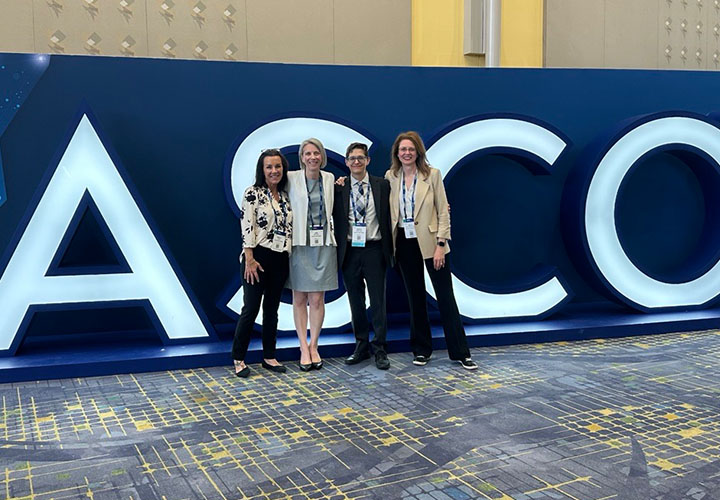
Each year, oncology professionals from around the world gather at the American Society of Clinical Oncology (ASCO) Annual Meeting to explore the latest advances in cancer research and treatment. Our team recently returned from this year’s conference with exciting insights and updates to share.
Updates to precision medicine and targeted therapy
At ASCO 2026, we continued to see advancements made in targeted therapies, including new options for rarer biomarker groups.
- ALK
Updated data from the CROWN trial underscored long-term progress. The data compared the ALK targeted therapy Lorbrena (lorlatinib) as a first treatment for ALK-positive non-small cell lung cancer (NSCLC) to an earlier generation of ALK targeted therapy, Xalkori (crizotinib). While the trial had previously demonstrated that lorlatinib led to better outcomes, new data showed that even 7 years after the trial started, many patients had still not experienced progression while taking lorlatinib. The median or “middle-ground” benefit of lorlatinib has still not been determined, which could mean a long treatment benefit. This exciting result affirms that with continued research, we are achieving better long-term outcomes than ever before in lung cancer.
- EGFR
In the WU-KONG 28 trial, we saw promising results from the EGFR Exon 20 targeted therapy Zegfrovy (sunvozertinib) as a first therapy (notable also given that sunvozertinib is a pill and other currently approved EGFR Exon 20 therapies are administered by IV).
- RET
The Libretto-432 trial showed that giving the RET targeted therapy Retevmo (selpercatinib) after surgery decreased the chance that the cancer would come back after being removed in people with RET-positive NSCLC. Trials like Libretto-432 serve as a reminder that receiving comprehensive biomarker testing is important for everyone who has lung cancer (regardless of stage) and that we may soon see additional targeted therapy options for early-stage NSCLC, beyond the already approved Tagrisso (osimertinib) (EGFR) and Alecensa (alectinib) (ALK). Data also demonstrated the new RET targeted therapy, lunbotinib, had promising effectiveness and could be an additional option for RET-positive NSCLC.
- ALK
The LORIN trial showed that giving the ALK-targeted therapy Lorbrena (lorlatinib) before surgery to patients with initially unresectable, early-stage ALK-positive NSCLC led to significant tumor shrinkage. As a result, 75% of participants became eligible for surgical removal of their cancer, highlighting the potential role of targeted therapies in expanding treatment options for patients with early-stage disease.
Immunotherapy innovations
The field of immunotherapy continues evolving in new directions, with several agents advancing in trials and coming closer to entering clinical practice. Two such drugs that were spotlighted at this year's meeting include ivonescimab and pumitamig. These are both bi-specific antibodies that attach to and block PD-1 and VEGF (a special protein that helps blood vessels grow).
- Invonescimab with chemotherapy
In the Harmoni-6 trial, invonescimab (with chemotherapy) was compared to a PD-L1 inhibitor called Tevimbra (tislelizumab) (also given with chemo) to see which combination would be a better treatment for people living with squamous cell NSCLC. The ivonescimab group had a 4-month improvement in overall survival (28 months compared to 24), and improvement was seen across all participants, regardless of their PD-L1 expression. This emphasizes the importance of having doctors test the tumor tissue to measure PD-L1 expression.
- BNT327/BMS-986545 (pumitamig)
In the RosettaLung-02 trial, people with squamous and non-squamous NSCLC were given this drug in the first line. There was a strong response among both groups, with non-squamous individuals responding 63.6% of the time, and squamous individuals responding 72.7% of the time. For those who did respond, all still showed stable or shrinking disease at 9 months.
- Combination therapies
The TRITON study showed the benefits of new drug combinations, especially for mutations that are prone to resistance. The study found that a combination of durvalumab Imfinzi (durvalumab), Paraplatin (carboplatin) or Platinol (cisplatin) plus Toposar (etoposide) chemotherapy, and the drug Imjudo (tremelimumab) can provide added benefit when administered in first line NSCLC. This trial found that people who had a STK11, KEAP1, or KRAS mutation were 15% more likely to respond to this combination when compared to the standard of care, chemotherapy plus Keytruda (pembrolizumab), at 48% vs. 33.3%.
Promising research for small cell lung cancer (SCLC)
Researchers continue to work on bridging the gap for people living with SCLC and brought updates on improving both treatment and quality of life.
- SCLC with brain metastasis
In the DELPHI-304 study of Imdelltra (tarlatamab), people who received it over chemotherapy were more likely to see their brain tumor(s) shrink by 30% or more (56% of people compared to 38%). They also found that a complete response was more likely with Imdelltra (tarlatamab), at 15% compared to 5% for chemotherapy. This offers an additional layer of protection and confidence for the many people with SCLC experiencing brain metastases.
- Risks and benefits of adding extra treatments
The TRIPLEX study evaluated whether there was a survival benefit to adding radiation therapy to treatment with chemoimmunotherapy in extensive-stage SCLC. This study found that people given concurrent radiation with their chemotherapy+immunotherapy had higher rates of side effects and mortality when compared to those who were on chemo and immunotherapy alone, but they did not have a longer survival time. Though this study did not find that added radiation was beneficial for these individuals, it teaches us how to optimize cancer care. By balancing the disease control rate of a medication with its side effect profile, we can work to provide care that will be well-tolerated and effective at the same time.
Want to learn more about takeaways and highlights from ASCO 2026? Don’t miss our dedicated Lung Cancer Living Room discussion on Tuesday, July 21. Text "LivingRoom" to 844-871-7558 to receive Living Room text reminders.
June 15, 2026
When Misty Shields was 13 years old, her father was diagnosed with small cell lung cancer (SCLC). He was 48. Within 2 years, he was gone.
That loss changed everything for her. While other teenagers were figuring out who they wanted to be, Misty was looking online to find out how to become an oncologist. She had found her purpose, even if it came wrapped in grief.
Today, Misty Shields, MD, PhD, is one of the leading researchers and clinicians working to make SCLC a more treatable disease. She sat down with GO2’s Chief Patient Officer, Danielle Hicks, at a recent Lung Cancer Living Room® to share what’s changing in the world of SCLC and why she believes real hope is finally within reach.
Watch the full Lung Cancer Living Room conversation with Dr. Misty Shields on SCLC below.
A disease that went decades without progress
For most of the last 50 years, the story of SCLC treatment hasn’t changed much. Chemotherapy was the main tool, and it often worked for a little while, but not for long or well enough. Unlike non-small cell lung cancer (NSCLC), which saw a wave of new targeted therapies and immunotherapies reshape outcomes over the past decade, SCLC lagged behind.
That personal history is part of why Dr. Shields pushed into this field. “SCLC has been neglected for a long time,” she said. “That’s not acceptable.”
The treatments that are changing the picture
The first real turning point came in 2018 and 2019, when the Food and Drug Administration (FDA) approved the first immunotherapy drugs for SCLC. Drugs like Tecentriq (atezolizumab) and Imfinzi (durvalumab) work by releasing the brakes on the immune system, helping it recognize and attack cancer cells. They are used alongside or after chemotherapy, depending on the stage of disease, and they are helping some people with SCLC live longer.
Then, in 2025, a new treatment for SCLC was approved by the FDA. Dr. Shields explained that Imdelltra (tarlatamab) is a drug that works in a completely different way. Think of it as a connector. It acts like glue between the immune system’s T-cells and the cancer cells, pulling them together so the immune system can do its job. This approach, called a T-cell engager, is now the standard second-line treatment for extensive-stage (stage 4 (IV)) SCLC. It represents the first major shift in what doctors reach for when cancer stops responding to first-line therapy.
SCLC isn’t one disease anymore
For decades, doctors treated all SCLC the same way. That’s also starting to change. Researchers have discovered that SCLC has distinct subtypes, or different versions of the disease that may behave differently and respond differently to treatment.
This is the same shift that happened in NSCLC years ago, and it opened the door to targeted therapies that dramatically improved outcomes for many people. The hope is that identifying SCLC subtypes will do the same. The work is still in early stages, but the direction is clear: the future of SCLC treatment will likely be more personalized, not one-size-fits-all.
Finding SCLC earlier and understanding it better
SCLC is often caught late, partly because it can grow and spread quickly. Researchers are now looking at new tools that could change that. Liquid biopsies, or blood tests that detect cancer cells or fragments of cells in the bloodstream, may help doctors diagnose SCLC earlier or track how the cancer changes over time. Multi-cancer early detection tests are also being studied to flag cancers such as SCLC before symptoms appear.
For a fast-moving disease like SCLC, finding cancer earlier could dramatically change outcomes.
Clinical trials: progress requires participation
Every treatment Dr. Shields discussed exists because people with lung cancer agreed to be part of a clinical trial. It’s worth saying that plainly, because trials are still widely misunderstood.
A clinical trial is not a last resort. It often means people gain access to the newest treatments before they are widely available. For people with SCLC, that access can matter enormously, especially because the disease tends to progress quickly.
People with SCLC often face barriers to joining trials, such as strict eligibility requirements, how fast the disease progresses, and the need to act quickly. Researchers know this is a problem. Many are now designing studies with more flexible rules and faster enrollment to make sure more people can participate. More participants mean faster answers, and faster answers mean better treatments for everyone who comes after.
“The nihilism is no longer welcome.”
Dr. Shields closed the conversation with a message she clearly feels deeply: “Never give up hope. The breakthrough might be just right around the corner. This is the new era for small cell lung cancer, and the nihilism is no longer welcome.”
For the 15-year-old who lost her father to this disease, that shift is personal. For the people living with SCLC today, it may be life changing.
If you would like to learn more about SCLC, have questions, or need support, our SCLC program can help. Contact our free HelpLine at 1-800-298-2436 or email support@go2.org.