
SCLC

Find practical advice, emotional support, and resources to help you or your loved one cope with the challenges of living with lung cancer.


January 14, 2026
Lung cancer is one of the most common cancers in the United States, with small cell lung cancer (SCLC) making up about 15 out of every 100 (15%) cases. Like many other types of cancer, lung cancer can spread to the brain and start growing there. This is especially common for SCLC. When this happens, it’s called brain metastases or brain mets. It’s not brain cancer; it’s lung cancer that has spread to the brain.
If you have a diagnosis of SCLC, your healthcare team may discuss the risk of brain metastases, ways to manage that risk, and your treatment options if brain mets occur. It’s important to understand all your choices and openly discuss any questions you have with your healthcare team. This helps you gain the information needed to make informed decisions about your care.
Managing your risk of SCLC brain metastases
There are ways you and your healthcare team can manage your risk of developing SCLC brain mets, including:
- Magnetic resonance imaging (MRI) scans
Regularly scheduled MRI scans are the best way to detect brain metastases early, when they are easier to treat. MRI scans use strong magnets to create highly detailed images of the brain. These scans can detect very small changes and are usually scheduled every 3 months. If brain mets are seen on your MRI, your healthcare team will discuss treatment options with you. - MRI scans and prophylactic cranial irradiation (PCI)
Depending on the stage of SCLC you are diagnosed with, your healthcare team may discuss PCI as an option. PCI is a low-dose radiation treatment given to the whole brain to lower the future risk of brain mets. Its goal is to destroy SCLC cells that may be present in the brain, which are too small to detect on MRI scans. PCI is only an option when your brain MRI shows no signs of cancer.
Brain mets can still develop even after PCI treatment, and there are risks of long-term side effects with PCI that can impact memory and other thinking skills. Talk to your healthcare team about the benefits and risks of PCI.
Managing SCLC brain metastases
If your MRI shows brain mets, your healthcare team will discuss your treatment options with you. These options depend on the location and number of metastases, when they are found, your previous treatments, and your overall health and personal goals. Treatment for brain mets can include:
- Whole-brain radiation (WBR) delivers radiation to the whole brain. Typically used when there are many brain metastases.
- Stereotactic radiosurgery (SRS) delivers focused beams of radiation to a specific area of the brain. Used when there is a limited number of brain metastases.
- Immunotherapy helps your immune system to find and destroy cancer cells. Some types of immunotherapy drugs can cross into the brain and destroy cancer cells located there.
- Surgery to remove brain mets may be an option, depending on the location and the number of metastases.
- Clinical trials are research studies done to determine whether a new treatment or combination of treatments is safe and effective. It’s always good to explore clinical trials and discuss your options with your healthcare team. For help finding clinical trials, contact our navigators through our free HelpLine 1-800-298-2436 or email support@go2.org.
Whole brain radiation (WBR) versus prophylactic cranial radiation (PCI)
Sometimes there is confusion between WBR and PCI. While they may sound similar, they are very different and are used for different reasons. Here’s a breakdown in simple terms.
WBR
- When
WBR is given when SCLC has already spread to the brain. - Why
The goal is to treat cancer that is already there. Radiation covers the entire brain to target both visible tumors and cancer cells that may not show up on scans. - What to expect
WBR usually occurs over several treatments, spaced over days or weeks. Common side effects can include fatigue, hair loss, memory or thinking changes, and skin irritation.
PCI
- When
PCI is given when scans do not detect cancer in the brain. It aims to prevent lung cancer from spreading there. PCI’s goal is to destroy SCLC cells that are too small to be seen on an MRI. - Why
The goal is prevention. By treating the whole brain early, PCI can lower the risk of lung cancer spreading to the brain. - What to expect
PCI is usually given in smaller total doses than WBR. Common side effects can be similar, such as fatigue and changes in memory and thinking skills.
The key difference
- WBR = treatment for brain metastases that already exist
- PCI = prevention, used before metastases appear, low-dose radiation
Summary
Understanding how SCLC can affect the brain and the ways to manage your brain health can help you feel more prepared and confident in your care. Having regular MRI scans and thoughtful discussions with your healthcare team about what is important to you in your care can result in an approach to managing SCLC that is just right for you.
If you’d like to learn more about SCLC, have questions, or need support, please contact our free HelpLine at 1-800-298-2436 or email support@go2.org.

July 17, 2025
For Sean, running wasn’t just a hobby, it was a way of life. His passion for running connected him with a community, gave him purpose, and helped shape his identity. A 9-time London Marathon finisher and dedicated fundraiser for the UK Teenage Cancer Trust, he has always used running as a way to give back and connect with others. In October 2024, Sean again completed the London Marathon, placing 6th in the male over-55 category with an impressive time of 2 hours, 48 minutes, and 34 seconds. He immediately started training for another race—a 10-miler where he hoped to finish in the UK top 5. True to form, Sean trained very hard. He loves a challenge and never does anything halfway. But during his training runs, he noticed something was off. His energy lagged, and he was struggling to breathe. On race day, he pushed through despite feeling breathless just a mile and a half in. Sean believes “you don’t achieve much in life if you don’t push yourself.” He finished the race in 60 minutes and 23 seconds—a very respectable time by most standards, but far below his usual performance. He was disappointed and blamed overtraining.
When breathing got hard
By New Year’s Eve 2024, Sean was struggling to catch his breath even during short runs and felt unusually weak during light activities like walking his dogs. Believing it might be asthma, he called his doctor and then went to the emergency department, where he had a chest X-ray that revealed an unusual area on his lung. Sean was sent home to wait for the scheduling of a CT scan that would provide more answers. In February 2025, after having the chest CT, Sean learned that he had extensive-stage small cell lung cancer (SCLC) and that it was terminal. The cancer originated in his lungs and had spread to his lymph nodes and pelvic bones. Later, he learned it had also reached his brain. This news devastated Sean, his wife Julie, their children, family, and friends. He had been healthy, fit, and active. Lung cancer had never crossed his mind. The news hit hard. “It felt like all of my dreams had been taken from me,” he said. “Not just running, but the lifestyle, the friendships, the mentoring, the fundraising...” Sean felt like he had lost what made him feel alive and connected. But Sean wasn’t ready to give up.
A powerful send-off—and a new challenge ahead
Before starting treatment, Sean wanted to do one last Park Run—a weekly, community 5K designed to promote health and well-being in the United Kingdom. He wore his England uniform (known as a kit in the UK) and showed up for what would be an unforgettable send-off. An extra 160 people came out to the Park Run that day to support Sean and to run behind him, cheering him on to the finish line. Julie waited at the finish line. Seeing her there meant the world to Sean. At the end of February, Sean began treatment—chemotherapy and immunotherapy, with plans for radiation therapy to his lungs and brain. Unfortunately, he stopped immunotherapy due to side effects, but still, he pressed on.
Finding new purpose
Running had given Sean’s life determination and value for a long time. Without it, he felt lost. Reinventing himself after a cancer diagnosis was frightening, but that began to change in April 2025 when he connected with the Roy Castle Lung Cancer Foundation in the UK. He joined their 30-day walk-a-mile-a-day challenge, and—true to form—he completed it in half the time. Sean’s connection to the Foundation deepened, and he found more ways to be involved, which renewed his sense of purpose and gave him a new path forward. “Having purpose is important,” he said. “It gets me through the hard days, because I know they won’t last forever.” Sean also credits his palliative care team for their support through the Inspire Program, which helps people create new physical or mental challenges to regain control of their lives after a cancer diagnosis. Through this program, Sean has discovered new goals to pursue, including looking forward to seeing the summer solstice sunrise and taking on the challenge of off-road walking.
What keeps him going
To Sean, lung cancer is like running a marathon—there are unexpected obstacles, but the key is to take it a mile at a time. “You can’t think about mile 26 when you’re at mile 1,” he explained. “If you focus on the end, it can break you.” He compares the unpredictability of cancer to the unpredictability of a race and things like rain, cramps, and fatigue. “You don’t know exactly what you’re preparing for, but you prepare anyway. You face it, you fight, and you carry on.” Sean will continue to push himself and challenge his limits, especially on tough days. On good days, he can look back on all he has accomplished and see evidence that cancer hasn’t defeated him.
Advice and reflections after a lung cancer diagnosis

Sean offers some wisdom to others diagnosed with lung cancer:
- Surround yourself with the kind of people who are good for you to be around.
- Stay true to who you are and put your energy into getting better.
- Get out of the house, go for a walk, and change the scenery. Even when it’s difficult.
Sean says, “I’m happy being me,” and feels like he “won at life” because he is making the most of each day and doing his best. When reflecting on what he is grateful for, Sean says he’s especially grateful for his family and how they are all pulling together with the same mindset. One of Sean’s favorite memories is when he received a text from his son after they attended an uphill running group together that read, “I didn’t know you were such a beast, Dad!” And so, Sean continues—1 mile at a time.

May 20, 2024
Jim Fackler lives in Lancaster, South Carolina, with his wife, Gail. He is a proud Vietnam veteran who served in the United States Navy. He enjoys golf, driving his pontoon on the lake, home improvement projects, and meeting with other veterans. Jim and his wife also love to travel and are planning a trip to Amsterdam and Belgium this summer.In September 2021, I was told I had stage 4 (IV) small cell lung cancer (SCLC). To say I was in shock doesn’t even begin to describe what I felt when I was given the news. After the initial diagnosis, further testing found that the cancer had spread to my hips, abdomen, and brain. Today, 2.5 years after my diagnosis, I’m very happy to say that the cancer appears to be gone from my brain, hips, and abdomen, with only a small node left in the lung.
My diagnosis
In July 2021, I started coughing and assumed it was just a summer cold. As time went on and the cough persisted and started affecting my sleep, I got in touch with my Veterans Administration (VA) doctor. We were still at the height of COVID-19, and the VA was not seeing patients in person, so we communicated via email. They thought my blood pressure medicine was the problem, so we changed medicines. When that didn’t work, they thought I had asthma and sent me an inhaler. At that point, because the coughing was getting more persistent, my wife felt it was time to find a private doctor to see me. As soon as my doctor heard my cough and listened to my lungs, he said he wanted to get a CT scan done. I will never forget the day I went in for the results. I had the CT scan on Sept. 1, and on Sept. 2, I was given the news I hoped I would never hear. It was apparent the minute the doctor walked into the exam room that the news was not going to be good. He said, “I'm sorry to tell you that you have stage 4 (IV) lung cancer.” I’m not sure what adjectives best describe what I felt at that moment, but disbelief and numbness are the first things that come to mind. Feeling like my world just came to an end and feeling scared and hopeless were just the beginning of a long string of emotions. I wasn’t sure how I was going to tell my wife. After being referred to an oncologist and going through a lot of tests to determine the extent of the cancer, my healthcare team sent me to a pulmonologist for some additional tests. He provided the first glimmer of hope when he told me that treatments have come a long way in the past few years. He told me that if I had received this diagnosis even 5 years earlier, I probably would not have long to live, but he felt optimistic that I had some good options with treatments that are available today. Turns out he was right.
Being a veteran with SCLC
If the VA had a process in place for annual CT scans of every veteran who served in Vietnam, they might have been able to catch my cancer at stage 1 (I) or stage 2 (II), and it might have been curable. For me, exposure to Agent Orange and having a history of smoking (even though I quit 25 years ago) increased my risk of developing lung cancer. Unfortunately, 50 years ago, no one knew that exposure to Agent Orange and cigarettes could cause cancer. I hope that sharing my story as a Vietnam Veteran with SCLC will impact members of Congress and the Senate who control lung cancer research funding. I want to impress upon them how important additional federal funding is to finding cures for this devastating disease and saving lives. My message for Congress and the Senate is: “I fought for my country; now I am asking my country to fight for me, other veterans, and lung cancer survivors.” We need to continue to find out why SCLC metastasizes (spreads) the way it does so that new drugs can be developed to combat the spreading of cancer cells throughout the body without the harsh side effects.
Living with lung cancer
Living with lung cancer has changed my life significantly. Both my wife and I have had to learn to live one day at a time because I do not know what tomorrow will be like for me. There is good news in all of this, though. My oncologist told me about a clinical trial in which he thought I would do well. Because I put a lot of trust in my oncologist, I agreed to participate in the program. After going through chemotherapy and radiation, I now go to the cancer institute every 3 weeks for an immunotherapy infusion. This has helped to keep the cancer at bay for now and has given me a longer life than the expected range for my diagnosis. I strongly believe that I am still here today because of the clinical trial drug I receive with these infusions. However, the cancer treatments I receive have come with side effects. I have lost my balance and am no longer stable on my feet. My speech has become slurred, making it difficult for me to communicate clearly. My appetite and energy are also affected but are minor, next to my speech and balance issues. I've lost more than 60 pounds since my diagnosis—not a weight loss plan I would recommend for anyone. Because of my treatment schedule, I live my life 3 weeks at a time. Plans for activities and vacations are scheduled around and must fit within the confines of my treatment plan. However, I am still staying active, traveling, and staying involved with lung cancer groups. Last year, my wife and I went to Switzerland for 3 weeks during the summer and then to the Christmas markets in Germany in December. This year, we already have travel plans for the summer and fall. You can live a good life with SCLC—you just have to plan a little differently and expect the unexpected. Living with lung cancer is difficult, but I'm very grateful I'm still here, and I'm thankful for my treatment. I’m not going to stop living my life because I have cancer. I am going to continue to fight every day and make it difficult for cancer to live with me.
Advice for others with the disease
- Get lung cancer screenings! I want people to know that lung cancer is the leading cause of death among cancers diagnosed today. It is curable if caught early enough. If you have a smoking history, get a cancer screening yearly, just like women do with mammograms. It is easy to do and only takes minutes. You go into a tube for less than 2 minutes, and you don’t even have to take your clothes off. Results are immediate and insurance covers the cost if you meet the criteria. Annual screenings equal early detection; early detection equals finding cancer earlier and being cured so you can live a long life. One of the messages I bring back to my veterans group is: “You guys must get screened! It is essential because you have been exposed to toxic chemicals.”
- Connect with others. Being around other lung cancer survivors gives you hope, especially when you find people who were diagnosed with lung cancer many years ago and are still here today to tell their stories. It's very inspiring. I met many people through the LiveLung SCLC group and at the GO2 Voices Summit. The people and organizations in the lung cancer community are absolutely fantastic. Those who run the organization, along with the members, are the kind of people you need to surround yourself with to know that you are not alone. They are there to help you through difficult times and understand what you are going through. They are your lifeline.
- Advocate. Being at the GO2 Voices Summit this year was worth every minute. All the time and effort people put into raising awareness and advocating for additional funding for lung cancer research makes me proud to be a very, very small part of the GO2 community. I plan to attend GO2's Voices Summit again next year. I will continue advocating and spreading the word about getting screened early, getting involved with other lung cancer survivors, and joining an organization like GO2 that gives encouragement and hope. Having hope is so very important. It reminds you that you are not alone and that there are many people out there researching and advocating for treatments and cures for you.
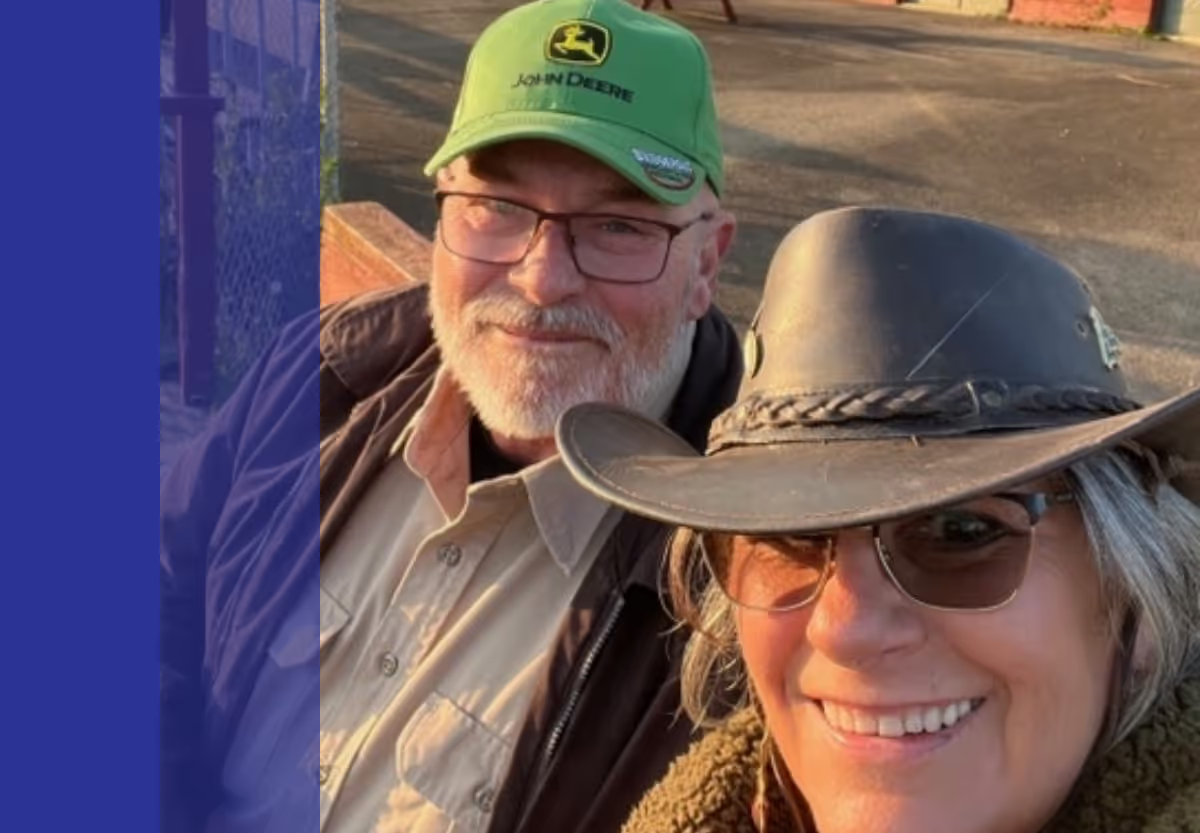
September 15, 2023
By Mike Knecht Mike Knecht retired from his career as an electrical contractor and business owner in 2019 and spent the following year traveling through the United States and Africa. In early 2023, he and his wife, Lois, sold their home in Maryland to live full-time in their vacation/retirement home in West Virginia. Mike enjoys a wide variety of activities from hobby farming on his 150-acre mountain-top property, to visiting his daughters and grandchildren on both coasts.
My diagnosis
In March of 2023, I was not feeling well. I was sluggish, easily fatigued, and was having recurring headaches. During my annual physical at the end of January, my blood work showed that my sodium level was a bit low, so my physician modified my medication to address it. The doctor said that I would need to take that prescription for a few weeks, get my blood work done again, and go from there. During those few weeks, I went to California to visit my daughter. While I was there, my headaches became more persistent, and my fatigue was constant. When I returned home, my sodium level was even lower. Within a few days, I went to an urgent care facility and the doctor took a chest X-ray because he was concerned that I might have pneumonia. The X-ray indicated a mass in the left side of my chest. The doctor said I should be admitted immediately to the hospital since my low sodium level put me at risk of having seizures. I spent seven days in the ICU trying to get my sodium level under control. They first did several scans and determined that I had lung cancer, but I had to wait to do a biopsy until my sodium level stabilized. The biopsy would determine the type of lung cancer I had and the treatment options.
Beginning treatment
My biopsy indicated I had small cell lung cancer (SCLC) and that I was at stage 3A (limited stage). I met with an oncologist at the Mary Babb Randolph Cancer Institute at West Virginia University Hospital who laid out my treatment plan. The oncologist recommended four three-day chemotherapy sessions that would take place three weeks apart and radiation. I also needed to meet with a radiation oncologist to determine the radiation treatments that would accompany the chemotherapy. The radiation oncologist gave me the choice of 30 once-a-day radiation treatments or 15 twice-a-day treatments. I opted for the twice-a-day regimen. Both doctors were very optimistic that I could be treated in a curative fashion and that with this regimen, my prognosis was very favorable. I had several side effects throughout my treatment but fortunately, none were unexpected, and all were relatively minor. The treatment and follow ups from my medical team were exceptional. I always felt I was in good hands and that they genuinely cared for me and my health.
Relying on my faith, family, and community
My SCLC diagnosis came as a shock to me, as I had been relatively healthy my whole life (66 years). It was not until my admittance to the ICU that I was ever admitted to a hospital. I am a spiritual person, and I drew strength from my beliefs. I never asked, “Why me?” or “How could this happen to me?” Instead, I knew that I was willing to do what I needed to do to beat this and to maintain the positive attitude I think is important in life.
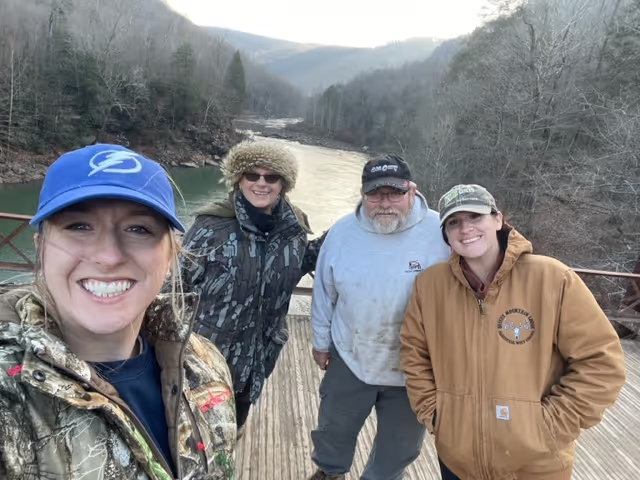
My family, while upset with my diagnosis, has been encouraging to me in every way. All three of my daughters came to West Virginia to help their mom, spend time with me, and accompany me to my treatments. The love of my family was instrumental in me being able to maintain a positive outlook and attitude. All through the treatment process, I also kept my circle of friends and family updated on how I was progressing. This wasn’t because I was looking for sympathy--but because I felt that people wanted to know how I was doing but might have been hesitant to ask for fear of hearing bad news. The concern my friends showed was astounding and gave me so much strength while I was in treatment. I also cannot discount the power of prayer for me. My church family placed me in daily prayer, as did many of my friends and family. I believe that the power of the prayers offered up by all of them and by myself were a huge part of my navigating the treatment path so well.
Learning about SCLC and connecting with GO2
After my initial diagnosis, I was able to learn more about SCLC than I ever thought I would. I spoke to my medical team and other healthcare professionals and read many articles that covered treatment processes and options, survival expectations, and personal stories. Learning about my diagnosis and treatment allowed me to better understand what my body was going through and helped me make better decisions about my treatment options. It also helped me to set realistic expectations about my treatment experience and the potential progression of the disease. At this time, I was also introduced by a friend in the medical profession to GO2 for Lung Cancer and Amy Kampschroeder who leads GO2’s SCLC program. I wish that would have occurred earlier in my cancer battle, as the encouragement and information that I gleaned from GO2 was quite helpful with its many resources.
Good news from my latest scans
On August 14, 2023, I underwent a CT scan and an MRI to determine how effective the treatments have been. I waited anxiously for a couple of days until my oncologist appointment to receive the results. I am happy to report that the cancer mass shrunk, and none was found anywhere else. I have since scheduled the preventative treatment known as Prophylactic Cranial Radiation (PCI) for October.
A realist’s new lease on life
I am a realist. I understand that this type of cancer may return, and that eventually it may become untreatable. However, I feel I have a new lease on life since my diagnosis. I have been given some more time to do things that are important to me: visit family and friends to let them know how much I value them, have fun, enjoy life, and help others. I have adopted the mantra that was expressed by musician and songwriter, Warren Zevon, when asked about how he handled his terminal diagnosis of mesothelioma 20 years ago. He told David Letterman in an interview that a diagnosis like that makes you "enjoy every sandwich.” When I first heard him say this, I thought we should always be that way, but life tends to overwhelm you with distractions, and we take too much for granted. It is my hope now that I don't let that happen to me.
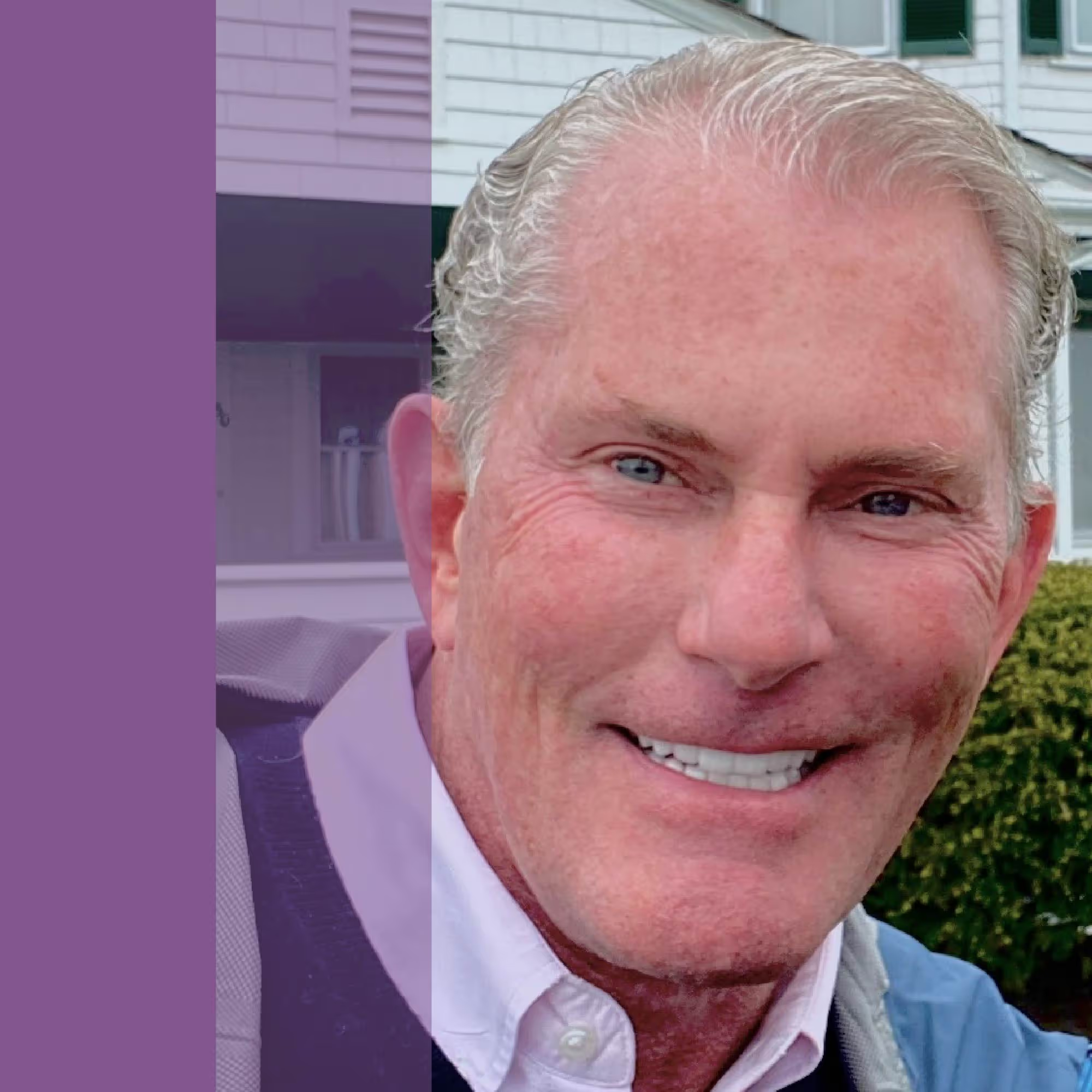
March 16, 2023

Tim is a small cell lung cancer (SCLC) survivor, but that’s just one small part of his story. Seven years ago, Tim went to his regular check-up with his primary care doctor and mentioned that he had a cough that wouldn’t go away. He had an x-ray, and a mass was found in his right lung that looked concerning. After more testing, Tim was diagnosed with SCLC. He had surgery to remove the right upper lobe of his lung and then started chemotherapy. These treatments were successful, and Tim is cancer-free to this day!Tim began his lung cancer experience with the unique perspective of surviving two previous, very serious health conditions. In the early 1980s, Tim discovered that he was infected with the virus that causes AIDS and within a few years, in declining health, he received a full blown AIDS diagnosis. Luckily, the FDA approved the very first drug to treat HIV/AIDS at this time. Tim received the new treatment, survived and recovered. Then, many years after his HIV diagnosis, Tim was diagnosed with stage III (3) non-Hodgkin’s lymphoma. Luckily, he was treated and survived that disease, as well. Fifteen years later, at 57 years old, Tim received his SCLC diagnosis.For Those Newly DiagnosedWhen asked what he would want those newly diagnosed with lung cancer to know, Tim said, “trust your gut if things don’t feel right” and "advocate for yourself and your care." When Tim’s SCLC was first discovered, he struggled to get information about his biopsy results which then delayed treatment plans. He was left with more questions than answers and most importantly, things just didn’t feel right to him. It was at that point Tim decided to transfer his care to a different cancer center in his area. Within two days he had a surgeon and a plan.It’s very important to feel comfortable with your healthcare team, be able to speak easily with them and get answers to questions and concerns. If this isn’t happening, it may be time to look elsewhere.Finding purpose Tim’s health history is frightening. Most people experiencing even one of these diagnoses would be devastated, as Tim was the time. He grew stronger and more resilient from these experiences, but it wasn’t always easy. Due to the long-term effects of his treatments, Tim had to retire from the work he loved. This left him feeling isolated, alone and without purpose. But with reflection, exercise, meditation and the ongoing support of his family and husband of fifteen years, Scott, in time, Tim found a new perspective and renewed purpose using his life experiences to help others. Tim is currently on the Patient Advisory Council at Dana Farber Cancer Center and advocates for improvements to the patient experience. He is also an advocate for the LGBTQ community and strives to increase awareness of clinical trials in minority populations.Tim believes that facing a huge life change like a major medical diagnosis can feel like a loss and grief can set in. He learned to move through these difficult periods step by step and piece by piece. Looking at the entire journey is overwhelming, but if you can focus on one thing at a time you’ll get through it. His mantra is, “do not give up. Keep going.”Tim has defied the odds through each of his diagnoses. He is a good example of the fact that every person will have their own experiences and outcomes, regardless of what statistics might say.Tim’s experience being successfully treated for HIV/AIDS is a good reminder of the hope that exists for lung cancer treatment. There weren’t any effective treatments for Tim when he was first diagnosed with HIV, but that is no longer the case. Thanks to new treatment options, most people can now live long, healthy lives after an HIV diagnosis. With limited treatments available for small cell lung cancer today, this is a reminder to remain hopeful. New treatments are being studied and advances in lung cancer care are coming more quickly now than ever before!
November 22, 2022

When Heidi Hanson was diagnosed with stage 4 metastatic small cell lung cancer (SCLC) in December 2021, it wasn’t the typical story. Heidi had been suffering from headaches and dizziness which sent her to the emergency room. It was there that she was told surgery was needed to remove a tumor on her brain. When doctors tested the tumor they discovered that her cancer started in her lungs - she had small cell lung cancer and it spread to her brain.This wasn’t the first time that Heidi heard the words, “you have cancer.” Earlier in life, she was successfully treated for unrelated breast and bladder cancers. With her signature energy and positivity, she jokingly says that she’s had the “3 Bs: breast, bladder and brain cancers.”Heidi’s been treated for her small cell lung cancer with chemo, radiation and an immunotherapy drug called Tecentriq. Her first follow-up PET scan showed only one spot on her lung, which was treated with radiation. Her second follow-up PET scan showed no evidence of disease! She’s currently continuing Tecentriq with close monitoring.We talked to Hanson about inspiration, where she finds strength and her advice for people who are newly diagnosed with lung cancer.Maintain a positive attitude, keep moving, and ask for help.Hanson believes you must be honest about how you’re feeling. “It’s okay to say you’re scared. It’s okay to say you don’t know how you feel. It’s okay to wallow around and feel depressed—but don’t stay there.” She notes that while it’s helpful to be positive, you have to give yourself permission to feel down every now and then.Hanson added that she also follows her doctor’s orders —eats small meals of healthy foods, drinks a lot of water, limits sweets and gets plenty of exercise. Hanson said, “No matter how I feel, I walk. Moving and exercise help to keep my body and mind healthy.”Most importantly, Hanson emphasized that you can’t fight lung cancer alone. “When people want to do something for you, let them,” she stressed. “And don’t be afraid to ask for help. Talk to a therapist or a good friend when you need support.”Do your research—and be your own advocate.“I’m not afraid of lung cancer,” said Hanson, “and I stand up for what I do and don’t want.”She explained that she did her research and chose a doctor she trusts. Her advice to others diagnosed with SCLC is to read and learn all you can so that you can walk into your doctor’s office with confidence—and your questions. “Find out where to get the best treatment, who is the best person to see, and how to get a second opinion,” she said. “You find peace of mind when you have the right care.”Live in the present.Hanson advises other people diagnosed with lung cancer to live in the present moment. “I’ve found it is best not to look too far into the future,” she said. “Just get up and go today. Take it one day at a time and don’t put off the things that are important to you.”We are excited to bring you more stories about living with lung cancer in upcoming issues of Your Community, including features about survivorship, wellness, and practical tips about living well with lung cancer. If you have ideas on topics or stories you’d like to read about here, please email yourcommunity@go2.org.
November 10, 2022
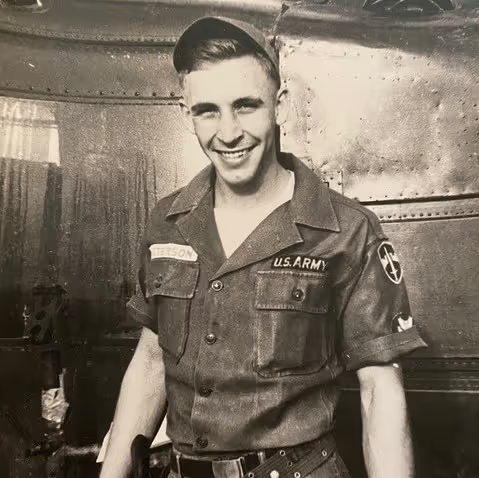
In 2019, Matt Peterson, a Vietnam veteran, was diagnosed with extensive-stage small cell lung cancer. He was told by his doctor, “This is a life-limiting diagnosis. You will not survive this.” Many people with small cell hear similar words or read information online that feels dire or hopeless, and then have to struggle their way out of that feeling. The truth is that we all have our own life stories and experiences that can’t be predicted or defined by statistics and data. When you have a small cell lung cancer diagnosis, your story is your own. You will have ups and downs, celebrations and lessons to learn, but you get to decide how to move through it. Here are a few thoughts from Matt and lessons learned along the way.Let people help.
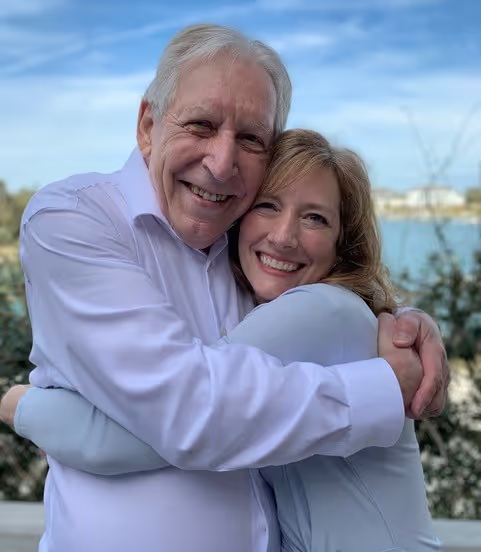
Matt has always been very independent. To admit that help was needed, and to allow people to help was extremely difficult. He’s learned through his experience that if you let others help you, it can be a gift to both the giver and the receiver. He says it’s about letting people show you who they are. If you turn people away who want to do something for you, you haven’t allowed them to be themselves. You make very special memories by opening up to people and those experiences.“It’s just a part of the process.” Resisting the things you can’t control makes everything harder. Losing hair, dealing with side effects and waiting for scan results are all just a part of the process. It’s not easy but if you keep stepping forward, you’ll eventually walk through it and it will be behind you. When things get hard, say to yourself or out loud: “It’s just a part of the process.”Focus on one step at a time with treatment. There is no need to look far into the future. Find a treatment team you trust and keep your thoughts in the present. At each treatment decision:
- Discuss your treatment options with your doctor
- Get a second opinion from an expert
- Then decide on the best treatment for you
Listen to your body and your instincts. Matt says in Vietnam, he had to rely on his instincts to survive and that mindset has always stayed with him. He listens to his instincts and what his body is telling him and talks to his doctor about anything that concerns him. You know your body better than anyone else. It’s important to share what you feel and know with the people who are managing your health.

Stay positive.Matt believes that keeping people around you who have positive energy and who are upbeat is the most important thing to do. Positive thinking helps the body and mind in more ways than we know and besides that, it just feels better. It’s okay to feel discouraged, disappointed or down sometimes, but it’s also good to know how to bring yourself out of those feelings. Laughter really can be the best medicine.On October 13, 2022, Matt Peterson passed away. His legacy and fight is continued by his daughter Amy Kampschroeder, MA OTR/L CHES, GO2’s Manager, Patient Outreach & Special Initiatives. Matt’s passing fuels our fight--and we hope it motivates you to take action by advocating for all those impacted by lung cancer.
April 25, 2022

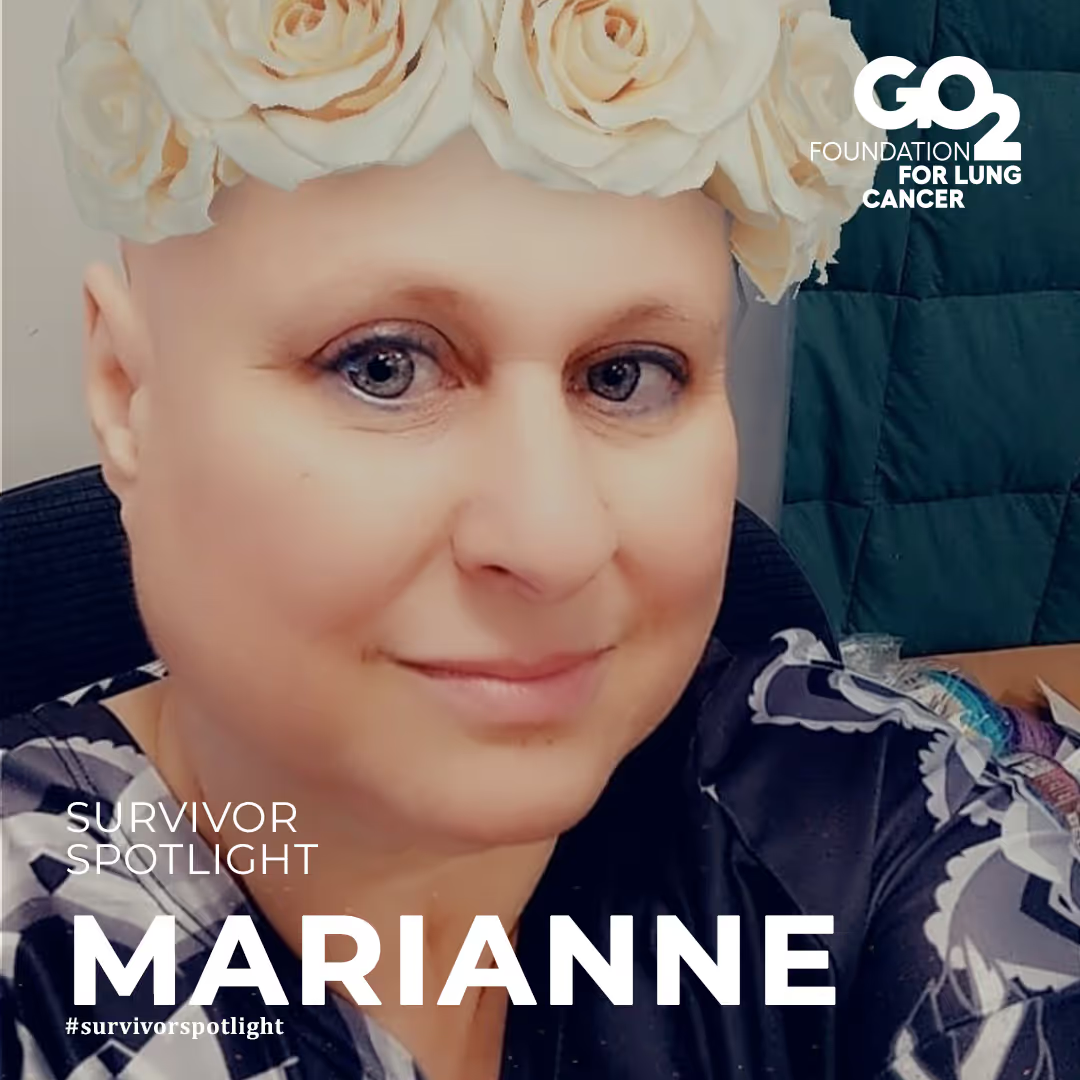
My name is Marianne Gordon. In 2008, at 41 years old, I was rushed to the emergency room after passing out due to a collapsed lung. I had been seeing my doctor prior to this because my blood pressure kept mysteriously dropping which was attributed to some sort of heart condition. Once I was seen in the ER, doctors discovered that I had small cell lung cancer (SCLC). A six centimeter tumor was pressing on my heart, causing my symptoms.Since my diagnosis, I have been in treatment except for a two-year break. I have been on my current treatment plan for almost two and a half years and am doing well. Throughout my journey I have leaned on my faith to hold on to hope, grace and love. Humor has also always helped me stay positive. Making others laugh or helping others lifts me up; it is empowering to feel useful.One time, I scratched out “terminal” cancer on my chart and my doctor asked, “What are you doing?”I said, “I’m scratching out ‘terminal’ and putting ‘chronic’ instead!”Advice I would give to someone newly diagnosed is to “doctor shop.” During the second year of my SCLC journey, I changed doctors and found my current doctor, who is the head of the tumor board and was an answer to my prayers. He decided to do radiation on my adrenal tumor and then surgery, which was not very common back then. Getting a second opinion is so important to make sure you’re able to weigh all your options. I would also recommend finding support, such as people from your family, church, or book club– it doesn’t matter where you find them, but you need close friends who you can call in the middle of the night. At church, before my diagnosis, I was known as Lucy’s daughter because I didn’t interact with people much. Now my mother is known as Marianne’s mother!My final piece of advice is don’t pay too much attention to the statistics. My doctor said I had a 5% survival rate, so I focused on traveling with my daughter and making memories with her. That was 13 years ago. Don’t go crazy with your finances because you could live a very long time! You are going to have good days and bad days. There will be days when you may panic. It’s okay. You don’t always have to be positive; you just have to rely on the supportive people in your life.
December 17, 2021

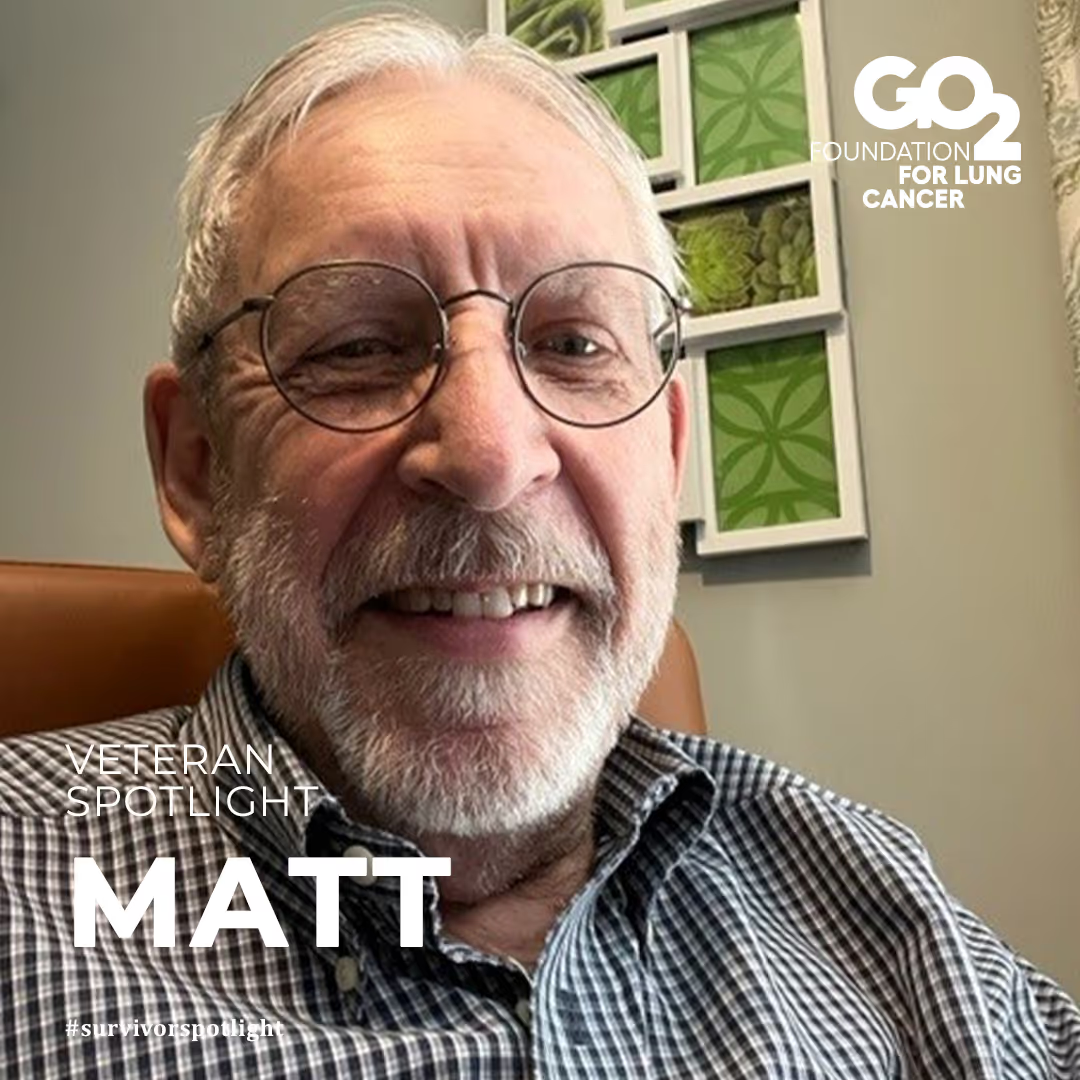
My name is Matt Peterson and I am a Vietnam veteran, father, and lung cancer survivor. After a single nodule was found in my lung in 2019, I was diagnosed with small cell lung cancer (SCLC). I was also diagnosed with diabetes. I’ve been through chemotherapy and immunotherapy, but after a while, they stopped working. Now I am getting radiation on the small amount of cancer that was seen on my last PET scan and all of my doctors are amazed by how well I am doing.Who I am now, and what I value, is very different than before my diagnosis. All of my relationships grew deeper, and people responded so differently than I thought they would. People came to visit from out of state, people called me, and the conversations were different. I learned that every day is an opportunity to live a better life. It’s not about the past. We are not living in the past, we are living today.I used to shut things out and take care of everything alone. I didn’t deal with any of my emotions because that’s the way I always managed things because of my PTSD. Since my diagnosis, I realized the most important things in life are family and friends. The constant love and care from my family and friends is getting me through this, has helped me to deal with all that is happening and has completely changed how I view life.My advice to someone newly diagnosed with lung cancer is to be open and welcoming to those who care about you. Your loved ones may need support, too. They may need to digest what is happening to you before they can be supportive.You will have to figure out how to live with cancer. Take one day at a time. Be positive, think positive thoughts, do positive things. I have moments when I feel discouraged, tired, and weary of treatment, but my choice is to live every day the best that I can. I may not feel as good as I would like, but I want to live the life that I have, not the life that I had.Learn everything you can about your disease and get the best medical team that you can. Get a second opinion from a lung specialist and look at all available options. Get someone to explain your diagnosis, data, and test results so you can best manage going forward. Ask yourself: what can I do and what is MY role? Don’t just surrender to your doctor. These decisions are yours.If you are a veteran diagnosed with lung cancer, you are not alone and we can help. Please contact our HelpLine at 1-800-298-2436 or support@go2.org. support@go2.org.