
Lung cancer remains the leading cause of cancer death in the United States. According to the National Institute of Health, about 12 out of every 100 cancers diagnosed in the U.S. are lung cancer. While these lung cancer facts may seem daunting, it's important to understand the facts about lung cancer to make informed decisions about screening, prevention, and treatment.

Key facts about lung cancer types
There are 2 main types of lung cancer: non-small cell lung cancer (NSCLC) and small cell lung cancer (SCLC). For every 100 people diagnosed with lung cancer, approximately 85 will have NSCLC and 15 will have SCLC.
There are 3 main types of NSCLC: adenocarcinoma, squamous cell carcinoma, and large cell carcinoma.
For every 100 people diagnosed with NSCLC, approximately:
- 40 will have adenocarcinoma
- 25 will have squamous cell carcinoma
- 10 will have large cell carcinoma
- 25 will have other less common types
Demographics and risk factors
Demographics for lung cancer include:
Lung cancer is most often diagnosed in people older than 65 years of age.
Males and females have a similar risk of developing lung cancer during their lifetime.
Women have a higher risk of developing lung cancer compared to men in the under-50 age group and in those who have never smoked.
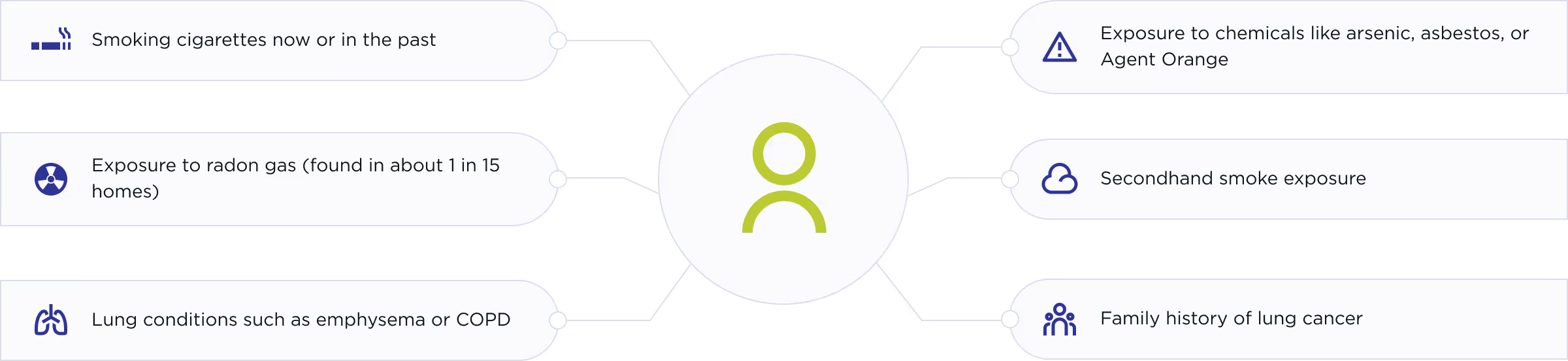
Key risk factors for lung cancer include:

Early detection and screening
The US Preventive Services Task Force recommends annual lung cancer screening for:
- Adults aged 50-80 years, and
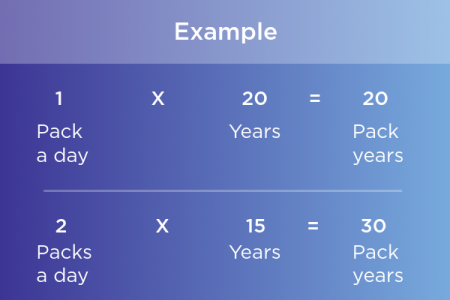
- Those with a 20-pack-year smoking history, and
- People who currently smoke or those who quit within the past 15 years
Assess risk for you or a loved one with our pack year calculator.
- Only low-dose CT (LDCT) scans are proven effective for lung cancer screening
- Chest X-rays should not be used for screening purposes

Racial and ethnic differences
- Access to screening, biomarker testing, and clinical trials varies significantly among different populations
- Studies show lower screening rates and later-stage diagnoses in underserved communities
- GO2 for Lung Cancer works to address these disparities through community outreach programs, navigation services, and advocacy
Research and hope
- More new treatments are being studied and approved than ever before
- Clinical trials are offering access to promising new therapies
- The GO2 Lung Cancer Registry is gathering real-world data to improve care
- Support services and resources continue expanding to meet the needs of the community

Education and support
Learn about lung cancer’s impact from our lung cancer fact sheets, available for download:
Young adults
Asian Americans
Black Americans
American Indian and Alaska Natives
Women
Military men and women
General lung cancer facts
Lung cancer research funding
Lung cancer screening
Questions about lung cancer? We are here to help. Contact our HelpLine at 1-800-298-2436 or email support@go2.org.