
Cancer that starts in the lungs is called lung cancer. It occurs when healthy cells in the lungs change or become damaged, and the damaged cells begin to grow out of control and spread.
Damage to cells in the lungs can be caused by exposure to toxins in the environment like smoke or radon, but it can also occur for unknown reasons during the normal process of cell division. Your entire body constantly produces new cells and each cell has a function. Inside each cell is a guide called DNA (deoxyribonucleic acid) that instructs the cell how to do its job. When new lung cells are formed, sometimes mistakes are made and the DNA is damaged. When these cells divide or double, they make more damaged cells and grow and spread out of control. This is cancer.
Process of cancer cell development


Cancer is named according to where it starts in the body. For example, cancer that starts in the breast is breast cancer. Cancer that starts in the lungs is lung cancer. Sometimes, cancer cells from the lung break away and travel to other parts of the body, like the liver or brain, and begin to grow there. These areas of spread are called metastasis or mets. No matter where in the body lung cancer spreads and grows, it is still called lung cancer.
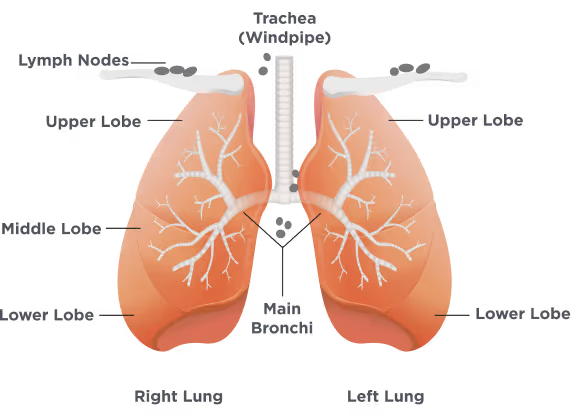
The lungs
How do lungs work?
Knowing the parts of your lungs and the basics of how they work can help you better understand lung cancer and its treatments. It also empowers you to have informed discussions with your healthcare team and be more involved in decisions about your care.
Your lungs are 2 sponge-like organs in your chest. The right lung has 3 lobes (sections) and the left lung has 2 lobes. When you breathe, air enters your mouth and nose and then into your lungs through the trachea (windpipe). The trachea divides into 2 tubes called the bronchi, which enter each lung and divide into smaller branches called bronchioles. At the end of the bronchioles are tiny air sacs known as alveoli. When the air you breathe travels down into these air sacs, oxygen can cross into your bloodstream and be carried through the rest of your body.
Causes of lung cancer
Some causes of lung cancer are well known, while others continue to be studied. A risk factor is something that increases the chance of a disease occurring.
Known risk factors for lung cancer include:
- Being exposed to heavy metals and chemicals such as arsenic, asbestos, beryllium, uranium, and Agent Orange.
- Being exposed to secondhand smoke.
- Smoking cigarettes now or in the past.
- Being exposed to radon gas. Radon is a gas that has no smell, taste, or color that occurs naturally in soil and rocks and seeps into the air through groundwater.
- Having other lung illnesses such as emphysema, chronic obstructive pulmonary disease (COPD), or pulmonary fibrosis.
- Having a family history of lung cancer.
If you smoke, quitting is one of the most important things you can do for your health. Even if you have lung cancer, quitting or cutting back on how much you smoke can improve how you respond to treatment. If you want to quit, your healthcare team can help you.
According to the National Cancer Institute (NCI), radon gas occurs at very low levels outdoors and is only a risk when high levels are inhaled in a closed space such as a building or home. One out of every 15 homes have too-high radon levels. Visit the CDC website to learn how to get your home tested.
Types of lung cancer
There are 2 main types of lung cancer.
For every 100 people diagnosed with lung cancer, approximately 85 will have NSCLC and 15 will have SCLC.
For every 100 people diagnosed with NSCLC, 40 will be diagnosed with adenocarcinoma, 25 with squamous cell carcinoma, 10 with large cell carcinoma, and the remaining with other less common types.
Non-small cell lung cancer (NSCLC)
NSCLC is the most common type of lung cancer. The 3 most common subtypes of NSCLC include:
- Adenocarcinoma: The most common subtype of NSCLC. It begins in the tissue that lines the outside of the lungs.
- Squamous cell carcinoma: The next most common subtype of NSCLC. It begins inside the lungs in the thin, flat cells that line the breathing tubes.
- Large cell carcinoma: The third most common subtype of NSCLC. It often begins in the outer regions of the lungs.
Knowing the subtype of NSCLC helps your healthcare team find the best treatment options for you. There are other types of NSCLC that are less common.
Small cell lung cancer (SCLC)
SCLC is named for the small, oval-shaped cancer cells seen under a microscope. It often starts in the breathing tubes known as bronchi in the center of the chest and spreads quickly, sometimes before any symptoms are noticed. This type of lung cancer is most often diagnosed at a later stage.
SCLC is a less common type of lung cancer that occurs in approximately 15 out of every 100 lung cancers (15%). It affects more men than women, and smoking is the biggest risk factor. In people who have never smoked, it tends to happen to people with family members who have also been diagnosed with SCLC.
In rare cases, NSCLC cells change into SCLC. When this happens, it’s called transformed small cell lung cancer (tSCLC). Researchers are studying why this type of change happens in some people and not others. This data will help researchers understand what causes tSCLC, which can lead to more treatment options.

Symptoms of lung cancer
It is important to know the signs and symptoms of lung cancer. A sign is something that can be seen by someone else; for example, a rash is a sign. A symptom is something that cannot be seen by someone else but must be described by the person; for example, a headache is a symptom. Early lung cancer may not have any signs or symptoms. As lung cancer progresses, signs and symptoms may develop.
Possible signs and symptoms of lung cancer may include:
- A cough that doesn’t go away
- Shortness of breath that is not caused by activity
- Wheezing that is not caused by an illness
- Coughing up blood
- Pain in the chest or shoulder
- A hoarse voice or other change in the voice
- Feeling tired all the time
- Weight loss with no known cause
- Headaches
- Painful lumps in the neck, armpits, or groin
These signs and symptoms can be caused by other diseases or conditions and may not be lung cancer. However, you should visit your healthcare team right away if you have many of these signs and symptoms.
If your healthcare team suspects you have lung cancer, they will order diagnostic tests to get a detailed view of your body and determine whether cancer is present. If cancer is found, additional tests may be ordered to determine the cancer’s exact type and stage.
Lung cancer treatment options
Treatment for lung cancer can include one or more therapies depending on the type of lung cancer, stage, biomarker test results, as well as overall health. Lung cancer treatment may include one or more of the treatment types shown in the table.

Lowering your risk for lung cancer
Lung cancer cannot always be prevented. However, there are actions you can take to lower your risk by making changes to your lifestyle and environment. For example:
- Quitting smoking is the best action you can take to improve your long-term health and reduce your risk of developing lung cancer. In addition, it helps protect your loved ones from exposure to secondhand smoke.
- Radon is a gas that has no smell, taste, or color and is the second leading cause of lung cancer. This gas occurs naturally in soil and rocks and seeps into the air through groundwater. Testing your home’s radon levels can be done with a simple at-home test and is an important step in reducing your lung cancer risk. Learn more about how to reduce radon levels in your home.
Our research on lung cancer
Research helps improve outcomes and changes lives. We are committed to better understand lung cancer through our research studies and the Lung Cancer Registry.
GO2 is creating real results for people at risk and living with lung cancer and their loved ones. If you’re interested in learning more about the work GO2 is doing in the lung cancer field, connect with one of our LungMATCH treatment and trial navigators. You can also stay up to date on the latest scientific news from GO2 by subscribing to our email newsletters!


.avif)
Lung cancer resources and information
GO2 is your go-to for lung cancer support and resources, including:
- One-on-one guidance through our HelpLine at 1-800-298-2436 or support@go2.org.
- Information on lung cancer risk factors and screening
- Questions for your healthcare team
- Finding quality cancer centers such as those in GO2’s Center of Excellence Network
- Educational resources and a glossary of lung cancer terms you may hear
- Personalized treatment and trial navigation through LungMATCH
- Types of assistance and local resources
- Facts about lung cancer
- Tips on managing lung cancer stigma
Frequently asked questions
What is the difference between non-small cell lung cancer (NSCLC) and small cell lung cancer (SCLC)?
NSCLC and SCLC are the 2 main types of lung cancer. They do not look the same under a microscope and behave differently. NSCLC is the more common type and is typically slower-growing, with multiple subtypes. In contrast, SCLC is less common and typically grows faster. Researchers are currently studying subtypes of SCLC.
What is the difference in treatments for non-small cell lung cancer (NSCLC) and small cell lung cancer (SCLC)?
Treatment for NSCLC is based on its stage, subtype, biomarker test results, and other health factors. Treatment for SCLC is based on its stage and other health factors. Researchers are currently studying SCLC subtypes and biomarkers to expand the scope of new treatment options.
Where can I find support and resources for lung cancer?
Contact the GO2 HelpLine at 1-800-298-2436 or email support@go2.org to connect with caring and highly trained staff who listen, answer your questions, and provide support. In addition to our HelpLine, we have free educational materials that can be downloaded or ordered from our online store. You can also join our Phone Buddy program to connect with someone who is living with lung cancer or Gathering HOPE for group support.