global
Variables
Utilities
CUSTOM STYLES

Types of Lung Cancer

The type of lung cancer is a factor your healthcare team will consider when developing the best treatment approach. There are 2 main types of lung cancer: non-small cell lung cancer (NSCLC) and small cell lung cancer (SCLC). For every 100 people diagnosed with lung cancer, 85 will have NSCLC and 15 will have SCLC.

Understanding the specific type of lung cancer you are being treated for empowers you to have informed conversations and be an active member of your team.
Select a type of lung cancer

NSCLC

Non-small cell lung cancer (NSCLC) is the most common form of lung cancer. It tends to grow and spread more slowly than small cell lung cancer (SCLC).

NSCLC is usually diagnosed through imaging tests like CT scans, followed by a biopsy to examine the cancer cells under a microscope. Your healthcare team will also test for specific biomarkers that can help determine the most effective treatment for you.

Treatment options for NSCLC may include surgery, radiation therapy, chemotherapy, targeted therapy, and immunotherapy. The best treatment plan depends on several factors, including the stage of cancer, your overall health, and your biomarker test results.

For every 100 people diagnosed with NSCLC, 40 will be diagnosed with adenocarcinoma, 25 with squamous cell carcinoma, 10 with large cell carcinoma, and the remaining with other less common types.

Subtypes of NSCLC

There are several subtypes of NSCLC; however, the 3 most common subtypes include:

  • Adenocarcinoma is the most common subtype of all lung cancers. It begins in the cells that line the outer parts of the lung.
  • Squamous cell carcinoma is the second most common subtype. It starts in the thin, flat cells that line the larger airways (bronchi).
  • Large cell carcinoma is the least common of these 3 subtypes. It can start in any part of the lung and tends to grow and spread quickly.

SCLC

It is estimated SCLC accounts for 15 out of every 100 lung cancer diagnoses. It is named for the small, round cancer cells seen under a microscope. SCLC often starts in the breathing tubes (bronchi) in the center of the chest and tends to grow and spread more quickly than NSCLC. Because of this rapid growth, SCLC is often diagnosed at a later stage.

SCLC is usually diagnosed through imaging tests like CT scans, followed by a biopsy, to examine the cancer cells under a microscope.

Treatment options for SCLC may include surgery, radiation therapy, chemotherapy, and immunotherapy. The best treatment plan depends on several factors, including the stage of cancer and your overall health.

Less common types of lung cancer

There are several less common types of lung cancer, subtypes of NSCLC, and tumors that are not lung cancer but can affect the lungs. If you are diagnosed with a less common type that isn’t included in the following list and you would like more information, contact our HelpLine at 1-800-298-2436 or email support@go2.org. You’ll connect with caring and highly trained staff who will listen, answer your questions, and provide you with support and guidance.

Transformed small cell lung cancer

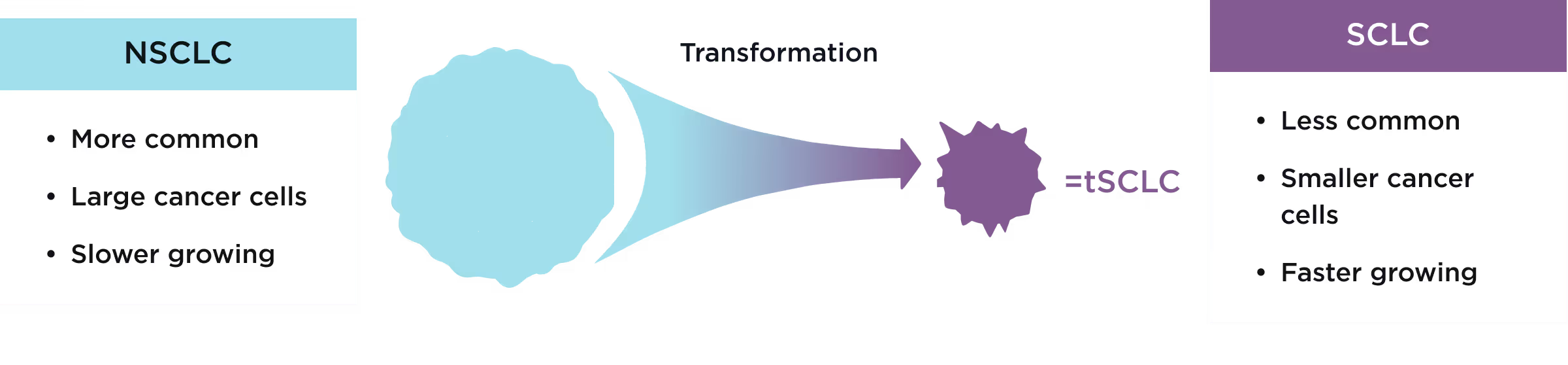
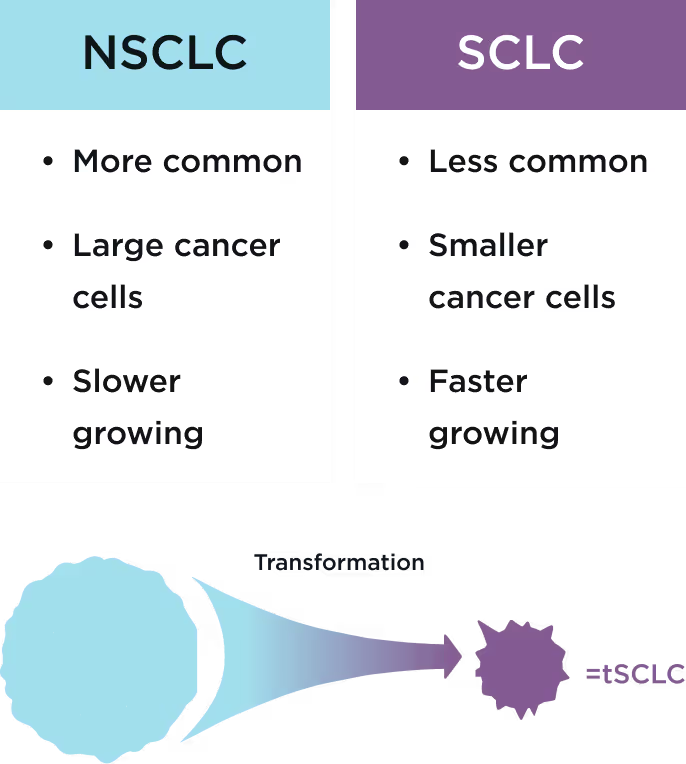
In rare cases, NSCLC cells change into SCLC cells. When this happens, it’s called transformed small cell lung cancer (tSCLC).

Diagram comparing NSCLC and SCLC lung cancer types: NSCLC is more common with large, slower-growing cells; SCLC is less common with smaller, faster-growing cells; transformation to tSCLC indicated.Comparison chart showing NSCLC as more common with large, slower-growing cancer cells, and SCLC as less common with smaller, faster-growing cancer cells; illustration of NSCLC cell transforming into tSCLC cell.

Researchers are studying to learn why this change occurs in some people but not others. This data helps researchers learn what causes tSCLC, which can lead to more treatment options. Current studies show that tSCLC most often occurs in people whose tumors have an EGFR biomarker and who are treated with certain drugs. But tSCLC can also occur in lung cancer that has other biomarkers.

tSCLC can have both NSCLC and SCLC cells as it transforms. For that reason, 1 treatment or a combination of treatments may be used to treat both cell types. Treatment decisions are based on your most recent biopsy results and your specific health needs.

Pancoast tumors

Pancoast tumors are a type of lung cancer that occurs in the apex or very top of either lung near the spine and a large group of nerves called the brachial plexus. Due to their specific location and symptoms, Pancoast tumors can compress nerves and blood vessels, causing shoulder pain, arm weakness, and nerve-related symptoms on the same side of the body as the tumor. This group of symptoms is sometimes called “Pancoast syndrome.”

Pancoast tumors can also cause Horner’s syndrome, which includes drooping of the eyelid, reduced pupil size, and lack of sweating on 1 side of the face. These symptoms occur when the tumor presses on nerves in the chest.

Almost all Pancoast tumors are NSCLC, but in very rare cases, they can be SCLC. Treatment for Pancoast tumors is often based on the type of tumor (NSCLC/SCLC), but may vary depending on the exact location and size.

Other tumor types that can affect the lungs

There are also several types of cancers that are not lung cancer, but they can affect the lungs.

  • Mesothelioma is caused by being exposed to asbestos. It starts in the tissue that lines some organs including the lungs. For more information on this disease, visit Mesothelioma Applied Research Foundation.
  • Carcinoid tumors begin in endocrine cells and often grow slowly. These cells put out hormones and line organs like the small intestines and lungs. Carcinoid tumors are often called endocrine tumors. For more information on carcinoid tumors, visit the Carcinoid Cancer Foundation.
  • Sarcoma begins in soft tissue throughout the body, so it can also be found in the lungs. For more information on sarcoma, visit the Sarcoma Foundation of America.

Frequently asked questions

Where can I find more resources and support?

Contact the GO2 HelpLine at 1-800-298-2436 or email support@go2.org to connect with caring and highly trained staff who listen, answer your questions, and provide support.  We offer many free programs and educational resources to meet your needs.

What is the most common type of lung cancer?

The most common type of lung cancer is non-small cell lung cancer (NSCLC). For every 100 people diagnosed with lung cancer, 85 (85%) will have NSCLC. The second most common type is small cell lung cancer (SCLC). Small cell lung cancer accounts for 15 out of every 100 (15%) lung cancer diagnoses.

How does my doctor know what type of lung cancer I have?

A biopsy is performed to determine whether lung cancer is present and to determine the type of lung cancer. During a biopsy, small pieces of tissue or fluids are removed from the body and examined by a pathologist. If NSCLC is diagnosed, comprehensive biomarker testing should also be performed to determine what biomarkers are present. The type of lung cancer and whether certain biomarkers are present are 2 key pieces of information used to make treatment decisions.

Can I have more than 1 type of lung cancer at the same time?

Yes, in very rare cases, more than 1 type of lung cancer can be found during a biopsy. When this occurs, your healthcare team will look closely at the types of cancer and determine how to best treat it.