
“Get Rid of the Mothership,” and Why Surgery Still Matters in Stage 4 (IV) Lung Cancer: Glen’s Story
March 3, 2026

Glen lives in Hercules, CA with his Yorkie, Kuma, where he moved in 2021 to be closer to family and friends. After nearly 20 years working in the probation department, he retired at the beginning of the pandemic and began volunteering at the East Bay SPCA. What started as a way to give back quickly turned into a full-time job. These days, you’ll often find him on his daily walk to Starbucks or visiting his mom, who lives just 15 minutes away.
Jeffrey B. Velotta, MD, FACS is a thoracic surgeon at Kaiser Permanente’s Oakland Medical Center, a Clinical Professor in the Department of Clinical Science at Kaiser Permanente’s Bernard J. Tyson School of Medicine, and a clinical assistant professor in the Department of Surgery the UCSF School of Medicine. Dr. Velotta went to medical school at George Washington University. He then completed his general surgery residency at UCLA Medical Center. During this time, Dr. Velotta also completed his postdoctoral research in the Department of Cardiothoracic Surgery at Stanford University School of Medicine. Following this, he completed his training in Cardiothoracic Surgery at Brigham and Women’s Hospital and Harvard Medical School. Dr. Velotta’s clinical and research interests involve innovative techniques and regionalization pathways for all thoracic cancers and improving lung cancer screening in at-risk populations.
When Glen first noticed chest pain in the fall of 2024, lung cancer wasn’t on his radar. He was in physical therapy at the time and assumed the discomfort was muscular and temporary. But 1 test led to another, and by December, an X-ray raised concerns that couldn’t be ignored.
On December 24, 2024, Glen had a biopsy. Four days later, he received a phone call confirming cancer.
“I didn’t know what stage I was or much about what I was even being diagnosed with,” Glen recalls. “I just know it turned my world upside down.”
Glen didn’t have a smoking history, and there was no history of lung cancer in his family. Yet here he was, grappling with a diagnosis he never expected and didn’t yet fully understand.
Hearing the worst news, but not much else
Glen remembers little of the conversation that followed his diagnosis. His oncologist delivered the news with compassion, giving him permission to react however he needed.
“She said, I’m telling you the worst news I could possibly tell you. It’s okay if you get upset, scream, or cry. I’m here,” he says.
But like many patients in that moment, Glen fixated on 1 question: How long do I have to live? “I wasn’t really hearing anything else,” he says. “My best friend was with me, taking notes. I’m glad she was there because I don’t remember much of what was said. I could only think about my prognosis.”
In the days that followed, Glen did what so many people do, he went online. And almost immediately, he regretted it. “That was the worst thing I could do,” he says. “You Google stage 4 (IV) lung cancer and life expectancy, and the first article you see tells you that this is really bad news. You don’t even need to read the rest.”
Treatment, side effects, and a growing sense of fear
Glen began treatment quickly. His first regimen included radiation to his brain and chest and an infusion therapy that caused repeated breathing reactions. After 4 reactions across 2 sessions, his care team stopped the drug. He later transitioned to Tagrisso (osimertinib), which he is still on today and has tolerated much better.
But emotionally, Glen was spiraling. He describes himself as generally relatively pessimistic by nature, and the statistics he’d read didn’t help. He began quietly preparing for the end, updating legal documents, organizing passwords, and making sure his affairs were in order.
A parking lot, a 5K, and an unexpected meeting
Everything began to shift at GO2’s San Francisco 5K Walk/Run. Glen attended the event almost on a whim after finding information about it online. He arrived early, sat in his car, and debated leaving. Eventually, he got out and walked toward the event, unsure why everyone seemed so happy. “This is a cancer walk,” he remembers thinking. “Why is everyone smiling?”
A volunteer noticed he wasn’t okay and introduced him to GO2’s Senior Manager, Support Programs and Events, Michele Zeh. As Glen shared how bleak he was feeling, she pointed around the room. “This person has 10 years since their diagnosis. That person has 8,” she told him.
“And I’m thinking, how is that possible? I thought people never lived that long,” Glen says.
Then Michele asked a simple question: “Do you know Dr. Velotta?”
Glen didn’t. But meeting him was about to change his life.
“Let’s get rid of the mothership”
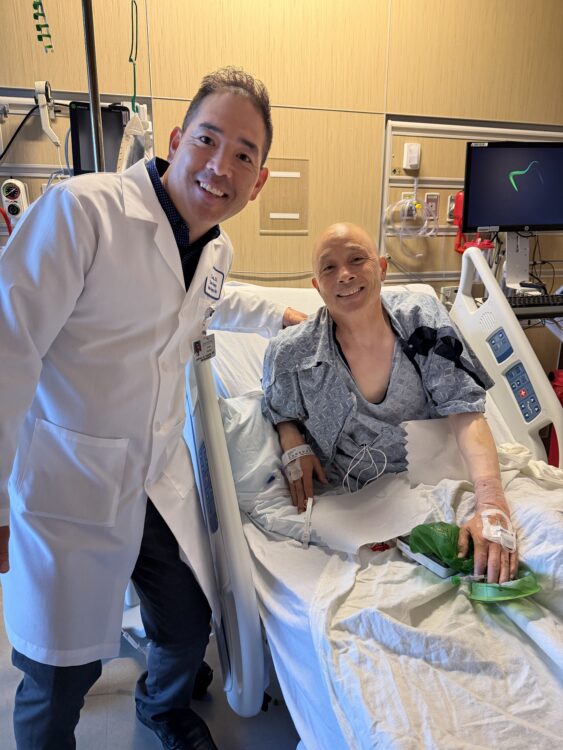
Dr. Jeffrey Velotta is a thoracic surgeon at Kaiser Permanente in Northern California, and one of only a small number of surgeons in the country willing to seriously consider surgery for patients with stage 4 (IV) lung cancer.
When Glen met him, the conversation felt different immediately. “He really cared,” Glen says. “I could tell right away how passionate he was about lung cancer and about the people who have it. It made me feel good.”
Dr. Velotta reviewed Glen’s scans and told him that he could be a good candidate for surgery, a treatment that might help his prognosis despite his stage 4 (IV) diagnosis. He explained his thinking using an analogy that stuck.
“We’ll get rid of the mothership,” he said.
The primary tumor, Dr. Velotta explained, was like a command center that was sending cancer cells elsewhere. If Glen’s metastatic disease was controlled with medication, removing the original tumor could still slow or stop future progression.
“The approach made sense to me,” Glen says. “You’re radiating my brain and my bones but you’re leaving where it all started? Why not get rid of that, too?”
Why surgery for stage 4 (IV) is still so controversial
Dr. Velotta is blunt about how unusual his approach still is. “I don’t think every patient with stage 4 (IV) lung cancer should have surgery,” he says. “But I absolutely believe that some should, including many more than most doctors currently consider.”
In addition to being younger, healthier, and generally fit, the key factor that makes someone a good candidate, he explains, isn’t the extent of the disease or the number of metastases, but whether disease outside the lung is controlled.
“Glen had multiple spots in his brain, bones, and elsewhere,” Dr. Velotta explains. “But his cancer was well-controlled through a tyrosine kinase inhibitor (TKI). That’s what people call ‘polymetastatic’ disease. Most surgery trials exclude patients like that. But that’s actually the majority of people with stage 4 (IV) lung cancer.”
Clinical trials, he notes, tend to focus on patients with 1 or 2 metastases, not because others can’t benefit, but because trials are designed to show clean, easily publishable results. This disconnect, he believes, is 1 of the reasons surgery remains underused for people with advanced disease. “That leaves most patients out,” he says. “And it leaves surgeons hesitant.”
A lonely position in the field
Even today, Dr. Velotta says the prevailing mindset around surgery for stage 4 (IV) lung cancer hasn’t shifted much. “The thinking is that it’s too little, too late. We’ve missed the chance to help these patients surgically. The idea is that the cat’s already out of the bag,” he says.
That assumption, that surgery can’t help once cancer has spread, is something he pushes back against constantly. “People get freaked out by polymetastatic disease,” he says. “They see multiple spots and think, ‘Oh my God, they’re everywhere.’ But if those spots are controlled, it doesn’t matter how many there are. Those patients can still benefit.”
Dr. Velotta acknowledges that his willingness to operate in these cases often puts him at odds with colleagues. “There is a stigma associated with operating on stage 4 (IV) lung cancer,” he says.
Even within his own health system, he is frequently the only surgeon willing to consider surgery for patients like Glen. “I feel very alone in this world sometimes,” he admits. “If these patients were all doing terribly, I would stop. But they’re actually doing really well.”
Instead, he says, many of his patients are living longer — and living well. “I’ve done this for 5 or 6 years. I’ve operated on many,” he says. “A lot of them are still alive. And even the ones who passed didn’t pass 3 months later. Some lived 6 plus years.”
Surgery as more than survival statistics
For Glen, surgery wasn’t just about controlling the disease. It was about reclaiming a sense of control over his own life. Surgery felt proactive to him, like taking control of his treatment and his future.
Dr. Velotta sees that psychological impact again and again. “You can’t quantify that on a spreadsheet,” he says. “But mentally, it matters a lot.”
Glen agrees. “I felt better from the moment I knew I was going to have surgery,” he says. “I can’t put that on paper, but I felt different. Better. It has helped my mindset immeasurably.”
Glen had surgery on November 12, 2025. It was minimally invasive, and he went home 2 days later. Within weeks, he was walking hills near his house. Then jogging. Then biking.
“I’m not back to where I was yet,” he says. “But I’m close. And I really don’t mind putting in the work.”
Pathology from his surgery showed just .5 millimeters of active cancer remaining in the tumor that was removed. “All I cared about was that it wasn’t inside me anymore,” Glen says.
NED — and what hope looks like now
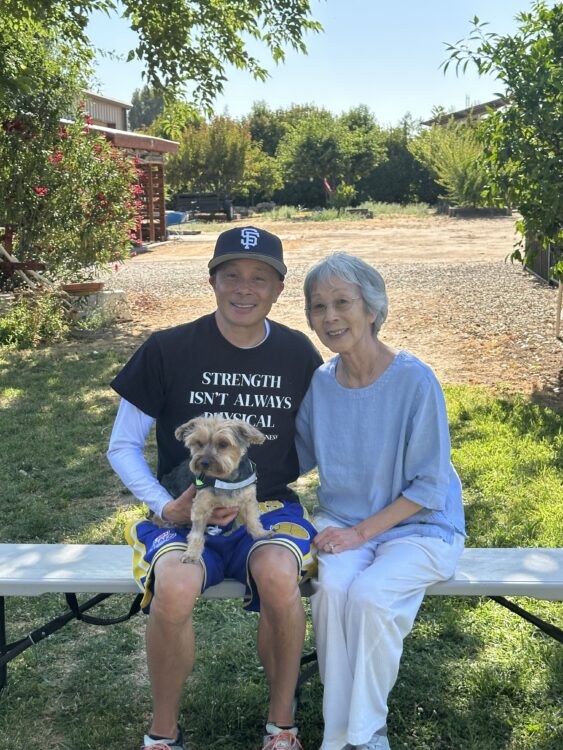
When Dr. Velotta emailed Glen with the words “NED” or “no evidence of disease,” Glen didn’t fully grasp what it meant, but others did. “When I told people at GO2, they got really excited,” he says. “That’s when I realized, oh, this is a big deal.”
Hope, he says, is everything. “Sometimes I’m still pessimistic at heart,” he admits. “But the surgery has given me so much more reason to have hope for the future, and hope is what keeps me going.”
On sharing his story
Glen hesitated before agreeing to speak publicly about his experiences with lung cancer. Talking about cancer can still pull him into dark places. But ultimately, he agreed for 1 reason.
“If this helps 1 person,” he says. “If someone like me hears this and thinks, ‘Maybe surgery is an option for me, maybe I should ask’, then it’s worth it.”
Dr. Velotta agrees. “I just want people to know that they can ask,” he says. “That’s huge progress.”
GO2’s HelpLine is a free, one-on-one service that connects patients and caregivers with experienced staff who can provide guidance, referrals, resources, and, most importantly, hope. Whether it’s questions about biomarker testing, treatment options, or simply needing someone to listen, the HelpLine is often the first step toward feeling less alone after a lung cancer diagnosis. Call 1-800-298-2436 or email support@go2.org to get started.