
Lung cancer stories

Explore real stories honoring survivors and those remembered through their lasting legacy. Select a category to find stories that resonate most with you.
Learn about local and national events where you can connect, raise awareness, and support the lung cancer community.
Explore real stories honoring survivors and those remembered through their lasting legacy. Select a category to find stories that resonate most with you.
Find practical advice, emotional support, and resources to help you or your loved one cope with the challenges of living with lung cancer.
Stay informed about the policies that impact the lung cancer community and ways you can get involved.
Explore breakthroughs and ongoing studies in lung cancer research, from clinical trials to cutting-edge therapies and prevention.
Catch up on highlights from our newsletter, featuring stories, resources, and upcoming opportunities to engage.
Explore news and updates shaping the lung cancer landscape—from scientific breakthroughs and organizational milestones to awareness campaigns and community highlights.
September 16, 2026
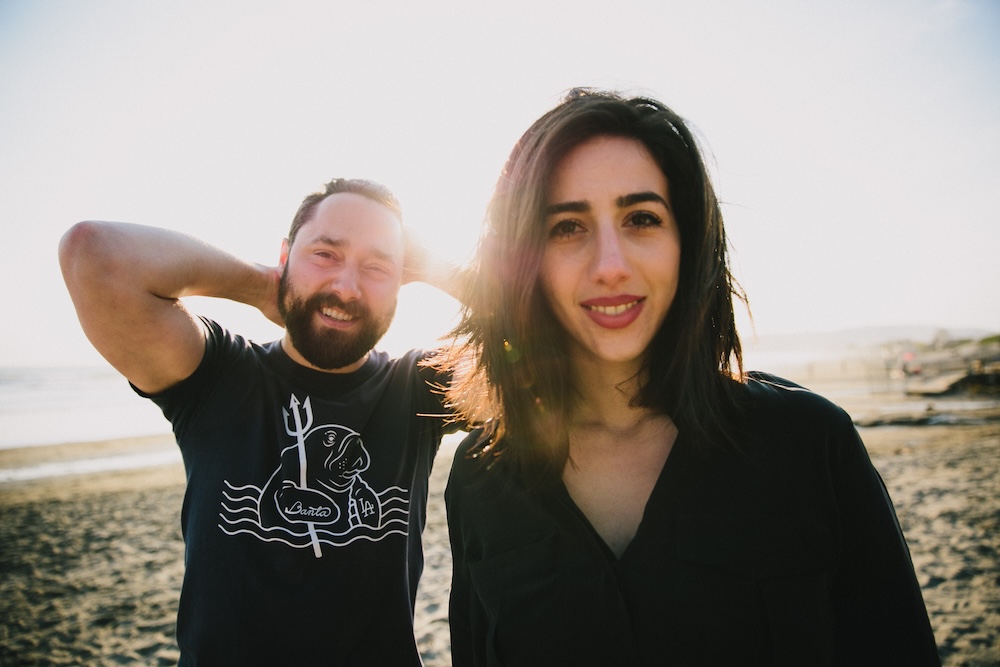
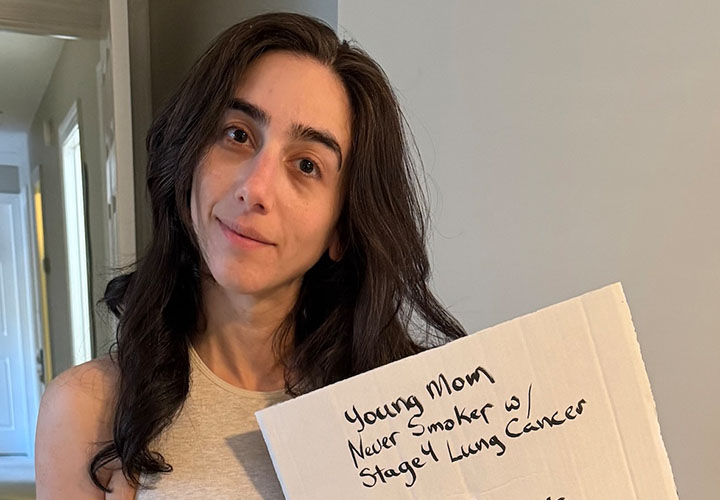
Before lung cancer, Mayya was used to having a plan for everything. As a high performing marketing executive in the video game industry, she managed multimillion-dollar campaigns, led large teams, and was interviewing for a major new leadership role when her life took an unexpected turn. At home, she and her husband were raising 2 young children and juggling the beautiful chaos that comes with life as a busy young family.
By all accounts, things were going well.
“I was essentially corporate Barbie,” Mayya said.
She was healthy, active, and the last person anyone would have expected to be diagnosed with lung cancer. But looking back, Mayya knew something wasn’t right.
Trusting herself
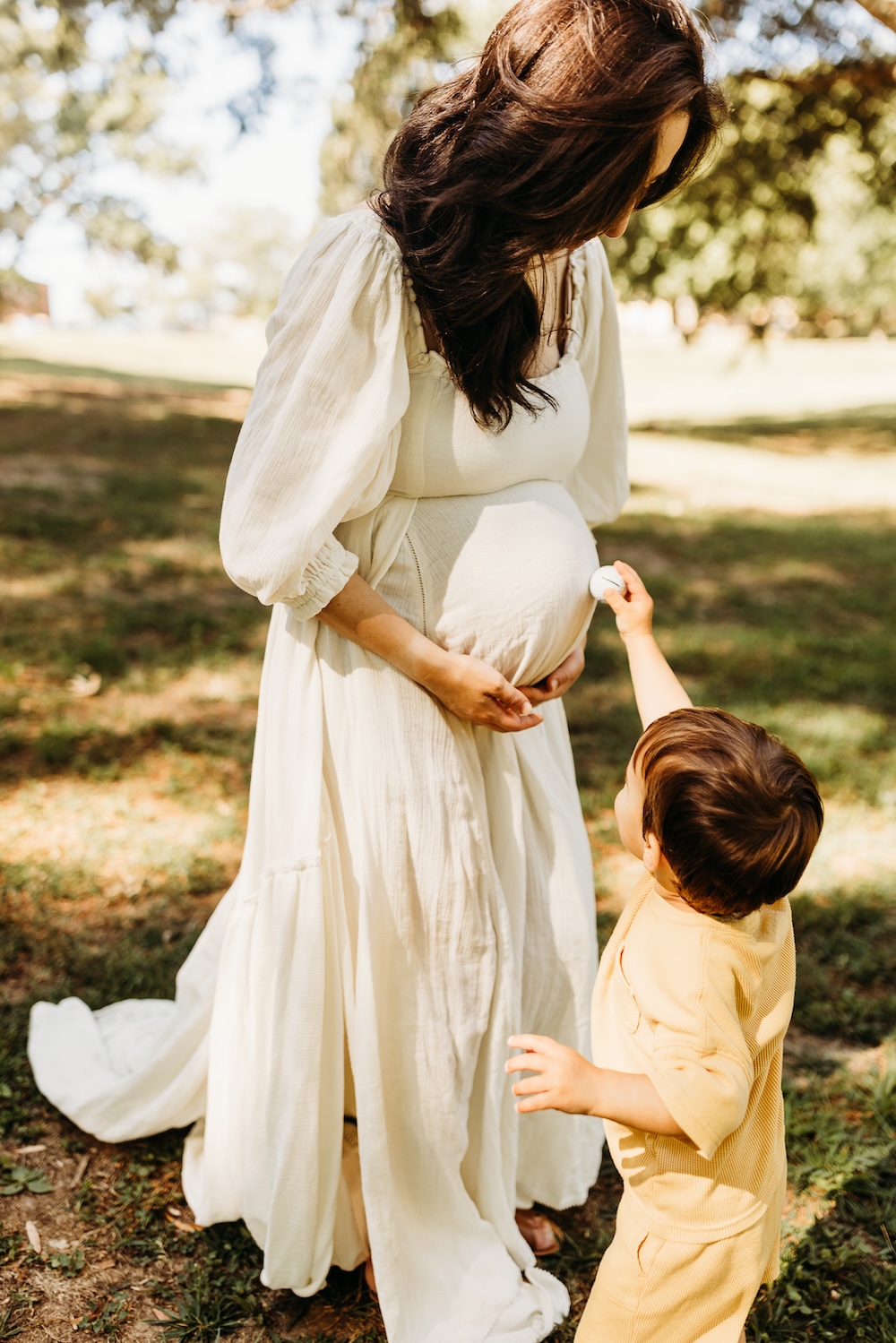
It started during her second pregnancy. Mayya wasn’t gaining weight the way she had during her first pregnancy. She constantly felt like she had to remind herself to eat and found herself raising concerns with her care team at appointment after appointment.
After her daughter was born, other symptoms followed. She was exhausted, but she had a newborn and a toddler. Of course she was exhausted. She lost the baby weight quickly, but everyone congratulated her for it.
Then came the cough. At first, that was easy to explain away too. Her family had endured the endless parade of illnesses familiar to many families with children in day care. But when everyone else recovered, Mayya didn’t. Her cough lingered, as did the fatigue and the general feeling that something was off.
When she sought medical care, her concerns were dismissed, and she was told it was likely allergies or a lingering infection. In fact, the first doctor barely listened to her, looking at the clock before she ever looked at Mayya. When Mayya asked for an X-ray, the doctor said she didn't need one. "It doesn't sound dry," the doctor said. "I haven't coughed yet," Mayya replied.
She walked to her car in the parking lot and called the office back immediately to make a new appointment with a different doctor. Then that appointment got canceled, so she drove straight to urgent care where she found a doctor who was finally willing to dig a little deeper.
An X-ray showed some cloudiness. It was not a clear answer, but it was something. Mayya was given antibiotics for possible pneumonia and sent home, but she didn't get better.
"I was feeling slightly worse every day," she remembered.
Then came Mother's Day. Mayya was sitting on the floor playing with her kids, exhausted, when she heard a sudden, clear, and urgent voice in her head: “If you don't go to urgent care right now, you're going to die.”
"It had to be my grandmother," she said. "She had a flair for the dramatics."
She turned to her husband. "I know it's Mother's Day, but I have to go."
At urgent care, the same doctor who had seen her earlier that week sent Mayya directly to the ER, worried she had a dangerous blood clot in her lungs known as a pulmonary embolism. Before going to the ER, she went home, breastfed the baby, left a stash of milk in the fridge, and said goodbye to her 3-year-old son, who asked how she'd get home.
"You guys will pick me up in a little bit," she told him.
At the ER, a CT scan brought unexpected news. There was no blood clot, but there was a mass in her chest.
"I knew in that moment it was cancer," Mayya says. "I knew."
The long road to a name
For weeks, the working assumption was lymphoma. Nobody brought up lung cancer because she was young, had no known risk factors, and her blood work was perfect.
She was admitted to the hospital where she had a bronchoscopy and got sent home. The interventional pulmonologist who did the procedure told her, “My job is to get you answers." The bronchoscopy came back inconclusive, but he was honest that something didn’t look right.
Then came a PET scan. Every lymph node from her neck to abdomen as well as her bones lit up. Still, the results pointed to lymphoma because her lung itself was barely glowing.
Following that, Mayya was matched with an oncologist at Duke Cancer Center. The coordinator on the phone mentioned access to clinical trials. “Trials?” Mayya thought. “I don't need trials for something as vanilla as lymphoma.”
She looked the doctor up. He was a thoracic oncologist. Her stomach dropped. She wondered whether perhaps he was moonlighting in hematology.
Mayya was at the beach with her family when she opened her test results. They reported stage 4 (IV), ALK-positive, non-small cell lung cancer (NSCLC). “Metastatic, metastatic, metastatic,” the word repeated down the page. No clean margins.
"That's how I found out," she said. "At the beach house, by myself, piecing it together."
A zebra in a world full of horses
There is a concept in medicine called Occam's Razor which states that when you hear hoofbeats, you should assume horses, not zebras. In other words, doctors are taught to look for the most likely explanation before considering something more rare. Mayya knows this, and she understands it. "But I am a zebra," she said. "And doctors are so used to looking for horses that when a zebra is standing right in front of them, they try to make it a horse."
At 38 years old, Mayya became part of a growing group of people who are reshaping what the world thinks lung cancer looks like. Young, healthy, active, and with no traditional risk factors, these people do not appear to doctors as “typical” lung cancer patients and often experience long delays in diagnosis because of it.
In other words, they are zebras.
A zebra among zebras
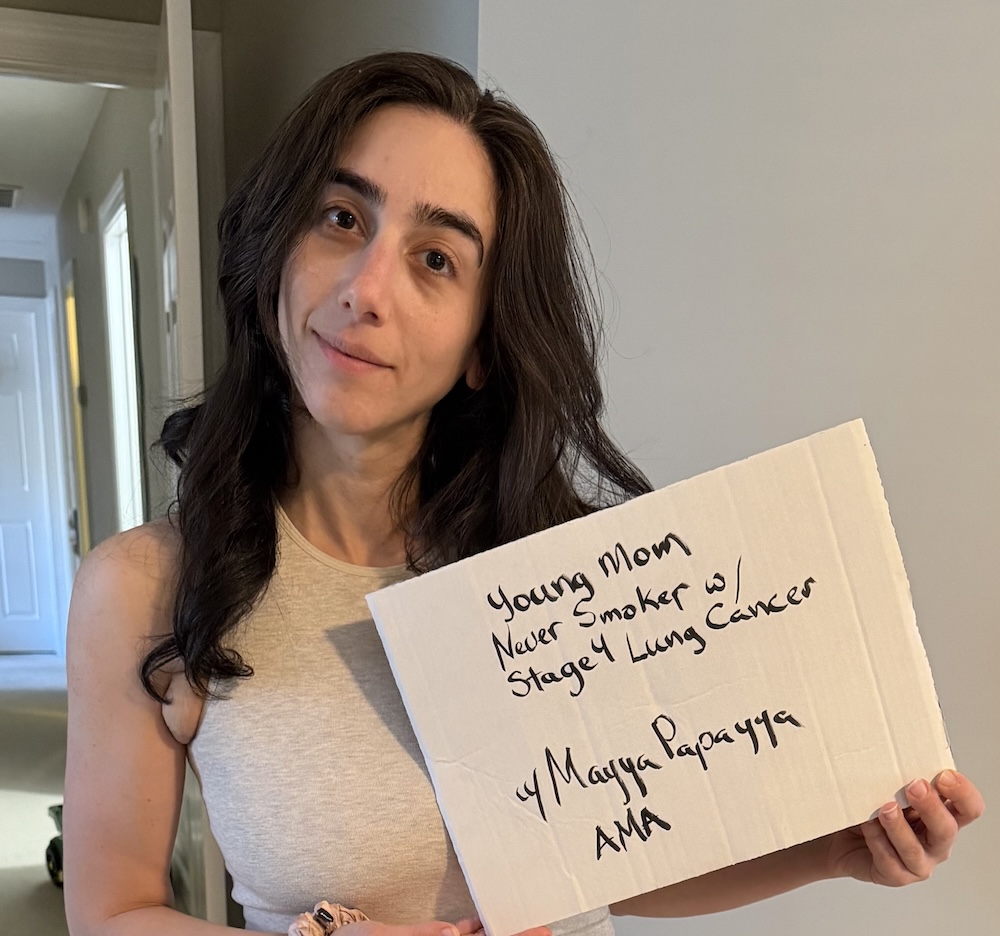
If being diagnosed with lung cancer at 38 made Mayya a zebra, her experience after diagnosis only reinforced the point.
She started Lobrena (lorlatinib), a targeted therapy for ALK-positive lung cancer. Her response was extraordinary. By her first scan, nearly all evidence of disease in her bones and lymph nodes had disappeared. Her doctor had never seen anything like it.
She was told that she was lucky to have this genetic type, and she and her care team hoped she would be one of the large number of ALK-positive patients having many years of progression-free survival on the drug.
However, 8 months later, the cancer progressed. And once again, Mayya found herself outside the expected path.
"I call myself the ghost of Christmas future, walking around rattling chains in ALK communities," she said with a laugh. "They say the median survival on lorlatinib is 7 years. I made it 8 months. I represent a possibility that nobody wants to think about."
Being someone whose cancer progresses quickly on a treatment that works for most others carries its own weight. Mayya has talked to others in the same position and found something unexpected: shame.
"There's almost an embarrassment in it," she said. "You see those graphs showing how well people do, but then you fall off at the 2% mark. Nobody likes to talk about those people. Unfortunately, a third of people on the drug will have an experience like mine. We have to understand our experiences too.”
Mayya is now on a combination regimen of chemotherapy, lorlatinib at a reduced dose, and Avastin (bevacizumab), a plan developed in collaboration between her primary oncologist at Duke and a second-opinion team at Dana-Farber Cancer Institute, including 1 of the leading ALK researchers in the country.
"Between the 2 of them, they came up with a plan that I don't think either would have come up with on their own," she said. “They’re a great team.”
Who gets your best 8 hours?
Life changed for Mayya in large and small ways after her diagnosis. Despite being a successful professional and her family’s bread winner, she made the decision to step back from work and go on disability. It wasn't a defeat. It was a choice.
"Statistically speaking, the best I was going to feel was right after diagnosis," she said. "My doctors aren't trying to cure me; they are managing a downhill slide. And I realized that I was giving the best 8 hours of my day during the best part of my life to my CEO. I had to ask myself, who did I actually want to be giving those hours to?"
The answer was her kids, her husband, and her mom, who now lives with them. Her family, whom she had always prioritized, became her full focus. They plan trips, go to swim lessons and ballet recitals, and squeeze adventures into the windows between her every-3-week infusions on the days when she feels well enough to go.
Her biggest fear is not her own death. It is the crater she would leave behind. She worries for her children, who were 3 years old and 8 months old when she was diagnosed; her mother, who has already buried a husband and her own mother, and whose only child is now fighting lung cancer; and her husband, who she used to joke better get his own health together so that he would live a long life with her and their kids.
“I feel like I’m the bomb that went off in my family,” she said. “Cancer didn’t go off as a bomb in our house. I went off.”
For Mayya, the hardest part of a metastatic diagnosis has never been thinking about herself. It has been thinking about the people she loves most and the grief they might carry.
The stakes are different
Living with metastatic lung cancer means learning to live with uncertainty.
"My body is a haunted house," Mayya said. "It's like a Halloween haunted house where there's a bunch of creaks and jump scares. Some of them are real and some of them are not."
A blurry eye might just be eye goop. A sore hip might be because you slept wrong. Or it might be something more. The challenge is that there is no way to know immediately, and every new symptom carries a question mark.
Mayya also thinks about the people who don't speak up as readily as she does. The short responders who disappear from online communities because they feel like they've let everyone down, the patients whose doctors dismiss them, the women who hear "you're probably fine" when something is clearly not right. She wants them to know they are not alone.
"The stakes are different for patients than they are for doctors," she said. "If a doctor misses something, they've had a bad day, but you're not coming home to your children."
Her advice is to think about your medical team the way you'd think about a contractor working on your house. You would never do your own electrical work. You trust their expertise and value their training, but you still ask questions, get second opinions, and stay actively involved. In this case, your doctor is the expert, but you’re still the one who lives in the house, so you get to have an active say in what’s happening to it.
Planning anyway
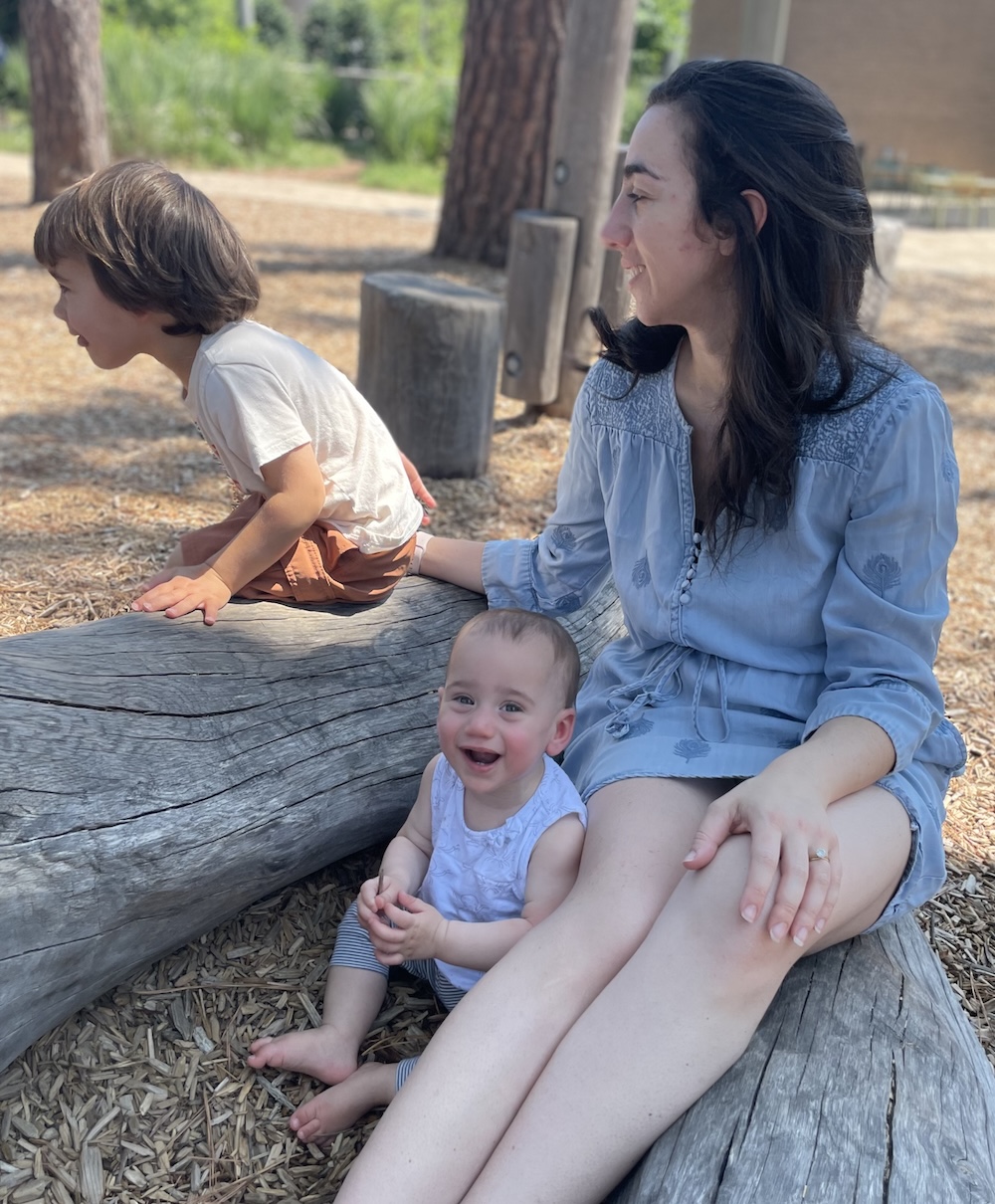
Today, Mayya continues to advocate, raise her children, spend time with her friends and family, and push for more research. She speaks openly about uncertainty, progression, and the experiences that don't always fit neatly into the success stories people want to hear. Because that's part of being a zebra, too. You don't always fit the expected narrative, but you keep moving forward anyway.
She thinks often about the people in her community who are living with ALK-positive lung cancer as something closer to a chronic disease, surviving for a decade or more, and weathering setbacks along the way but still here.
"Those are my heroes," she said. "People who can stumble forward for a decade are my spirit animals. I'll take it. I'm happy just stumbling down the road for another 20 years."
It may not be the path she expected, but she's still moving forward 1 scan, 1 infusion, 1 family trip, and 1 ordinary day at a time.
A lung cancer diagnosis can bring a lot of questions, emotions, and uncertainty. GO2 for Lung Cancer's free HelpLine connects you with trained specialists who can provide support, answer questions, and help you find resources along the way. Whether you're newly diagnosed, in treatment, or navigating survivorship, you don't have to face it alone.
Call us at 1-800-298-2436 or email support@go2.org to learn more.
September 9, 2026
In early 2021, Melissa noticed something strange. Whenever she laughed, coughed, or exhaled forcefully, she heard an odd sound coming from her chest. It wasn't painful, it wasn't affecting her breathing, and she was still able to exercise easily, but she also knew it wasn’t normal.
As a veterinarian, Melissa was accustomed to paying attention to subtle changes. At the time, she was also helping lead COVID-19 vaccination efforts, traveling around the country and working long days outdoors in Colorado's unpredictable weather.
When the sound didn't go away, she mentioned it to her doctor. Neither of them was particularly concerned, and they initially wondered if it might be related to cold-weather asthma. An inhaler didn't help, so Melissa returned a few weeks later. To be thorough, her doctor ordered a chest X-ray.
An unexpected diagnosis
The X-ray revealed a mass in Melissa's lung. Even then, lung cancer wasn't high on anyone's list of possibilities. Melissa was young, healthy, and active, and had no traditional risk factors. As a veterinarian, she was more concerned about unusual fungal infections or exposures she might have encountered through her work.
When the biopsy revealed lung cancer, she was stunned.
"I was totally floored," she said. "Of all the things that I thought I was going to get, lung cancer was not on the list."
Despite her medical background, Melissa realized she had carried many of the same assumptions about lung cancer that others do.
"I never even thought that people who didn't smoke could get it," she said.
Further testing revealed that Melissa had EGFR-positive non-small cell lung cancer (NSCLC) that had spread to her brain.
“They were not going to talk me out of it”
Melissa's care team quickly began developing a treatment plan. She underwent stereotactic radiation for 3 small brain metastases and started targeted therapy with Tagrisso (osimertinib). The treatment worked remarkably well, and within months, her tumors had shrunk by more than 50%, and the lymph nodes that had previously shown signs of cancer were no longer visible on scans.
But Melissa couldn't shake 1 thought. As a veterinarian, she knew that, when possible, surgeons often remove the primary tumor. She wanted to know whether surgery could play a role in her own treatment. Her doctors initially hadn't recommended it because her cancer was stage IV (4), and surgery is not a typical treatment for lung cancer at later stages. Still, Melissa continued asking questions.
"I had a really strong gut feeling that I wanted that primary tumor out," she said.
Rather than dismissing her idea, her care team listened. Her local surgeon encouraged her to seek an additional opinion from a thoracic surgeon with more experience treating complex lung cancer cases. Her oncologist supported the idea as well.
After consulting with specialists who supported her as a good candidate for surgery, Melissa underwent surgery in December 2021, just 6 months after her diagnosis. Surgeons removed the upper lobe of her left lung along with 14 lymph nodes.
Looking back, she's grateful that she trusted her instincts and that her doctors were willing to partner with her.
"Honestly, they were not going to talk me out of it," she said. “Even if someone had told me that the surgical outcome would be identical to non-surgical treatment, I still wanted the tumor out of me. Just for the peace of mind.”
Learning to hope again
The first months after diagnosis were some of the hardest of Melissa's life. For a long time, she was convinced she wouldn't survive.
"I was pretty sure I was going to be dead within a year," she said.
Although her doctors were compassionate and honest, they couldn't tell her exactly what the future would look like. There were simply too many unknowns.
Searching for answers, Melissa began reading stories from other people living with lung cancer. For the first time, she saw people talking about surviving for 8 years, 10 years, or even longer.
"It was then I started to have hope," she said.
The stories didn't guarantee anything about her own future, but they helped her realize that she might have one, too. They also showed her that hope and uncertainty could coexist.
Surrounded by support
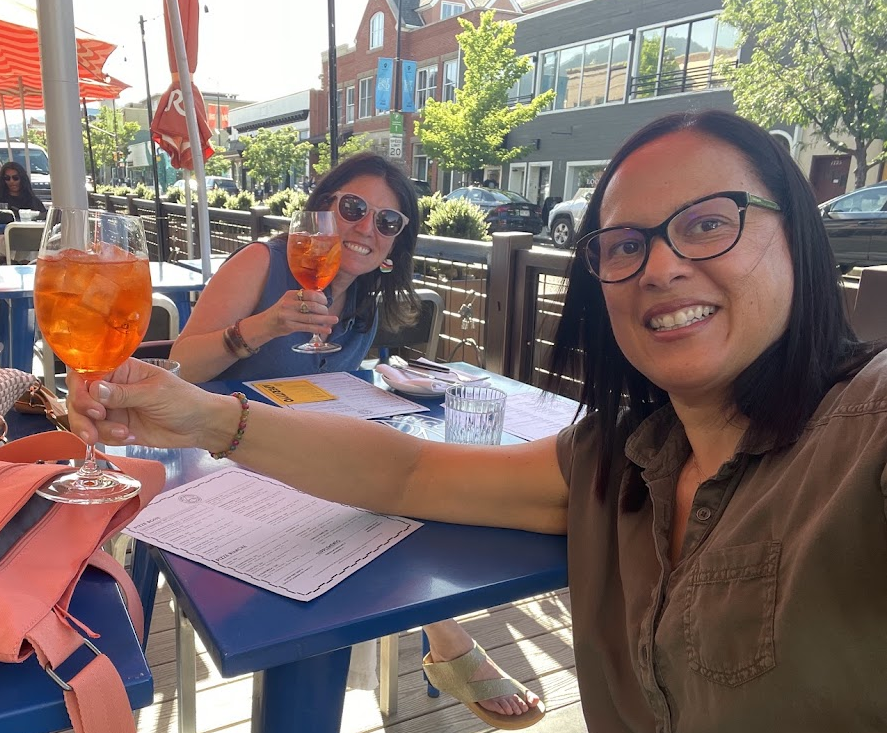
While Melissa was learning to navigate life with lung cancer, she quickly discovered that she didn't have to do it alone. When she was diagnosed, friends from across the country showed up in remarkable ways. One of her closest friends, a fellow veterinarian who lives in Washington state, drove to Colorado and stayed with her for a month. Other friends came for a week at a time, helping with appointments, daily tasks, and the emotional weight of everything she was facing.
Their support arrived when she needed it most. During one visit, Melissa developed a serious bacterial infection and spiked a 104 degree fever. The friend who had just arrived at her house ended up taking her to the emergency room.
Over the years, that support never faded. Earlier this year, Melissa celebrated the 5-year anniversary of her diagnosis with afternoon tea at a hotel in Denver. Nine friends joined her to mark the milestone.
"It was absolutely amazing," she said.
The experience reminded her of something she has learned again and again since her diagnosis: even in the most uncertain moments, she was never facing lung cancer alone.
Are you living or are you dying?
One conversation changed Melissa's perspective more than any other. She had been working with a counselor through her cancer center, struggling with questions about the future. She wondered whether she should buy a house, make long-term plans, and even adopt a new cat, given her diagnosis.
Every decision seemed tangled up in uncertainty. Then, her counselor asked a simple question.
"Are you living or are you dying?"
The question stopped Melissa in her tracks. For months, Melissa had been organizing her life around the possibility that she might die. Her counselor challenged her to consider a different perspective. Today, she wasn't dying. Today, she was alive. For the first time in a long time, she began giving herself permission to plan accordingly.
That realization didn't erase the uncertainty of living with stage IV (4) lung cancer. It simply changed how she chose to respond to it.
Not long afterward, Melissa adopted a young cat. Looking back, she sees that decision as one of the first times she truly started planning for the future again.
"I felt pretty confident that was going to be here to take care of this animal," she said.
Letting go of what she can't control
Over time, Melissa found herself changing in other ways, too. Before cancer, uncertainty often made her anxious. She wanted answers, a plan, and certainty.
After her diagnosis, however, she came to realize that none of those things were actually available to anyone, even those living without cancer.
"I completely accepted that I have no control over any of this," she said. "And I also have no way of predicting anything."
And rather than feeling defeated, Melissa found freedom in that realization. She stopped spending energy on things she couldn't control and became more intentional about where she focused her time and attention. She treasured friendships more deeply and reached out to people more often. She became more grateful for experiences and less concerned about the small frustrations that once occupied her mind.
"I’m so much more clear about how I want to spend my energy now," she said.
Looking ahead
Today, 5 years after her diagnosis, Melissa remains on Tagrisso (osimertinib) and has no evidence of disease. She's also slowly extended the time between scans, going from every 3 months to 4 ½ months to every 6 months. It wasn’t an easy shift.
"Initially, I didn't think I was going to live long enough to have to worry about radiation exposure from the scans," she says. "And now maybe I do."
Her oncologist helped her think through it. Because there's no established playbook for someone in Melissa's exact position, he told her they were “cooking without a recipe.” They talk through decisions together to figure out what they're both comfortable with.
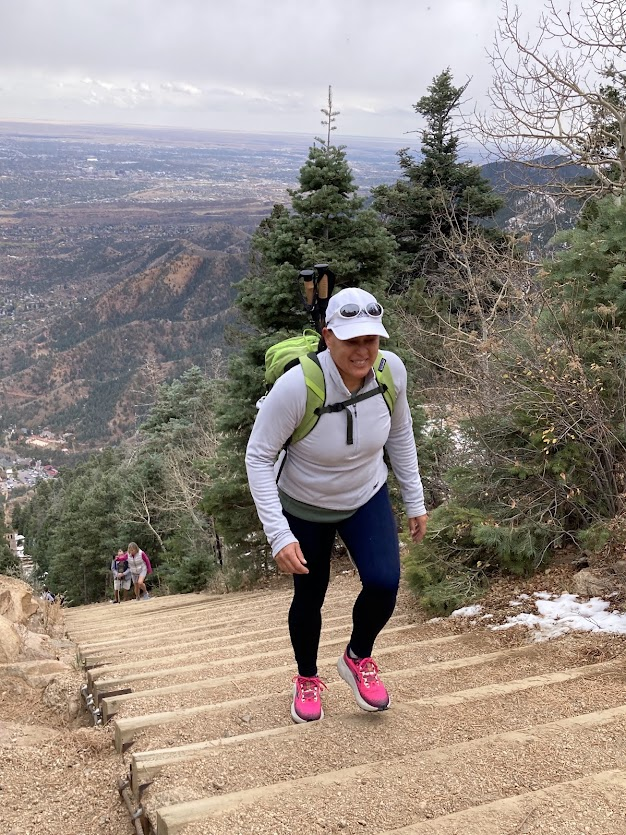
She's also setting ambitious physical goals for herself. A year and a half ago, she decided she wanted to climb the Manitou Incline near Colorado Springs, a grueling hike up what used to be a mining railroad, now more than 1,000 steps rising nearly straight up a mountain. She trained hard for it, but she still wasn't sure she'd make it even halfway.
She made it all the way to the top.
Her next goal is to tackle some of the epic hikes in Glacier National Park that can run up to 14 miles long. She doesn't know yet if she can do it, but she's going to try.
Just 5 years ago, Melissa wasn’t sure she’d live long enough to plan for the future. Today, she's planning trips, setting new goals, deepening friendships, and looking forward to what's next.
She still thinks about the question her counselor asked her.
“Are you living or are you dying?”
These days, Melissa knows her answer.
August 5, 2026

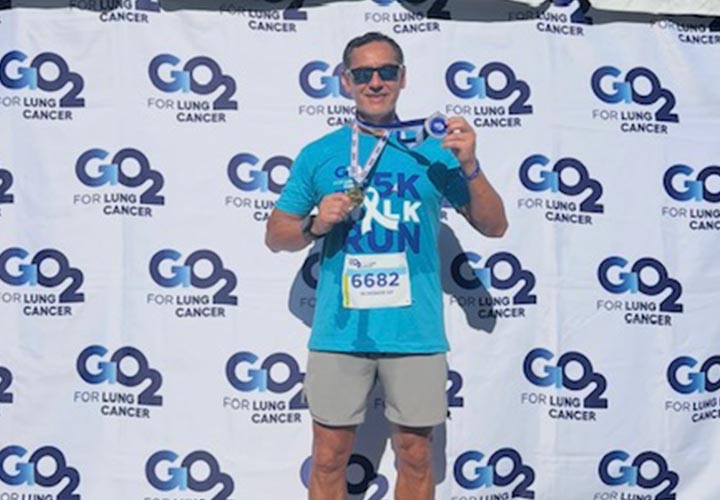
Felipe had spent his entire life focused on how the body works and how to keep it working well. With a background in exercise physiology and injury prevention, his career was built around helping people recover, rebuild, and, whenever possible, avoid injury altogether. So, when something didn’t feel right in his own body, it stood out immediately.
In 2019, Felipe was running a half marathon with 2 clients when he noticed a cough that felt different from anything he had experienced before.
“I couldn’t catch my breath, which was very unlike me,” he said. “People were actually stopping and asking if I was okay.”
He finished the race, but the symptoms stayed. He was diagnosed with chronic bronchitis and asthma and prescribed inhalers and steroids, but things didn’t improve.
By 2021, after months of worsening symptoms and delays in care during the COVID-19 pandemic, Felipe went to urgent care. His oxygen levels were dropping to dangerous levels, and he was sent to the emergency room where a CT scan revealed nodules in his lungs.
Soon after, he was diagnosed with lung cancer. “It was so completely unexpected,” he said. “I was healthy in every way, and I’d never smoked, so getting lung cancer wasn’t something I even thought was possible.”
“I lost my identity”
At the same time, other parts of Felipe’s life were shifting just as dramatically. A flood destroyed his 10,000-square-foot gym overnight, and he was about to turn 65, a big milestone that included a long-time dream of relocating to Florida.
In April 2021, Felipe underwent a lobectomy. The procedure was successful. Physically, he recovered quickly. But what followed was something he hadn’t anticipated.
In the months following surgery, Felipe expected to return to the life he once knew. Instead, he felt himself drifting further and further away from it. For someone whose life had always been grounded in discipline and driven by purpose, the shift was deeply unsettling.
“I lost my identity,” he said. “I lost my purpose.”
At first, it didn’t have a name; it just showed up in patterns he couldn’t ignore. Overeating, drinking more than he should, not training, constantly consuming news and social media, yet he was still showing up for work, still meeting responsibilities. From the outside, everything looked intact. But inside, something felt off and disconnected.
“I was just not myself at all,” he shared. “I was in a really dark place.”
Then he came across a description of those behaviors being called “slow suicide.” That stopped him in his tracks. Not because suicide had ever crossed his mind, it hadn’t, but because he recognized the pattern. It was a slow drift, quiet neglect, and disconnection from himself.
That realization pushed him to try to understand what he was actually experiencing. Through research he realized it had a name: high-functioning depression.
A turning point
Felipe doesn’t identify a single moment that changed everything, but rather a more gradual realization that he needed to do something different.
His approach was to return to training, nutrition, and structure, the fundamentals that had served him well throughout his life. He sought out accountability and rebuilt his routines with intention.
Over time, the changes were significant.
“I got into the best shape of my life,” he said, “and I dragged myself out of a dark place while doing it.”
But more importantly, he began to see his experience differently and as an opportunity to return to the life of serving people that had once defined him.
Rethinking “survival”
As people around him began using the word “survivor,” Felipe found himself pushing back against it. To him, it didn’t go far enough.
“Just surviving cancer is a very low bar,” he said.
Felipe believes that for people with early-stage cancer, surviving is not the only endpoint. It can be a beginning. What matters more is how you rebuild, how you take care of yourself, and how you move forward.
A disconnect
As Felipe moved further from treatment, he noticed something that surprised him and inspired his next steps.
“There’s a disconnect between the end of medical care and the re-starting of real life,” he said. “Your appointments become less frequent and the structures that guide you through your diagnosis and treatments fade away.”
What to expect when your care ends isn’t always clearly defined, and for Felipe, that gap seemed like an opportunity to help others navigate what had proven tricky for him.
From experience to action

Felipe hadn’t planned to write a book about his experiences, but as he reflected on what he had gone through, he realized that much of what had helped him to navigate life after cancer wasn’t easy to find in one place.
“There are resources out there,” he said. “But they’re not organized. You have to go find a little bit here, a little bit there, and piece it together yourself.”
What he wanted to create was something different. Not a memoir, and not a set of rigid instructions, but a starting point. A way for people to begin making sense of what comes next.
That idea became his book, “Don’t Call Me a Survivor: Thriving Beyond Cancer.”His book brings together the core elements of training, nutrition, mindset, and accountability, all of which helped him rebuild. It introduces the idea that these things don’t work in isolation.
“Everything has to work in the same direction,” he said. “It’s the synergy of it all coming together that creates big change.”
At its core, the book is about awareness. Helping people recognize that the period after treatment can be just as challenging as the diagnosis itself, and that without structure or support, it’s easy to drift.
From there, the book points toward something more: a path forward. Building something different. After writing the book, Felipe began building something more structured, something that could help others not only understand what they were experiencing but begin to move forward too.
At his gym in South Florida and through his virtual client roster, his approach reflects what he learned through his own experience; that progress doesn’t come from one thing alone.
His “Phoenix Path” model moves from awareness to action, with a 90-day program that offers daily structure, weekly support, and a focus on rebuilding from the ground up.
It’s not about doing everything at once, he emphasizes. It’s about starting where you are.
That might mean starting with health before fitness and building a foundation through nutrition, breathing, and basic movement before pushing further. It might mean rebuilding confidence, rediscovering a sense of purpose, or creating structure where it’s been lost. And it always means meeting people where they are.
“Everything can be improved,” he said, “I help people focus on the fundamentals to feel better in a comprehensive way that’s unique to them, what they’ve been through, and where they want to go.”
Full circle
Earlier this year, Felipe heard from one of the runners from that half marathon where his symptoms first appeared. Now approaching 80, that same runner, Dan, was preparing to complete another half marathon, this time after his own cancer diagnosis.
On May 17, 2026 Felipe joined Dan for that race.
The moment felt full circle in a way he couldn’t have imagined years ago, when he was struggling to understand what was happening in his own body. To run alongside this man again after everything they’ve both been through seemed almost surreal.
For Felipe, this kind of real, human, and hard-earned connection is what it’s all about.
Looking ahead
Today, Felipe continues to train, build, and connect, drawing directly from his experience with lung cancer. He’s also focused on reaching more people, especially those navigating the uncertain space between treatment and whatever comes next.
He still undergoes regular scans, and there is still uncertainty. But his relationship with that uncertainty has changed. Instead of waiting for answers, he focuses on what he can control: how he trains, how he eats, and how he shows up each day.
For Felipe, surviving was never meant to be the end of the story. It was the beginning of a different experience, one rooted not just in getting through, but in moving forward with intention.
Because for him, the real question isn’t whether you survive. It’s what you do next.
A lung cancer diagnosis can bring a lot of questions, emotions, and uncertainty. GO2 for Lung Cancer's free HelpLine connects you with trained specialists who can provide support, answer questions, and help you find resources along the way. Whether you're newly diagnosed, in treatment, or navigating survivorship, you don't have to face it alone.
Call us at 1-800-298-2436 or email support@go2.org to learn more.

August 5, 2026

When Paul Poblete signed up to run the New York City half marathon, he wasn't just chasing a personal goal. Every training run, every early morning, and every mile had a deeper purpose.
Paul joined the GO2 for Lung Cancer Endurance Team to honor his father, who was diagnosed with combined small cell lung cancer (CSCLC) in 2021, and to help make a difference for other families facing the disease.
What started as marathon training became an opportunity to raise awareness, inspire others, and support the lung cancer community in a meaningful way.
We recently caught up with Paul to learn more about what motivated him to join the GO2 Endurance Team, what he learned along the way, and what advice he has for others considering taking on a race for a cause.
Running for something bigger than yourself
For Paul, choosing GO2 as his charity partner was deeply personal.
"My family was directly impacted when my father was diagnosed with CSCLC in 2021," he shared. "I understand the grief and uncertainty that families experience. I wanted to do something that could help make an impact, not only by raising money but also by raising awareness."
Like so many families, Paul's life changed after his father's diagnosis. Training for a marathon became more than a fitness challenge. It became a way to channel his energy into something positive while honoring his father's experience and supporting others navigating lung cancer.
"I wanted to run for a cause that had impacted not just my family, but so many others around the world."
Finding purpose through the GO2 Endurance Team
Training for a marathon requires commitment, discipline, and countless hours on the road. Paul says knowing that every mile represented something bigger than himself helped keep him motivated.
"Having the ability to raise awareness while raising funds for a personal cause was such a fulfilling feeling," he said.
He also appreciated the support provided through the GO2 Endurance Team.
"The organization provided all the resources I needed to have a successful campaign. From fundraising tips and tricks to a dedicated running coach, everything was there. The entire process was a lot of fun."
For Paul, the combination of training, fundraising, and connecting with a community united by a common purpose made the experience especially meaningful.
"Training and contributing to something bigger than myself really kept me grounded and grateful."
Every donation came with a mile
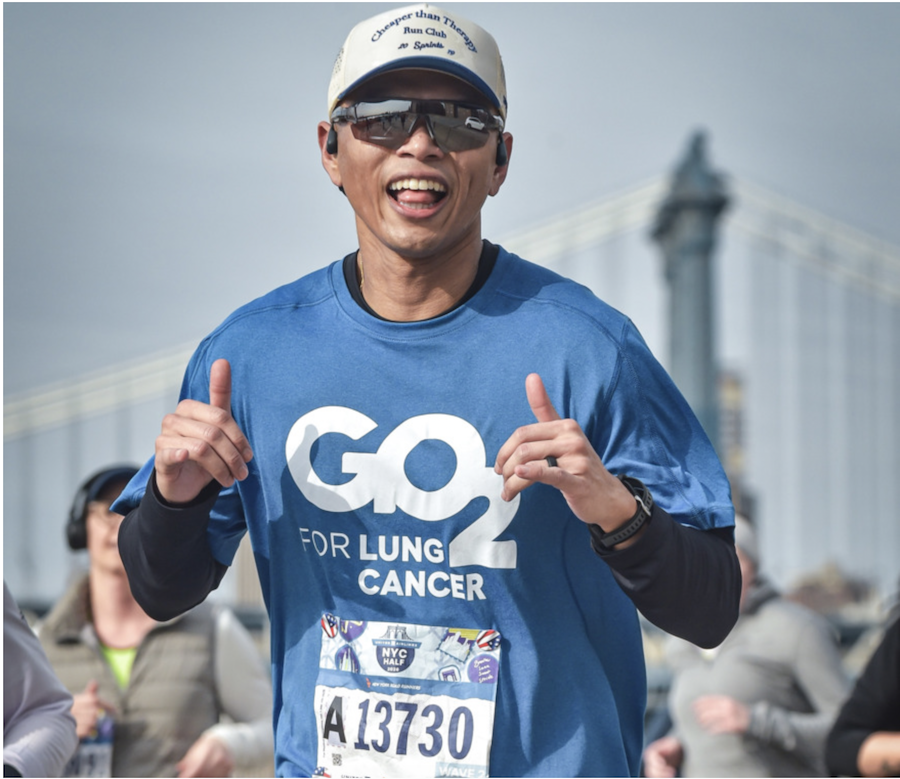
One of the most creative parts of Paul's fundraising campaign was finding a way to personally thank every donor.
He promised to dedicate 1 mile of training for every $10 donated. During those runs, he would give donors a shoutout on social media. For supporters who weren't on social media, he recorded personalized videos during his training runs and sent them directly.
The idea not only encouraged donations but also kept people engaged throughout his marathon journey.
"I was telling everyone that I would dedicate a mile during training for every $10 they donated," Paul explained. "I'd post a story during that run with their shoutout."
The approach quickly gained momentum.
"I even had friends donate just so they could make me run," he laughed.
By consistently sharing updates, celebrating donors, and inviting others into his journey, Paul kept his campaign visible while making every supporter feel like they were part of the experience.
The power of community
While fundraising was an important goal, Paul says one of the biggest surprises was the overwhelming support he received.
"I was surprised by how many people in my network wanted to support the cause, regardless of how close we were."
Many donations also came with something even more meaningful: personal stories.
"A lot of people shared how cancer had impacted their own lives. The support from everyone was inspiring."
Those conversations reminded Paul that lung cancer affects far more people than many realize. His campaign became an opportunity not only to raise funds, but also to create space for people to share their own experiences and honor loved ones.
Advice for future marathon runners
For anyone thinking about tackling a marathon, Paul's advice is to stay patient and enjoy the process.
"Stay consistent, but remember that progress isn't linear," he said. "There will be times when it gets hard, and you'll want to give up, but in the end it will all be worth it."
He also recommends finding others to train alongside.
"Find friends who want to train with you or join a run club. Running with a group makes it much more enjoyable."
Above all, he encourages runners not to lose sight of the experience itself.
"Have fun and enjoy it. It will be one of the most rewarding experiences of your life."
Advice for future fundraisers
Paul's fundraising success also came from being willing to share his story often and in different ways.
His advice?
"Utilize all your resources to spread awareness, from word of mouth to social media, even LinkedIn. Cast a wide net and repost often."
“People want opportunities to support causes that they care about,” he says. “Sometimes they simply need to be asked.”
Creating a fun, interactive campaign helped people feel personally connected to his fundraising goals and kept the momentum going from start to finish.
Ready to run for hope?
Whether you're an experienced runner chasing your next marathon or someone looking for a new challenge with purpose, the GO2 Endurance Team offers an opportunity to turn every mile into hope for people affected by lung cancer.
As Paul's story shows, fundraising is about much more than reaching a finish line. It's about honoring loved ones, building community, raising awareness, and helping create a future with better outcomes for everyone affected by lung cancer.
Join the GO2 Endurance Team and help us confront lung cancer one mile at a time
August 5, 2026
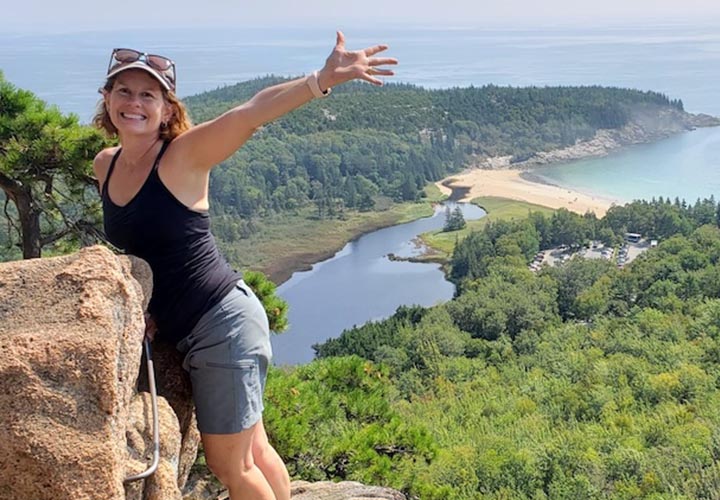
Leslie lives in St. Augustine, FL with her husband, Ken, and their elderly rescue cat. Her children are grown and live in Maryland and Washington, DC. When not traveling, Leslie can be found soaking up the sunshine at the nearby beach.
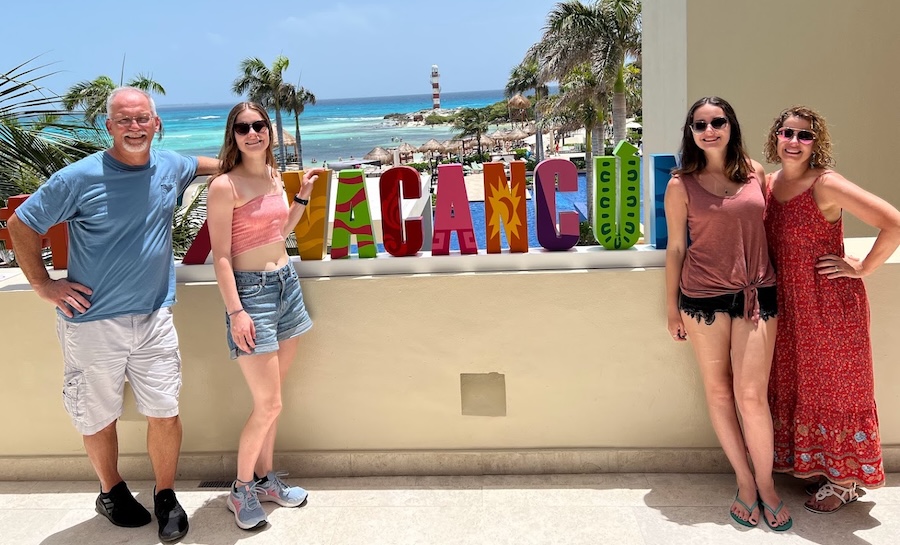
When Leslie's cough wouldn't go away, she did what most people would do; she went to her doctor. Then she went back again. And again.
She tried antibiotics and inhalers from her allergist, but nothing helped. Meanwhile, the cough worsened, her breathing became more difficult, and the active lifestyle she loved started slipping away. At the time, Leslie was teaching fitness classes, yet suddenly she found herself struggling to catch her breath.
As the weeks passed, Leslie became increasingly concerned. Her lymph nodes had become noticeably swollen, and she was getting sicker by the day. Although her primary care physician finally ordered a chest CT scan, the appointment was weeks away.
Friends urged her to stop waiting, and finally she listened. She drove herself to a nearby emergency room (ER), expecting to learn she had pneumonia or some other explanation for her symptoms. Instead, a CT scan performed at the hospital revealed a mass in her lung.
“Here’s why you can’t breathe”
The doctor in the ER returned to her room carrying a piece of paper.
"He said, 'I have good news. Your blood work is normal, and your COVID test is negative,’” Leslie remembered. “Then he handed me the scan results and said, 'Here's why you can't breathe.'"
Reading the report herself, Leslie saw the words "lung mass."
"I started screaming, 'Am I going to die?'"
Alone in the hospital room, she called her husband in a panic. Then, something remarkable happened. Her next-door neighbor, an oncologist, happened to be on call that day.
"She walked into my room, and it was like an angel at my bedside," Leslie said.
Her neighbor sat with her, held her hand, and said, “we’ll figure this out together.” Those words became an anchor during one of the most frightening moments of her life.
Finding hope in biomarker testing
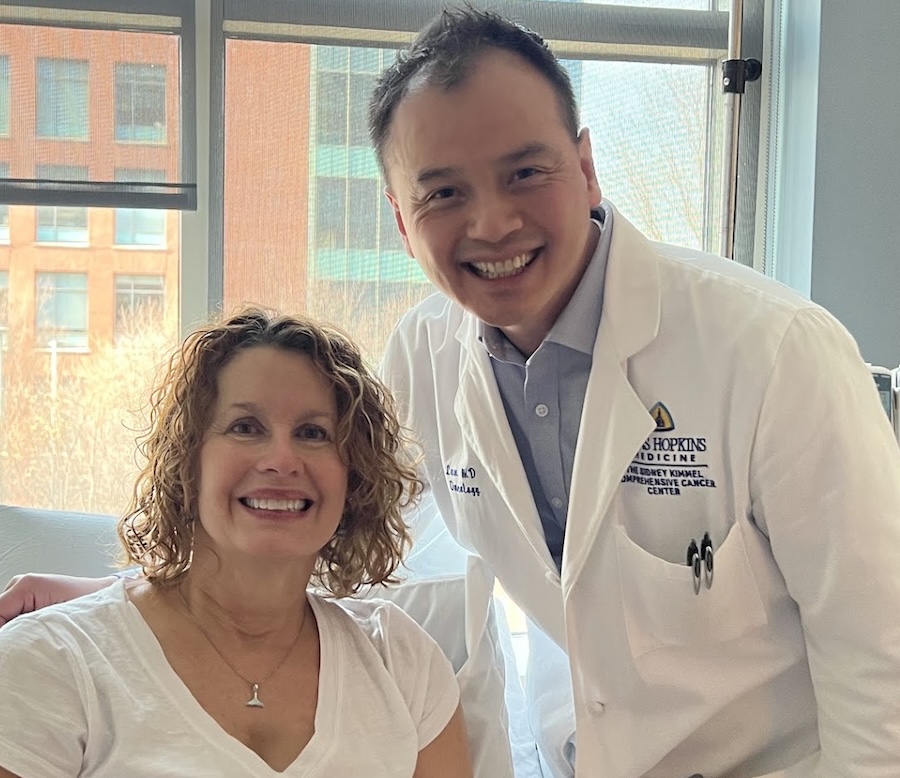
A biopsy soon confirmed that Leslie had lung cancer. Because the cancer had already spread to her lymph nodes, doctors knew it was advanced. Like many people diagnosed with stage 4 (IV) lung cancer, Leslie immediately feared the worst.
"All I could think was, 'I'm going to die. Am I going to see my daughters get married? Do I want to be buried or cremated? What’s going to happen to me?' My brain just spiraled."
Her neighbor, however, knew there was another important piece of information still to come: biomarker testing. The wait was agonizing. When a lab error delayed her results for nearly a month, she spent long days sitting outside in the sunshine, reading books, and trying to keep her mind occupied.
When the results finally came through, her neighbor actually printed them out and walked them over to Leslie’s house. She said, "This is good news!"
Leslie's cancer had tested positive for an ALK biomarker, and she heard a phrase that many people with ALK-positive lung cancer have heard before.
"You've won the cancer lottery."
At first, the statement felt impossible to understand.
"It didn't feel like I was winning any lottery," Leslie said.
But as her doctors explained what the ALK biomarker meant, Leslie began to understand. Advances in targeted therapies were allowing many people with ALK-positive lung cancer to live much longer and better than ever before. For the first time since her diagnosis, she felt a glimmer of hope.
The worst club you never wanted to join
Not long after her diagnosis, Leslie discovered the ALK Positive support community, a patient-founded and patient-driven nonprofit organization committed to transforming the future for everyone affected by ALK-positive cancer. No doctor had suggested it. She found it herself. The impact they had on her was profound.
"The ALK Positive group saved my life," she said.
At the time, Leslie was preparing to undergo radiation treatment for brain metastases. She already had the mask made and appointments scheduled. Then, members of the ALK Positive community encouraged her to pause and ask more questions.
"They said, 'Wait. Let the treatment work first.'"
After discussing options with her medical team, Leslie decided to hold off. It turned out to be a good decision. The targeted therapy worked. Her brain metastases responded without radiation.
For Leslie, it was an early lesson in the power of connecting with others who had walked the same path. She found people who had been living with ALK-positive lung cancer for as long as 10 years or more. She found friendships, practical advice, and reassurance that life could eventually feel normal again.
"You won't always be thinking about cancer," people told her. "It gets better."
They were right. Today, Leslie regularly attends ALK Positive events and has formed close friendships within the community.
"Lung cancer is the worst club you never wanted to join," she said, “but we have the best members.”
Learning to accept help
If there was another unexpected gift in the midst of Leslie's diagnosis, it was discovering just how deeply she was loved.
After Leslie’s diagnosis, her people started to show up for her in important and practical ways. Friends delivered meals. Cards arrived in the mail. Flowers showed up at her door. People researched treatment options, shared resources, and offered support in every way they could.
"The kindness was overwhelming," she said.
At first, Leslie found that accepting help felt uncomfortable. Over time, however, she realized that allowing people to help was a gift for them, too.
Looking back, Leslie describes the experience in a way she has never forgotten.
"It's almost like I died and I was at my own funeral," she said. "It was such a gift. I got to see how much people love me while I'm alive."
During the hardest period of her life, she experienced something beautiful.
"I felt like the luckiest person because who gets to experience that? Most people don't get to know how loved they are and how much they’ve meant to people."
Leslie’s friends across the world also helped her raise over $8,000 last year to donate to ALK Positive, which has contributed to the over $10.8 million in patient research funding since 2017. She is beyond grateful for their support of research.

Looking toward the future
Today, Leslie and her husband have retired and moved to Florida, a decision influenced in part by her diagnosis. Rather than waiting for someday, they're embracing the life they had always hoped to build. There are home projects to finish. Trips to plan. New adventures to take. She’s planning for the future in ways she never expected when she was first diagnosed.
Leslie is also participating in a clinical trial that is exploring new ways to prevent resistance to targeted therapies. The experience has deepened her appreciation for the researchers and physicians working to improve outcomes for people living with lung cancer.
"The research gives me so much hope," she said.
Less than 2 years ago, Leslie was wondering if she would live long enough to see her daughters' futures unfold. Today, she's busy planning her own.

July 6, 2026
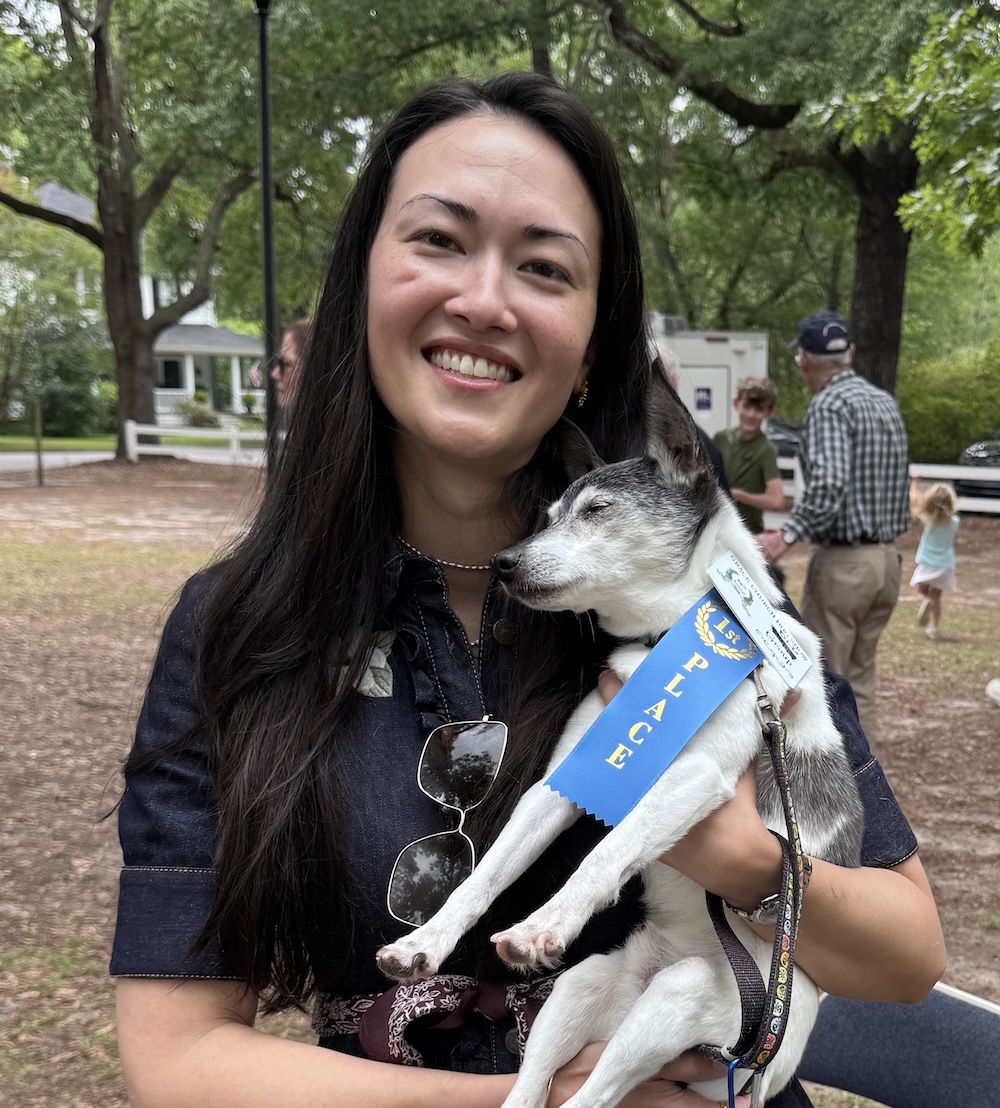
Laura lives in Camden, South Carolina, where she loves horseback riding, playing Mahjong, and is opening her very own Mahjong studio. She is a Veteran who receives care through the Veterans Administration (VA) and is an active advocate for lung cancer awareness.
Laura never expected lung cancer to be part of her story. At 38, she was doing everything she was supposed to do. She was keeping up with annual appointments through the VA, staying active, and paying attention to her health. Lung cancer wasn’t even on her radar.
But looking back, there were signs. She had a lingering cough that began the previous spring, fatigue that she chalked up to stress from work and life, and congestion that allergy medications never seemed to touch. Occasionally, she even coughed up blood. But like many people, especially younger people, she never imagined it could mean lung cancer.
“I was so focused on all the other cancers,” Laura said. “My mom died of colon cancer, so I started getting colonoscopies in my twenties. I kept up with everything they tell you to be aware of related to women’s health. But lung cancer was nowhere on my radar.”
During a routine visit at the VA in April 2023, Laura mentioned the cough to her doctor, along with wrist pain, exhaustion, and a handful of other symptoms that had slowly become part of everyday life. Because Veterans are diagnosed with lung cancer at higher rates than the general population, her care team ordered a chest X-ray right away.
The chest X-ray appeared to show a small 6-millimeter nodule in her right lung. It was small enough that her care team reassured her it was common in service members. They'd just monitor it with a CT scan to make sure it wasn't growing.
Then the CT results came back. The nodule wasn't 6 millimeters. It was almost 6 centimeters.
Her doctor called her that afternoon. She told Laura she was sorry and that she was going to schedule her with an oncologist right away. Laura didn't even know what to say.
"I'm sorry, ‘oncologist?’ What do you mean? Why do I need an oncologist? Could it be anything else?" she asked.
"Based on the size of [the nodule]," the doctor told her, "No. It's going to be cancer."
The importance of biomarker testing
A few days later, Laura underwent a biopsy through the VA’s partnership with the Medical University of South Carolina (MUSC). Her pulmonologist immediately emphasized the importance of comprehensive biomarker testing before starting treatment. It’s a step that Laura now knows was critical.
“They said, ‘We’re going to get a lot of tissue, send it for genetic testing, and wait for those results before deciding on treatment,’” she said. “I was lucky. This is how everybody should be treated.”
The results confirmed that Laura had stage 4 (IV) ALK-positive lung cancer, a form of non-small cell lung cancer (NSCLC) driven by an ALK biomarker. Although hearing the words “stage 4” was devastating, learning she had a biomarker also meant she had highly targeted treatment options available.
At first, Laura started treatment with alectinib, an ALK-targeted therapy. But while the medication effectively treated her cancer, the side effects became difficult to manage.
Eventually, after struggling with side effects and elevated liver enzymes, Laura transitioned to lorlatinib, another ALK-targeted therapy she says has allowed her to regain much of her quality of life.
“I have energy again,” she said. “It’s so much better.”
Learning to live with uncertainty
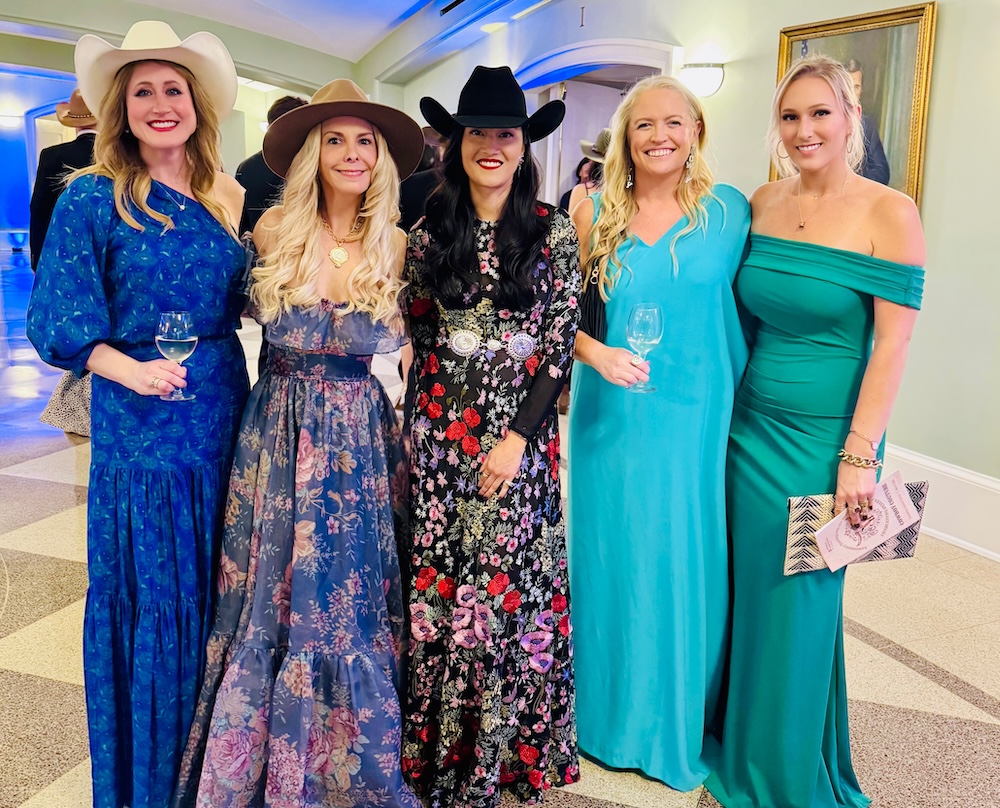
Still, adjusting to life with metastatic lung cancer has been about far more than finding the right medication. Laura describes the emotional aftermath of diagnosis as one of the hardest parts of her experience.
“The diagnosis is world-upending,” she said. “First, you think you’re going to die. Then, actually, no. Maybe you’re not going to die right away. And, OK, you’re excited to be doing so well, but now you have to figure out how to live this entirely new way.”
Over time, Laura has learned that coping doesn’t always mean fixing everything. In fact, some of her biggest lessons have come from letting go of the illusion of control.
“I went a little crazy trying to control everything at first,” she said. “I changed my diet, exercised constantly, and stopped drinking alcohol overnight. I just wanted to do something.”
“Over time, I had to learn to let go a little, and that I don’t need to solve every bad feeling,” she said. “I control what I can control and let the bad days come when they come. It doesn’t mean it’s forever.”
That shift in perspective has helped Laura rebuild a life that still feels joyful and meaningful. After her diagnosis, she moved to Camden, South Carolina, where she now spends time horseback riding, playing mahjong, and preparing to open a mahjong studio, a project she enthusiastically describes as her latest obsession.
“When I’m into something, I’m serious about it,” she laughed. “It’s been good to channel that energy from cancer to something more fun.”
Finding community and hope
Laura has also become involved in advocacy through GO2 for Lung Cancer and the ALK Positive community. Attending advocacy events and scientific summits has transformed the way she thinks about the future.
“Every year at the ALK Summit, researchers and doctors show us what they’re working on,” she said. “You realize there are absolutely brilliant people out there who care deeply about helping us live longer.”
Sharing her story on Capitol Hill during GO2’s Voices Summit has also shown her how much education is still needed around lung cancer.
“I realized legislators and staffers often don’t know anything about lung cancer,” she said. “Sharing my story was an opportunity to teach them about the disease and what is needed to better treat it.”
Today, Laura hopes her story helps challenge outdated assumptions about who gets lung cancer and what life after diagnosis can look like, especially for younger people, Veterans, and people living with biomarker-driven disease.
Her biggest advice for someone newly diagnosed?
“Take your time,” she said. “You don’t have to figure everything out right now.”
She also strongly encourages others to find community.
“The biggest help for me was joining a supportive group and talking to people going through the same thing,” Laura said. “You realize you’re not alone, and that’s priceless.”
“There’s so much more coming”
Three years after her diagnosis, Laura knows life still includes uncertainty, grief, and hard days. But it also includes hope, connection, and plans for the future.
“It’s so empowering to see all the advances happening in research,” she said, “I really believe there’s so much more coming.”
A lung cancer diagnosis can bring a lot of questions, emotions, and uncertainty. GO2 for Lung Cancer's free HelpLine connects you with trained specialists who can provide support, answer questions, and help you find resources along the way. Whether you're newly diagnosed, in treatment, or navigating survivorship, you don't have to face it alone.
Call us at 1-800-298-2436 or email support@go2.org to learn more.
July 6, 2026
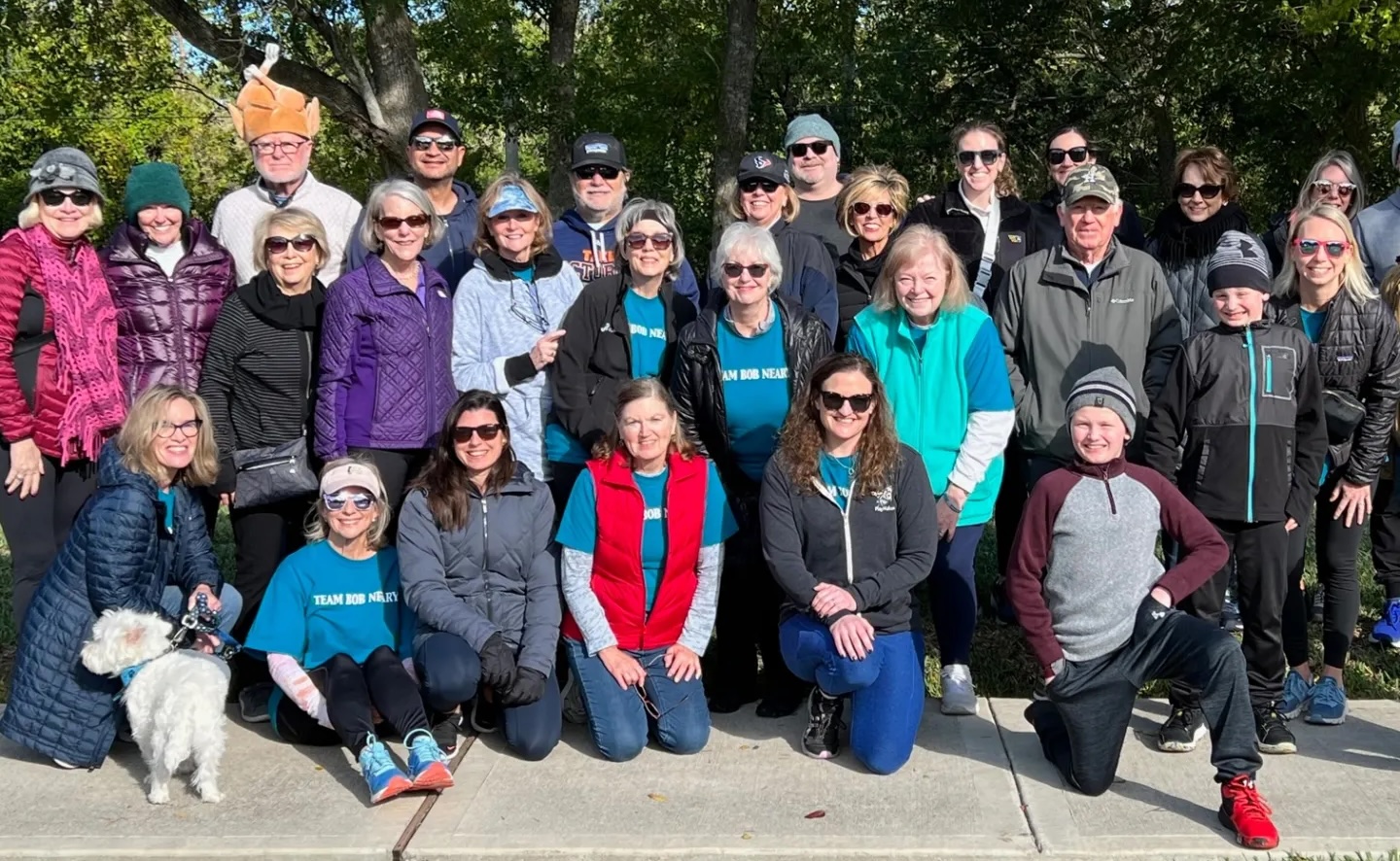
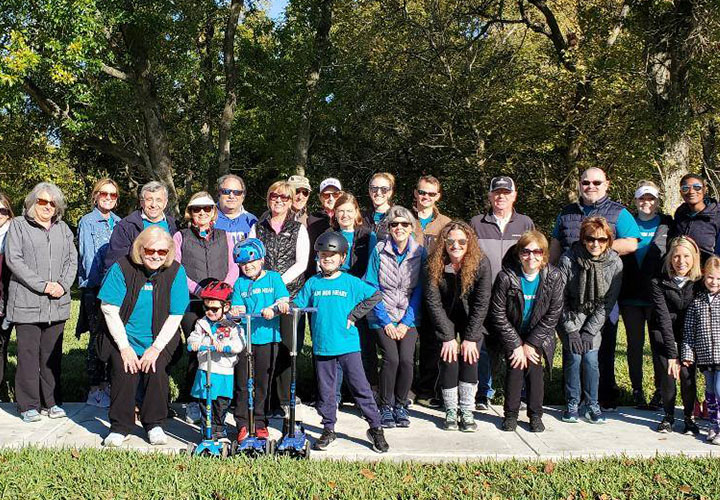
When Bob Neary passed away from lung cancer in February 2013, his family was left with immense grief. A devoted husband, father, coach, and community member, Bob touched countless lives during his 63 years. Today, more than a decade later, his memory continues to inspire friends and family through Team Bob Neary, an annual community walk that raises awareness and funds for lung cancer research.
Bob’s story is one of resilience, family, and service. He was the youngest of 8 children in a close-knit Irish family. Having lost his mother to kidney disease when he was just 7 years old, Bob understood hardship from an early age. Tragically, lung cancer would later claim both his father and Bob himself at the same age.
After moving to Houston as newlyweds, Bob and his wife Alice built a life centered on family and community. Bob worked as an investment banker at Amegy Bank and spent countless hours coaching his children’s soccer, baseball, softball, and T-ball teams. His commitment to youth sports eventually led him to serve as Commissioner of the Spring Branch Baseball Association, where he helped oversee one of the largest baseball organizations in West Houston.
“He was very involved in our children’s sporting events,” Alice recalls. “He coached their teams for many years and was always there.”
Following Bob’s diagnosis in July 2012 and his passing just 7 months after undergoing radiation and chemotherapy, his family searched for a meaningful way to honor his life.
“I had a longing to do something to keep his memory alive,” Alice said.
After attending a lung cancer walk hosted by the organization that is now GO2 in downtown Houston, an idea began to take shape. The family realized that hosting an event closer to home might make it easier for friends and neighbors to participate. Together, they created what would become Team Bob Neary’s annual community walk.
What began in 2016 as a local gathering has grown into a cherished tradition led by Alice. This year marks the walk’s 10th anniversary. Since its inception, Team Bob Neary has raised more than $32,550 to support GO2 for Lung Cancer’s mission to save lives, increase survivorship, and improve quality of life for those affected by lung cancer.
The event takes place near Terry Hershey Park in Houston’s Energy Corridor, a beautiful park that stretches for miles along the bayou. The location was intentionally chosen to make participation convenient and welcoming.
“Getting into downtown Houston is a hassle,” Alice explains. “If we started the walk at 9 a.m., people would still have most of their Saturday free.”
That simple approach has resonated with supporters year after year. Friends return each November, and family members from across the country have even flown in to take part.
“Having so many of our friends who faithfully come to our walk each year has meant so much to my children and me,” Alice said. “We have had family members fly in for the weekend to attend; it is hard to put into words how grateful we are.”
Typically, around 30 participants gather for the walk. For those unable to complete the route, there is always an invitation to join afterward for breakfast, a tradition that has become one of the event’s most meaningful elements.
After the walk concludes, participants head back to the Neary home to share a meal, reconnect, and celebrate the community that has formed around Bob’s memory.

“I love having everyone back to my house for breakfast,” Alice said. “It’s a way for me to give back and thank everyone for their support.”
The personal touches don’t end there. Participants proudly wear Team Bob Neary T-shirts, often sparking conversations with curious passersby along the trail.
“Every year during the walk, people stop and ask what Team Bob Neary means,” Alice said. “Maybe that small gesture will make someone think about donating or starting something of their own.”
For Bob’s family, the event has become much more than a fundraiser. It has evolved into a powerful source of healing.
While she hadn’t initially viewed the walk as part of her grief journey, looking back, she recognizes the role it has played.
“If by doing the walk every year, raising money and awareness has contributed in some small way to help find a cure for this awful disease, I am not only honoring Bob’s memory but maybe helping someone else and their family not having to go through the pain and suffering of losing a loved one.”
Among Alice’s favorite memories are the years when her daughter and son-in-law returned home after living in Abu Dhabi, UAE, for 8 years, where they welcomed 3 sons. Being able to walk together as a family upon their return to the United States added an extra layer of joy and meaning to the event. Alice is also deeply grateful for the steadfast support of her son and daughter-in-law over the years. She says their love, encouragement, and presence have meant more than words can express and have been an important part of the journey.
Throughout the years, GO2 for Lung Cancer has been a trusted partner in Team Bob Neary’s fundraising efforts.
“GO2 for Lung Cancer has been so supportive over the years,” she says. “They are always there to answer questions or help in any way they can.”
For anyone considering starting a community fundraiser or advocacy effort of their own, she acknowledges that it requires time and dedication. Organizing invitations, tracking donations, coordinating attendees, and sending thank-you notes all take effort.
Yet the rewards far outweigh the work.
“Every year at the end of the walk, I know it was so worth the effort,” Alice said. “Not only is it wonderful to be with devoted friends and family who show up every year, but to feel that you are making a contribution to help end cancer is the best feeling in the world.”
Looking ahead, her hopes remain simple.
“If time and health allow, I hope to continue our annual walk, to raise money and awareness, and to honor Bob for as long as possible.”
Learn more about how you can create your own fundraiser supporting GO2 for Lung Cancer.
June 5, 2026
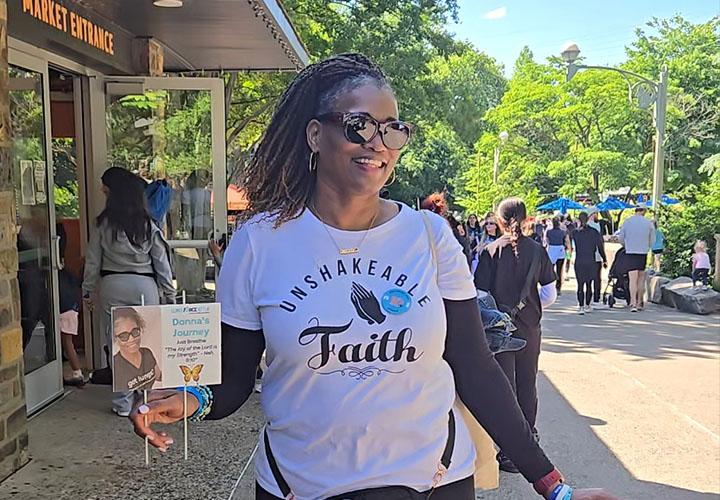
Donna Thompson is a 3-time survivor of early-stage, non-small cell lung cancer, thriving more than a decade since her first diagnosis. After 2 surgeries to remove portions of her right lung, she carries forward an experience that deepens her commitment to lung cancer awareness, mental health advocacy, and building supportive communities. Donna shares her story to inspire hope, reduce stigma, and elevate survivor voices. Her advocacy spans education, outreach, and research collaboration within the lung cancer community. She speaks at wellness and community events, using her experience to empower others navigating illness and recovery. Professionally, Donna is the director of Human Resources and a SHRM Certified HR leader, known for leading with empathy and practical insight, and supporting people through complex workplace challenges. She finds strength - literally and emotionally - through faith, fitness training, and time in nature. For her, movement is medicine, and advocacy is a calling rooted in compassion and resilience.
Donna remembers the exact moment everything changed. It was September 2015, and she went to the emergency room for something else entirely. Her blood sugar was dangerously high, and she wasn’t feeling right. They ran tests, monitored her, and sent her home. The next day, the ER doctor called her and said the radiologist saw a mass in her lung and that she should have it checked out right away.
At 45 years old, and having no smoking history, lung cancer wasn’t on her radar. It wasn’t on anyone else’s either.
“Everyone I talked to was like, ‘You’re too young. You’ve never smoked. This is probably not lung cancer.’”
But within 5 weeks, after scans, a biopsy, and what she still calls “the longest 5 weeks of my life,” Donna had her answer. It was lung cancer after all.
"The best possible situation”
Looking back, Donna sees the moments that led to her lung cancer diagnosis a little differently.
“I always say that was God getting my attention, whispering to me in the quiet, still moments," she said.
The tumor was stage 2 (II) and operable. In many ways, it was the best-case scenario for a diagnosis no one expected. Her surgical team moved quickly.
“She told me, ‘This is the best possible situation. It’s in a good location. We can take it out.’”
By the end of November, just 2 months after that ER visit, Donna had surgery, and for a moment, it felt like the worst might already be behind her.
When the plan changes
Initially, Donna was told she wouldn’t need chemotherapy. The surgery had been successful, her margins were clean, and everything pointed in the right direction.
Then the pathology report came back. It showed that her tumor was more complex than expected. It was an unusual form of adenocarcinoma that didn’t behave in typical ways. Her case was sent to multiple cancer centers, and the recommendation shifted.
“I remember my surgeon calling me herself,” Donna said. “She said, ‘I told you one thing, and now it’s changing, and I need to explain that to you.’”
A second opinion confirmed it: chemotherapy was recommended. Donna agreed, but her body had other plans.
When treatment becomes the crisis
“Every time I got chemo, I ended up in the ER,” she said. “Something was always going wrong.”
After just two treatments, it was clear that this wasn’t sustainable. Her oncologist made the call.
“He said, ‘Your body can’t handle this. We’re done.’”
It was a moment that carried both relief and uncertainty. The treatment meant to protect her was, instead, putting her in danger. And so, once again, Donna adjusted.
“I didn’t survive to be basic.”
In the months that followed, Donna made a decision that would shape everything that came next.
“I didn’t survive to be basic,” she said.
Instead, she poured herself into her health and started working with a trainer, changing her diet, and reclaiming a sense of control over her body.
“I got into the best shape of my life,” she said. “I came off medications. My A1C went back to normal. Everything changed.”
But the transformation wasn’t just physical. It was also about identity.
“The cancer gave me more than it took from me,” she said. “I learned who I am, how strong I can be, and what I really need in the world. I learned what and who are important to me. It put such a clear focus on what I want for my life.”
Finding community and belonging
Still, parts of the experience felt isolating.
“I kept meeting people, and they were all stage 4 (IV),” she said. “I felt like, am I even supposed to be here?”
She was grateful for her outcome, but that gratitude came with a quiet tension.
“I didn’t want to take up space in their groups,” she said. “But I still needed support too.”
And there was something else. “I didn’t see anyone who looked like me.”
It wasn’t until years later, through social media connections, introductions, and small group conversations, that Donna found what she had been missing: a close-knit circle of Black women who truly understood her experience.
“We started meeting regularly, talking, and supporting each other,” she said. “There’s something about being with people who understand you completely without you having to explain that changes everything. They know what they did for me, and what we do for one another. Finally, I had community.”

A second diagnosis, and a different reality
For nearly 7 years, Donna focused on moving forward, rebuilding, and holding onto the belief that she had come through something and grown because of it.
Then, in 2022, everything shifted again. This time, it wasn’t a symptom that sent her back to treatment. It was a scan.
“My scans went from showing nothing to showing a tumor the same size as my first diagnosis,” she said. “I was just so shocked because I wasn’t expecting anything.”
As Donna began to piece together what had happened, the story became even more complicated. The tumor hadn’t appeared overnight. When her new care team reviewed her prior scans, they discovered that the growth had been visible as far back as 2018, but it had been missed.
The radiologist who originally read the scan had not flagged it, and even more concerning, it became clear that her oncologist had never reviewed the images directly.
“That was the moment for me,” Donna said. “I realized no one had really been looking out for me the way they should have. I felt like a number, and I’m a relationship person. This matters to me.”
It was a turning point, not just medically, but emotionally. What initially felt like a sudden recurrence became something harder to process. It was a missed opportunity for earlier intervention.
Another treatment crisis
This time, Donna’s treatment plan included a targeted therapy designed specifically for EGFR-positive lung cancer that would allow her to take a lower dose of chemo, which they hoped she would tolerate better. It felt like progress and a better path.
But after a second surgery, adjuvant chemo, and introducing the new treatment, her body began to struggle again in a different and even more frightening way, this time in response to the targeted therapy.
After multiple attempts to adjust the dosage, the new medicine ultimately led to kidney failure, a serious complication that forced yet another shift in her care and another redefinition of what “moving forward” would look like.
It was also the moment that changed how Donna understood her own story.
“I used to say that cancer gave me more than it took from me,” she said. “And I believed that until my kidneys failed. Recovering from that took nearly all I had. I’m still trying to fully move on from how traumatic that year was.”
“I also have to remind myself how remarkable it was that I overcame this,” she said. “My nephrologist said my recovery was miraculous, and it does feel like a total miracle now.”
Living in the in-between
Today, Donna is once again in a place that many people with lung cancer know all too well: waiting.
In July 2025, after recovering from kidney failure, her care team radiated 2 new spots. They chose radiation because it was the gentlest option for her. Recent scans have shown new nodules that Donna and her care team are just watching, for now.
“They’re watching them and trying to decide what to do next,” she said. “And with my treatment history, not every option feels like a good one.”
It’s not a crisis. But it’s not clarity, either, and Donna finds herself struggling with living in this place of uncertainty.
“I like to have a plan, and I like to know what we’re going to do. I’m finding it very hard for me to just wait and see.”
Still choosing more
Through her diagnosis, treatment, recurrence, and all the unexpected turns in between, Donna has held onto a simple mindset:
“I didn’t survive to be basic.”
It’s a phrase that stuck with her early on and has continued to shape how she moves through each new chapter. And for Donna, that means continuing to choose a full life, even in the unknown.
If you or someone you love has been diagnosed with lung cancer, know that you're not alone. Our HelpLine provides free, one-on-one support to people impacted by the disease. Call 1-800-298-2436 or email support@go2.org to connect. Our team is available Monday-Friday from 9 a.m.-5 p.m. ET/6 a.m.-2 p.m. PT.
May 6, 2026
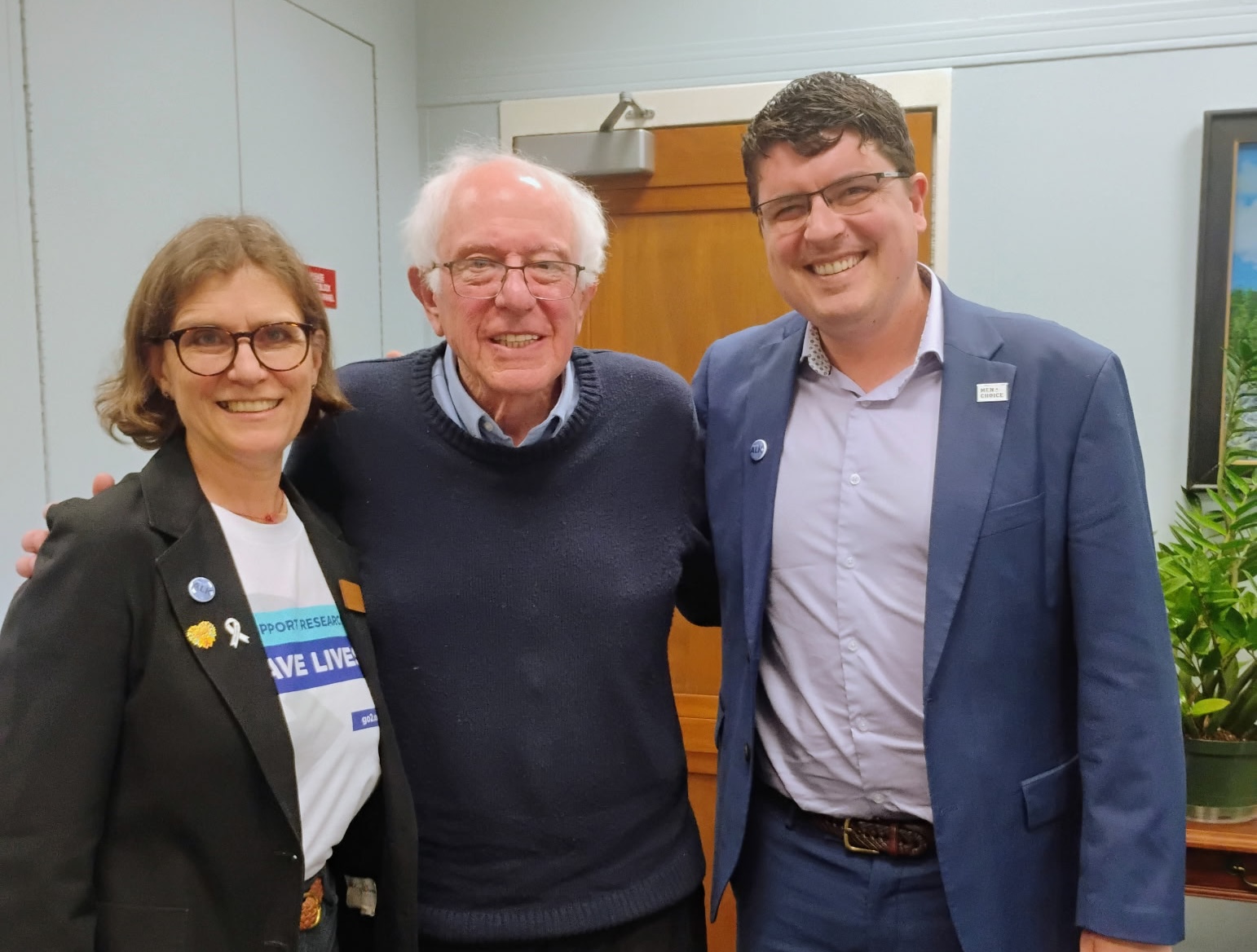
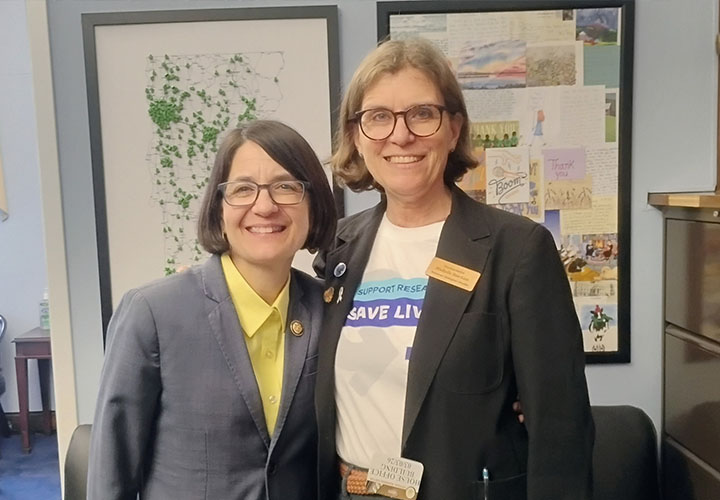
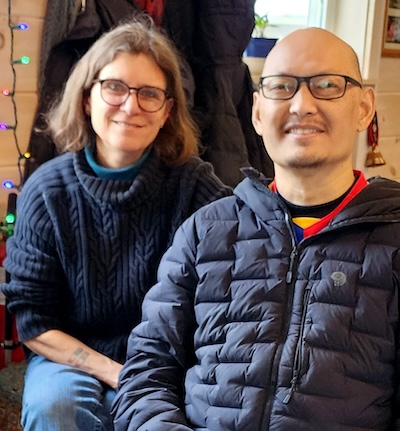
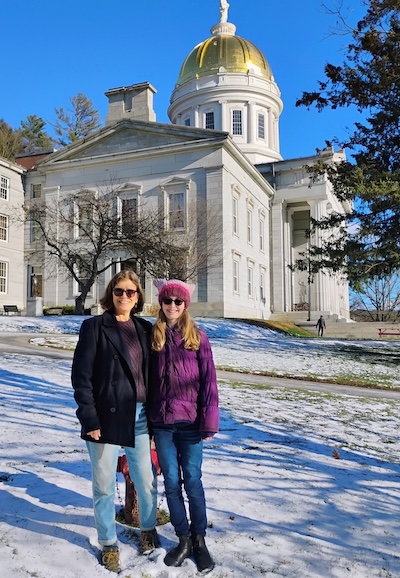
Michelle Bos-Lun is a third term state representative in the Vermont General Assembly. She lives in Westminster with her husband. She has 3 adult children and 2 grandchildren. Michelle is an enthusiastic vegan cook and baker, a mushroom forager, a hiker, and an advocate for lung cancer.
When Michelle returned home from a trip to Nepal last year, she soon found herself unable to get out of bed. At first, she thought she had jet lag, but when her symptoms worsened, she ended up in the hospital.
What followed was a whirlwind of tests and uncertainty that led to a diagnosis she hadn’t expected: scrub typhus, a rare and potentially life-threatening infection she had contracted while traveling.
But the story didn’t end there. In the process of trying to understand why she was so sick, doctors ordered a chest X-ray and saw something there that they couldn’t explain.
Three weeks and even more tests later, Michelle received a second surprising diagnosis: lung cancer.
A diagnosis she never expected
Like so many others, lung cancer wasn’t something Michelle imagined would happen to her until it did.
“Before my diagnosis, I knew of one person who had lung cancer without a smoking history,” she said. “So, while I knew it was possible, it didn’t seem at all likely. But lots of people aren’t good candidates for lung cancer, and yet it still finds us.”
Still, even in the face of a stage 3B (IIIB) diagnosis, her reaction was not what many might expect.
“I’m pretty pragmatic about things,” she said. “When something comes up, I want to learn all about it and figure out what I can do to have the best results with a situation that isn’t ideal.”
That instinct to learn, adapt, and move forward has shaped everything that’s followed
“I won the lottery”
After her initial diagnosis, Michelle entered a waiting period, one filled with a lot of questions, but few clear answers. Her oncologist couldn’t yet tell her what kind of lung cancer she had or how it would be treated. The outlook he shared at that point was sobering.
But there was one 1 possibility that offered hope, and that was a genetic mutation.
Her doctor told her, “If you have a mutation, there are some really good targeted therapies.”
Two weeks later, the call came. Michelle had ALK-positive lung cancer.
“He told me I won the lottery,” she said. “I had the best one with the best treatment.”
Within days of starting the targeted therapy, Lorbrena (loralatinib), her persistent cough, which was her only noticeable symptom, had disappeared. A few months later, her first scan showed her cancer had been reduced by nearly 50%.
“My doctor actually said, ‘This is even better than I would have expected,’” Michelle said.
A whole-person approach
From the beginning, Michelle approached her diagnosis the same way she has approached much of her life by integrating different perspectives, experiences, and tools. Having spent part of her adolescence in Taiwan, and as a long-practicing Buddhist, she was already comfortable holding multiple ways of thinking at once.
“My life has been a mixture of East and West since I was 12,” she said. “So, when I got cancer, it made sense to include a variety of different resources and approaches.”
Her treatment plan reflects that. Alongside her targeted therapy, Michelle has built a daily routine that supports her body in other ways:
- Tai Chi twice a day to improve circulation and manage neuropathy
- Walking several miles each day
- Bi-weekly acupuncture
- Regular lymphatic massage
- A nutrient-dense, plant-based diet including daily kale smoothies, large salads, and roasted vegetables with whole grains
“I feel as healthy as I’ve ever been. Except I have cancer,” she said.
It’s a paradox she doesn’t shy away from. And it’s one she’s actively working to sustain.
“The lorlatinib gets credit for 75% of my healing, and my kale smoothies get the other 25%,” she joked.
Choosing hope—on purpose
Michelle is quick to acknowledge that everyone responds to a diagnosis differently. But for her, hope is not something she has to force; it’s something she naturally gravitates toward.
“I think you can choose to look at the hardest parts, or you can look at the possible good outcomes,” she said. “For me, it’s more satisfying to look at the positive. I try to find the best-case scenarios and aim for those.”
Even before her diagnosis was confirmed, she made a conscious choice not to dwell in pessimism.
“Before my lung biopsy, I thought, I don’t think it’s very likely that this is lung cancer, so I’m not going to worry about it,” she said. “And then when it turned out to be cancer, I said, ‘Okay, so when can we figure out how to treat this?’ I could have spent that time scared, but being scared wouldn’t have changed the outcome, only how I experienced the time leading up to it. That’s sort of how I approach everything.”
Finding community and perspective
Like many people diagnosed with a biomarker-driven form of lung cancer, Michelle quickly found community among others living with ALK-positive disease.
“I feel like I’ve been welcomed into this club that none of us wanted to join,” she said. “But since we’re here, we’re there for each other.”
Through that community, she found not only information, but perspective, including examples of people living 10, 15, even 20 years after diagnosis. Their stories helped her understand the full range of what’s possible and where she might fit within it.
“Somebody would say, ‘my husband is 21 years out’, and I thought, what? We can live 21 years with this? Knowing that some people can live quite a long time made me feel like, okay, then I can make it too,” she said.
Not waiting anymore
If there is 1 theme that runs through Michelle’s story, it’s this: don’t wait.
After her diagnosis, she began thinking about the people she hadn’t seen in years and the friendships that had drifted with time and distance. She immediately set out to rectify that. Her first trip was to reconnect with a close friend she hadn’t seen in decades.
“I just thought, I don’t want to wait,” she said. “Why did I already wait 30 years? I’m not doing that again.”
Now, her “bucket list” isn’t about places; it’s about people – reunions, visits, and time spent together.
“I hope I’m going to be around for a long time,” she said. “But in case I’m not, I don’t want to wait to spend time with the people who matter most to me. I want to see them now.”
Turning experience into action
As a state legislator in Vermont, Michelle already had a platform. After her diagnosis, she chose to use it in a new way. From the very beginning, she has spoken publicly about her experiences, using them as an opportunity to raise awareness about lung cancer, and especially the importance of early detection.
“I thought, maybe I can help somebody else,” she said. “If I can help educate someone, then go ahead, use my story.”
After her story appeared on the front page of her local paper, she learned that at least two people went to their doctors to ask for chest X-rays. For Michelle, that was enough.
“That’s the whole point,” she said.
She is also working to connect her personal experience with broader public health efforts, including initiatives that emphasize nutrition as a core component of care.
“When people eat healthy food, it helps keep them healthy,” she said. “I’m a living example of that.”
Moving forward
Less than a year into her diagnosis, Michelle’s life looks both familiar and entirely new. She is still working, still advocating, and still showing up for her family.
But she is also living with a deeper sense of urgency and intention.
“When you get lemons, make lemonade,” she said. “Well, I’m making some lemonade.”
Only in Michelle’s case, it’s likely organic, and paired with a kale smoothie.
A lung cancer diagnosis can bring a lot of questions, emotions, and uncertainty. GO2 for Lung Cancer’s free HelpLine connects you with trained specialists who can provide support, answer questions, and help you find resources along the way. Whether you’re newly diagnosed, in treatment, or navigating survivorship, you don’t have to face it alone.
Call us at 1-800-298-2436 or email support@go2.org to learn more.