
Blog
Whether you're navigating a diagnosis or supporting someone who is, our blog is here to inform, inspire, and connect. Discover stories of hope, expert insights, and the latest updates in lung cancer care—all in one place.

Use the search box or filter buttons above to find a blog that interests you.
Learn about local and national events where you can connect, raise awareness, and support the lung cancer community.
Explore real stories honoring survivors and those remembered through their lasting legacy. Select a category to find stories that resonate most with you.
Find practical advice, emotional support, and resources to help you or your loved one cope with the challenges of living with lung cancer.
Stay informed about the policies that impact the lung cancer community and ways you can get involved.
Explore breakthroughs and ongoing studies in lung cancer research, from clinical trials to cutting-edge therapies and prevention.
Catch up on highlights from our newsletter, featuring stories, resources, and upcoming opportunities to engage.
Explore news and updates shaping the lung cancer landscape—from scientific breakthroughs and organizational milestones to awareness campaigns and community highlights.
August 31, 2026
Every few months, we round up the latest research, treatment approvals, and guideline changes in small cell lung cancer (SCLC), translated into plain language. This is general information, not medical advice. Always talk with your care team about what's right for you.
A lot has happened in SCLC research over the past several months. Rather than covering everything, this blog focuses on the most clinically promising trial updates.
Imdelltra (tarlatamab) and brain metastasis
What it is and who it applies to: People with extensive-stage small cell lung cancer (SCLC) who are receiving Imdelltra (tarlatamab) as a second-line treatment, especially those whose cancer has spread to the brain.
Imdelltra (tarlatamab) is currently the standard second-line treatment for SCLC, meaning it's typically used after the cancer progresses following initial chemotherapy. It works by helping your own immune cells find and attack cancer cells. Researchers analyzed a portion of the data from Imdelltra’s (tarlatamab) original trial to better understand how people with brain metastases responded to the treatment.
What it means:
- The risk of death was reduced by almost half when treated with Imdelltra (tarlatamab) as compared to chemotherapy, even in people whose SCLC had spread to the brain.
- About half of the people in this study group lived longer than 14 months on Imdelltra (tarlatamab), versus under 7 months on chemotherapy.
- Real-world data from clinics (not just the formal trial) showed similar results in everyday practice.
Why this matters: There has been uncertainty about whether immune-based drugs remain effective once the cancer reaches the brain. This data is reassuring. If you have or develop brain metastases, Imdelltra (tarlatamab) remains a treatment option.
New second-line combination: Ivonescimab and liposomal irinotecan
What it is and who it applies to: People diagnosed with extensive-stage SCLC whose cancer has progressed after first-line chemo-immunotherapy.
A phase 2 trial presented at ASCO 2026 tested combining Ivonescimab with liposomal irinotecan. Ivonescimab is a new type of drug that aims to block 2 proteins called PD-1 and VEGF that are commonly targeted using separate drugs. Liposomal irinotecan is a modified form of chemotherapy.
What it means:
- More than 6 out of 10 people (61.7%) had their tumors shrink, which is a strikingly high response rate for second-line SCLC.
- More than 7 in 10 people (72.0%) were still free of cancer progression at 6 months, with about half of the people in this study group not progressing until 9.8 months.
- Almost all people (9 in 10 people or 91.7%) had their disease controlled to some degree.
Why this matters: Second-line SCLC is hard to treat, and a 61.7% response rate brings significant hope. This is a phase 2 trial, which means it needs to be tested with a larger group of people in a phase 3 clinical trial before it can become a standard option.
A "guided missile" drug: ABBV-706
What it is and who it applies to: People with relapsed or refractory SCLC, meaning the cancer came back or stopped responding to prior treatment.
ABBV-706 is an antibody-drug conjugate (ADC). ADCs can be described as a targeted, guided missile. ABBV-706 is built from an antibody that seeks out and locks onto a protein called SEZ6, which sits on the surface of most SCLC cells. Once it attaches, it delivers a chemotherapy payload directly into the cancer cell.
What it means:
- Among 17 people receiving the drug as second-line therapy at the best-recommended dose for safety and efficacy, the response rate was 82%, meaning more than 8 in 10 people had their tumors shrink.
- Side effects were considered manageable and consistent with earlier data.
Why this matters: An 82% response rate is an outstanding number for relapsed SCLC. However, it is still important to be cautious because 17 people is a very small group, and phase 1 trials enroll highly selected people. Real-world results from a larger study are needed to confirm these results, although early data suggests that it could become a meaningful new option for people.
A new CAR T-cell therapy in SCLC
What it is and who it applies to: People with relapsed or refractory SCLC who have already tried multiple prior treatments.
CAR T-cell therapy has transformed treatment for certain blood cancers but getting it to work in solid tumors like SCLC has been very difficult. A phase 1 trial called LB2102 presented the new data on a CAR T-cell therapy made for SCLC.
How CAR T-cell therapy works: Researchers take a person's own T cells (immune cells that naturally fight infection and disease) and alter them in a lab to target the DLL3 protein commonly found on SCLC cells. The CAR T-cells are also made to remain active inside the hostile environment that SCLC tumors create around themselves.
What it means:
- At the higher doses tested, slightly less than 2 out of 10 people (about 17.6%) had their tumors shrink, and almost 8 out of 10 people (76.4%) had their disease controlled, including some people whose disease stayed controlled for months after treatment.
- Serious immune reactions (like cytokine release syndrome) were rare and mostly mild and overall the treatment was well-tolerated by study participants.
Why this matters: CAR T-cell therapy has not been approved for any solid tumor. This is a phase 1 trial, which is the first step, and focuses on safety and finding the right dose. It's early, but this could create an important new direction for SCLC. Larger studies are planned, but could take several years to reach people outside of trials.
The big picture
In the past, SCLC has had few treatment options. However, meaningful progress is now underway with increased confidence in the second-line standard treatment and several new treatment approaches emerging.
The pace of progress is real, and the pipeline has never looked more active.
Questions for your healthcare team about these studies
- If cancer has spread to the brain: What treatment and clinical trials are an option?
- If cancer has progressed on first-line treatment: What second-line options are available, and am I eligible for any clinical trials?
- Are there open trials near me that I might qualify for?
- What clinical trials should I know about given my current stage and treatment history?
If you have questions about clinical trials or want to learn about your own clinical trial options, contact our LungMATCH team at 1-800-298-4236 or email support@go2.org.
This post summarizes publicly reported clinical trial and guideline updates from major oncology meetings and organizations, including ASCO 2026, OncLive, NCCN, and the American Cancer Society. It is intended for general information only and is not a substitute for personalized medical advice from your own healthcare team.
August 5, 2026

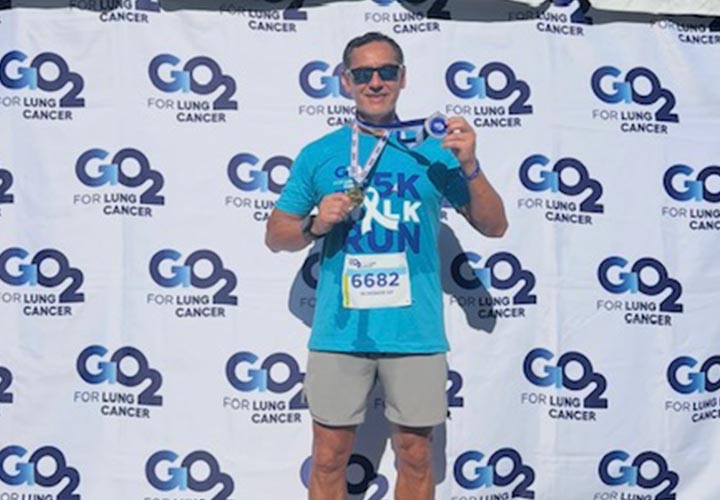
Felipe had spent his entire life focused on how the body works and how to keep it working well. With a background in exercise physiology and injury prevention, his career was built around helping people recover, rebuild, and, whenever possible, avoid injury altogether. So, when something didn’t feel right in his own body, it stood out immediately.
In 2019, Felipe was running a half marathon with 2 clients when he noticed a cough that felt different from anything he had experienced before.
“I couldn’t catch my breath, which was very unlike me,” he said. “People were actually stopping and asking if I was okay.”
He finished the race, but the symptoms stayed. He was diagnosed with chronic bronchitis and asthma and prescribed inhalers and steroids, but things didn’t improve.
By 2021, after months of worsening symptoms and delays in care during the COVID-19 pandemic, Felipe went to urgent care. His oxygen levels were dropping to dangerous levels, and he was sent to the emergency room where a CT scan revealed nodules in his lungs.
Soon after, he was diagnosed with lung cancer. “It was so completely unexpected,” he said. “I was healthy in every way, and I’d never smoked, so getting lung cancer wasn’t something I even thought was possible.”
“I lost my identity”
At the same time, other parts of Felipe’s life were shifting just as dramatically. A flood destroyed his 10,000-square-foot gym overnight, and he was about to turn 65, a big milestone that included a long-time dream of relocating to Florida.
In April 2021, Felipe underwent a lobectomy. The procedure was successful. Physically, he recovered quickly. But what followed was something he hadn’t anticipated.
In the months following surgery, Felipe expected to return to the life he once knew. Instead, he felt himself drifting further and further away from it. For someone whose life had always been grounded in discipline and driven by purpose, the shift was deeply unsettling.
“I lost my identity,” he said. “I lost my purpose.”
At first, it didn’t have a name; it just showed up in patterns he couldn’t ignore. Overeating, drinking more than he should, not training, constantly consuming news and social media, yet he was still showing up for work, still meeting responsibilities. From the outside, everything looked intact. But inside, something felt off and disconnected.
“I was just not myself at all,” he shared. “I was in a really dark place.”
Then he came across a description of those behaviors being called “slow suicide.” That stopped him in his tracks. Not because suicide had ever crossed his mind, it hadn’t, but because he recognized the pattern. It was a slow drift, quiet neglect, and disconnection from himself.
That realization pushed him to try to understand what he was actually experiencing. Through research he realized it had a name: high-functioning depression.
A turning point
Felipe doesn’t identify a single moment that changed everything, but rather a more gradual realization that he needed to do something different.
His approach was to return to training, nutrition, and structure, the fundamentals that had served him well throughout his life. He sought out accountability and rebuilt his routines with intention.
Over time, the changes were significant.
“I got into the best shape of my life,” he said, “and I dragged myself out of a dark place while doing it.”
But more importantly, he began to see his experience differently and as an opportunity to return to the life of serving people that had once defined him.
Rethinking “survival”
As people around him began using the word “survivor,” Felipe found himself pushing back against it. To him, it didn’t go far enough.
“Just surviving cancer is a very low bar,” he said.
Felipe believes that for people with early-stage cancer, surviving is not the only endpoint. It can be a beginning. What matters more is how you rebuild, how you take care of yourself, and how you move forward.
A disconnect
As Felipe moved further from treatment, he noticed something that surprised him and inspired his next steps.
“There’s a disconnect between the end of medical care and the re-starting of real life,” he said. “Your appointments become less frequent and the structures that guide you through your diagnosis and treatments fade away.”
What to expect when your care ends isn’t always clearly defined, and for Felipe, that gap seemed like an opportunity to help others navigate what had proven tricky for him.
From experience to action

Felipe hadn’t planned to write a book about his experiences, but as he reflected on what he had gone through, he realized that much of what had helped him to navigate life after cancer wasn’t easy to find in one place.
“There are resources out there,” he said. “But they’re not organized. You have to go find a little bit here, a little bit there, and piece it together yourself.”
What he wanted to create was something different. Not a memoir, and not a set of rigid instructions, but a starting point. A way for people to begin making sense of what comes next.
That idea became his book, “Don’t Call Me a Survivor: Thriving Beyond Cancer.”His book brings together the core elements of training, nutrition, mindset, and accountability, all of which helped him rebuild. It introduces the idea that these things don’t work in isolation.
“Everything has to work in the same direction,” he said. “It’s the synergy of it all coming together that creates big change.”
At its core, the book is about awareness. Helping people recognize that the period after treatment can be just as challenging as the diagnosis itself, and that without structure or support, it’s easy to drift.
From there, the book points toward something more: a path forward. Building something different. After writing the book, Felipe began building something more structured, something that could help others not only understand what they were experiencing but begin to move forward too.
At his gym in South Florida and through his virtual client roster, his approach reflects what he learned through his own experience; that progress doesn’t come from one thing alone.
His “Phoenix Path” model moves from awareness to action, with a 90-day program that offers daily structure, weekly support, and a focus on rebuilding from the ground up.
It’s not about doing everything at once, he emphasizes. It’s about starting where you are.
That might mean starting with health before fitness and building a foundation through nutrition, breathing, and basic movement before pushing further. It might mean rebuilding confidence, rediscovering a sense of purpose, or creating structure where it’s been lost. And it always means meeting people where they are.
“Everything can be improved,” he said, “I help people focus on the fundamentals to feel better in a comprehensive way that’s unique to them, what they’ve been through, and where they want to go.”
Full circle
Earlier this year, Felipe heard from one of the runners from that half marathon where his symptoms first appeared. Now approaching 80, that same runner, Dan, was preparing to complete another half marathon, this time after his own cancer diagnosis.
On May 17, 2026 Felipe joined Dan for that race.
The moment felt full circle in a way he couldn’t have imagined years ago, when he was struggling to understand what was happening in his own body. To run alongside this man again after everything they’ve both been through seemed almost surreal.
For Felipe, this kind of real, human, and hard-earned connection is what it’s all about.
Looking ahead
Today, Felipe continues to train, build, and connect, drawing directly from his experience with lung cancer. He’s also focused on reaching more people, especially those navigating the uncertain space between treatment and whatever comes next.
He still undergoes regular scans, and there is still uncertainty. But his relationship with that uncertainty has changed. Instead of waiting for answers, he focuses on what he can control: how he trains, how he eats, and how he shows up each day.
For Felipe, surviving was never meant to be the end of the story. It was the beginning of a different experience, one rooted not just in getting through, but in moving forward with intention.
Because for him, the real question isn’t whether you survive. It’s what you do next.
A lung cancer diagnosis can bring a lot of questions, emotions, and uncertainty. GO2 for Lung Cancer's free HelpLine connects you with trained specialists who can provide support, answer questions, and help you find resources along the way. Whether you're newly diagnosed, in treatment, or navigating survivorship, you don't have to face it alone.
Call us at 1-800-298-2436 or email support@go2.org to learn more.

August 5, 2026
Some insurance plans use a policy called step therapy, sometimes known as fail first. This means some plans may require you to try a lower-cost cancer therapy before they will cover the therapy your healthcare team originally recommended.
Step therapy is not new, but it is getting renewed attention because of recent changes to Medicare Part D could lead some Medicare prescription drug plans to rely more on tools like prior authorization (getting approval before a treatment is covered), formularies (the list of medications a plan covers), and step therapy. Health plans can use step therapy tools to help control costs by encouraging the use of less expensive or preferred medications before covering more expensive treatments.
The good news is that the step therapy policy does not appear to be widely used for many lung cancer drugs today. GO2 is closely monitoring these policy changes to help protect timely access to appropriate treatment. This is especially important in lung cancer because new therapies continue to be approved by the U.S. Food and Drug Administration (FDA), giving patients more treatment options. Lung cancer treatment is often guided by biomarkers. Biomarker testing results help your healthcare team determine which therapy is most appropriate for you, making timely access to that treatment important.
That is why GO2 supports ongoing legislative and policy efforts such as the Safe Step Act. If enacted, the legislation would help protect patients from unnecessary delays by making it easier to receive a timely exception when step therapy is not medically appropriate.
GO2 recently joined coalition letters, including efforts led by the MAPRx Coalition, expressing concern that recent changes to Medicare Part D payment could lead some Medicare prescription drug plans to rely more on tools like step therapy and prior authorization. These policies could make it harder to get the treatment your healthcare team believes is best for you.
For those interested in learning more, organizations like Aimed Alliance offer resources on step therapy policies, including state laws and patient rights.
GO2 will continue to monitor how these policies are implemented and advocate for approaches that protect timely access to the most appropriate care.
A lung cancer diagnosis can bring a lot of questions, emotions, and uncertainty. GO2 for Lung Cancer's free HelpLine connects you with trained specialists who can provide support, answer questions, and help you find resources along the way. Whether you're newly diagnosed, in treatment, or navigating survivorship, you don't have to face it alone.
Call us at 1-800-298-2436 or email support@go2.org to learn more.

August 5, 2026

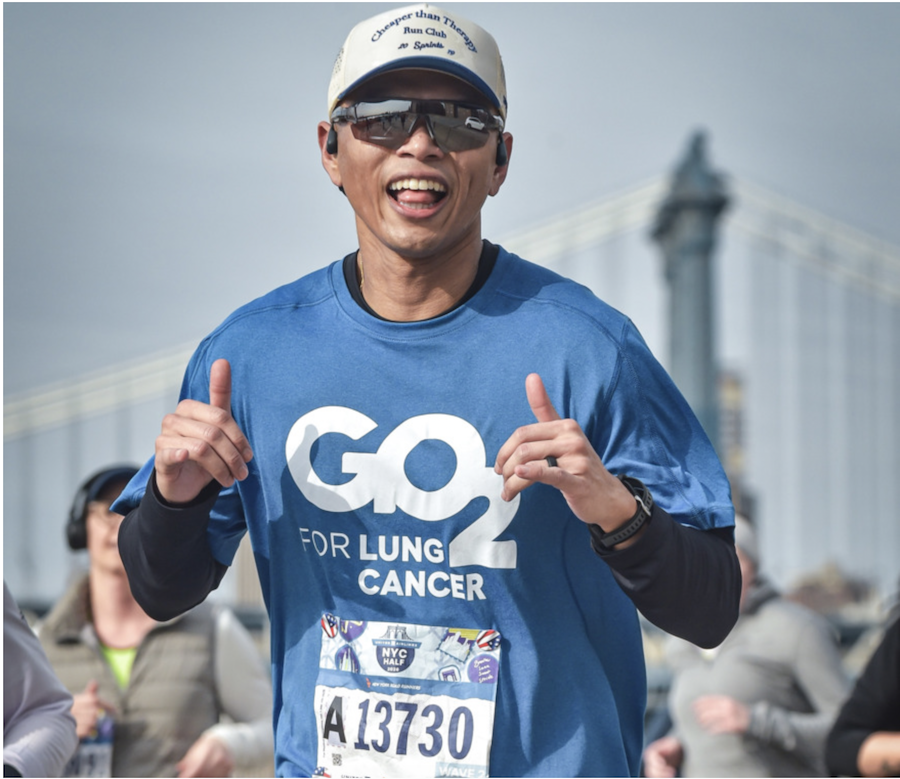
When Paul Poblete signed up to run the New York City half marathon, he wasn't just chasing a personal goal. Every training run, every early morning, and every mile had a deeper purpose.
Paul joined the GO2 for Lung Cancer Endurance Team to honor his father, who was diagnosed with combined small cell lung cancer (CSCLC) in 2021, and to help make a difference for other families facing the disease.
What started as marathon training became an opportunity to raise awareness, inspire others, and support the lung cancer community in a meaningful way.
We recently caught up with Paul to learn more about what motivated him to join the GO2 Endurance Team, what he learned along the way, and what advice he has for others considering taking on a race for a cause.
Running for something bigger than yourself
For Paul, choosing GO2 as his charity partner was deeply personal.
"My family was directly impacted when my father was diagnosed with CSCLC in 2021," he shared. "I understand the grief and uncertainty that families experience. I wanted to do something that could help make an impact, not only by raising money but also by raising awareness."
Like so many families, Paul's life changed after his father's diagnosis. Training for a marathon became more than a fitness challenge. It became a way to channel his energy into something positive while honoring his father's experience and supporting others navigating lung cancer.
"I wanted to run for a cause that had impacted not just my family, but so many others around the world."
Finding purpose through the GO2 Endurance Team
Training for a marathon requires commitment, discipline, and countless hours on the road. Paul says knowing that every mile represented something bigger than himself helped keep him motivated.
"Having the ability to raise awareness while raising funds for a personal cause was such a fulfilling feeling," he said.
He also appreciated the support provided through the GO2 Endurance Team.
"The organization provided all the resources I needed to have a successful campaign. From fundraising tips and tricks to a dedicated running coach, everything was there. The entire process was a lot of fun."
For Paul, the combination of training, fundraising, and connecting with a community united by a common purpose made the experience especially meaningful.
"Training and contributing to something bigger than myself really kept me grounded and grateful."
Every donation came with a mile
One of the most creative parts of Paul's fundraising campaign was finding a way to personally thank every donor.
He promised to dedicate 1 mile of training for every $10 donated. During those runs, he would give donors a shoutout on social media. For supporters who weren't on social media, he recorded personalized videos during his training runs and sent them directly.
The idea not only encouraged donations but also kept people engaged throughout his marathon journey.
"I was telling everyone that I would dedicate a mile during training for every $10 they donated," Paul explained. "I'd post a story during that run with their shoutout."
The approach quickly gained momentum.
"I even had friends donate just so they could make me run," he laughed.
By consistently sharing updates, celebrating donors, and inviting others into his journey, Paul kept his campaign visible while making every supporter feel like they were part of the experience.
The power of community
While fundraising was an important goal, Paul says one of the biggest surprises was the overwhelming support he received.
"I was surprised by how many people in my network wanted to support the cause, regardless of how close we were."
Many donations also came with something even more meaningful: personal stories.
"A lot of people shared how cancer had impacted their own lives. The support from everyone was inspiring."
Those conversations reminded Paul that lung cancer affects far more people than many realize. His campaign became an opportunity not only to raise funds, but also to create space for people to share their own experiences and honor loved ones.
Advice for future marathon runners
For anyone thinking about tackling a marathon, Paul's advice is to stay patient and enjoy the process.
"Stay consistent, but remember that progress isn't linear," he said. "There will be times when it gets hard, and you'll want to give up, but in the end it will all be worth it."
He also recommends finding others to train alongside.
"Find friends who want to train with you or join a run club. Running with a group makes it much more enjoyable."
Above all, he encourages runners not to lose sight of the experience itself.
"Have fun and enjoy it. It will be one of the most rewarding experiences of your life."
Advice for future fundraisers
Paul's fundraising success also came from being willing to share his story often and in different ways.
His advice?
"Utilize all your resources to spread awareness, from word of mouth to social media, even LinkedIn. Cast a wide net and repost often."
“People want opportunities to support causes that they care about,” he says. “Sometimes they simply need to be asked.”
Creating a fun, interactive campaign helped people feel personally connected to his fundraising goals and kept the momentum going from start to finish.
Ready to run for hope?
Whether you're an experienced runner chasing your next marathon or someone looking for a new challenge with purpose, the GO2 Endurance Team offers an opportunity to turn every mile into hope for people affected by lung cancer.
As Paul's story shows, fundraising is about much more than reaching a finish line. It's about honoring loved ones, building community, raising awareness, and helping create a future with better outcomes for everyone affected by lung cancer.
Join the GO2 Endurance Team and help us confront lung cancer one mile at a time

August 5, 2026
Leslie lives in St. Augustine, FL with her husband, Ken, and their elderly rescue cat. Her children are grown and live in Maryland and Washington, DC. When not traveling, Leslie can be found soaking up the sunshine at the nearby beach.
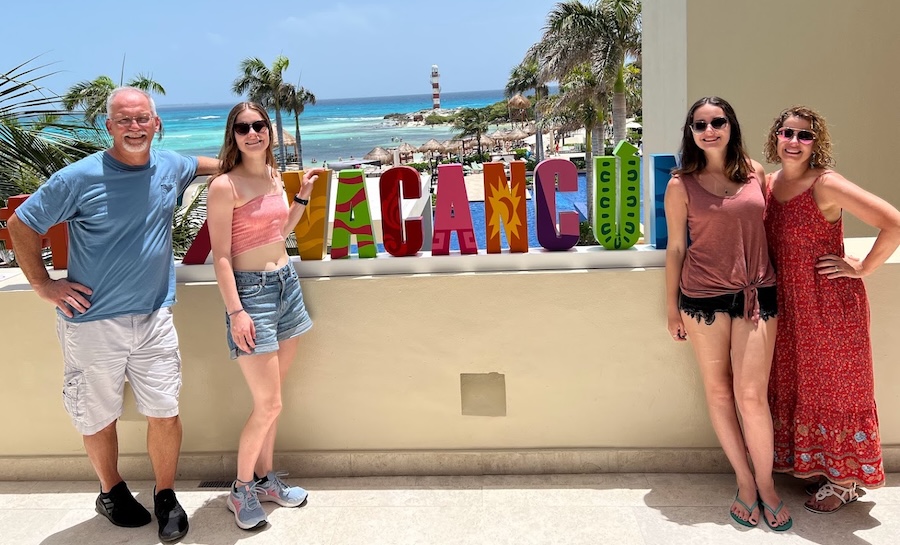
When Leslie's cough wouldn't go away, she did what most people would do; she went to her doctor. Then she went back again. And again.
She tried antibiotics and inhalers from her allergist, but nothing helped. Meanwhile, the cough worsened, her breathing became more difficult, and the active lifestyle she loved started slipping away. At the time, Leslie was teaching fitness classes, yet suddenly she found herself struggling to catch her breath.
As the weeks passed, Leslie became increasingly concerned. Her lymph nodes had become noticeably swollen, and she was getting sicker by the day. Although her primary care physician finally ordered a chest CT scan, the appointment was weeks away.
Friends urged her to stop waiting, and finally she listened. She drove herself to a nearby emergency room (ER), expecting to learn she had pneumonia or some other explanation for her symptoms. Instead, a CT scan performed at the hospital revealed a mass in her lung.
“Here’s why you can’t breathe”
The doctor in the ER returned to her room carrying a piece of paper.
"He said, 'I have good news. Your blood work is normal, and your COVID test is negative,’” Leslie remembered. “Then he handed me the scan results and said, 'Here's why you can't breathe.'"
Reading the report herself, Leslie saw the words "lung mass."
"I started screaming, 'Am I going to die?'"
Alone in the hospital room, she called her husband in a panic. Then, something remarkable happened. Her next-door neighbor, an oncologist, happened to be on call that day.
"She walked into my room, and it was like an angel at my bedside," Leslie said.
Her neighbor sat with her, held her hand, and said, “we’ll figure this out together.” Those words became an anchor during one of the most frightening moments of her life.
Finding hope in biomarker testing
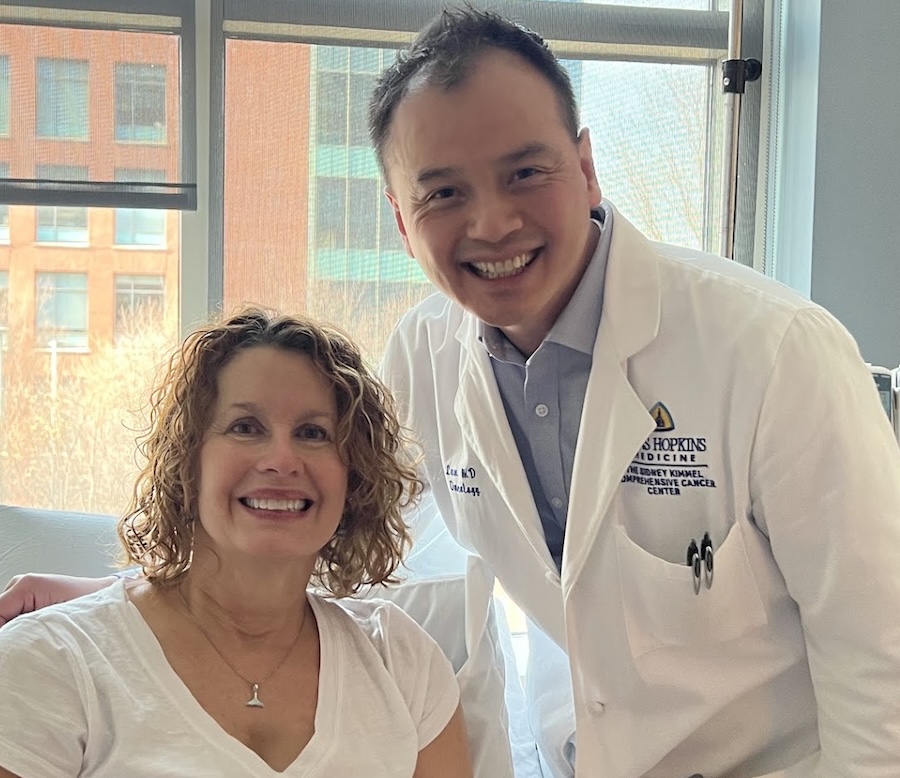
A biopsy soon confirmed that Leslie had lung cancer. Because the cancer had already spread to her lymph nodes, doctors knew it was advanced. Like many people diagnosed with stage 4 (IV) lung cancer, Leslie immediately feared the worst.
"All I could think was, 'I'm going to die. Am I going to see my daughters get married? Do I want to be buried or cremated? What’s going to happen to me?' My brain just spiraled."
Her neighbor, however, knew there was another important piece of information still to come: biomarker testing. The wait was agonizing. When a lab error delayed her results for nearly a month, she spent long days sitting outside in the sunshine, reading books, and trying to keep her mind occupied.
When the results finally came through, her neighbor actually printed them out and walked them over to Leslie’s house. She said, "This is good news!"
Leslie's cancer had tested positive for an ALK biomarker, and she heard a phrase that many people with ALK-positive lung cancer have heard before.
"You've won the cancer lottery."
At first, the statement felt impossible to understand.
"It didn't feel like I was winning any lottery," Leslie said.
But as her doctors explained what the ALK biomarker meant, Leslie began to understand. Advances in targeted therapies were allowing many people with ALK-positive lung cancer to live much longer and better than ever before. For the first time since her diagnosis, she felt a glimmer of hope.
The worst club you never wanted to join
Not long after her diagnosis, Leslie discovered the ALK Positive support community, a patient-founded and patient-driven nonprofit organization committed to transforming the future for everyone affected by ALK-positive cancer. No doctor had suggested it. She found it herself. The impact they had on her was profound.
"The ALK Positive group saved my life," she said.
At the time, Leslie was preparing to undergo radiation treatment for brain metastases. She already had the mask made and appointments scheduled. Then, members of the ALK Positive community encouraged her to pause and ask more questions.
"They said, 'Wait. Let the treatment work first.'"
After discussing options with her medical team, Leslie decided to hold off. It turned out to be a good decision. The targeted therapy worked. Her brain metastases responded without radiation.
For Leslie, it was an early lesson in the power of connecting with others who had walked the same path. She found people who had been living with ALK-positive lung cancer for as long as 10 years or more. She found friendships, practical advice, and reassurance that life could eventually feel normal again.
"You won't always be thinking about cancer," people told her. "It gets better."
They were right. Today, Leslie regularly attends ALK Positive events and has formed close friendships within the community.
"Lung cancer is the worst club you never wanted to join," she said, “but we have the best members.”
Learning to accept help
If there was another unexpected gift in the midst of Leslie's diagnosis, it was discovering just how deeply she was loved.
After Leslie’s diagnosis, her people started to show up for her in important and practical ways. Friends delivered meals. Cards arrived in the mail. Flowers showed up at her door. People researched treatment options, shared resources, and offered support in every way they could.
"The kindness was overwhelming," she said.
At first, Leslie found that accepting help felt uncomfortable. Over time, however, she realized that allowing people to help was a gift for them, too.
Looking back, Leslie describes the experience in a way she has never forgotten.
"It's almost like I died and I was at my own funeral," she said. "It was such a gift. I got to see how much people love me while I'm alive."
During the hardest period of her life, she experienced something beautiful.
"I felt like the luckiest person because who gets to experience that? Most people don't get to know how loved they are and how much they’ve meant to people."
Leslie’s friends across the world also helped her raise over $8,000 last year to donate to ALK Positive, which has contributed to the over $10.8 million in patient research funding since 2017. She is beyond grateful for their support of research.

Looking toward the future
Today, Leslie and her husband have retired and moved to Florida, a decision influenced in part by her diagnosis. Rather than waiting for someday, they're embracing the life they had always hoped to build. There are home projects to finish. Trips to plan. New adventures to take. She’s planning for the future in ways she never expected when she was first diagnosed.
Leslie is also participating in a clinical trial that is exploring new ways to prevent resistance to targeted therapies. The experience has deepened her appreciation for the researchers and physicians working to improve outcomes for people living with lung cancer.
"The research gives me so much hope," she said.
Less than 2 years ago, Leslie was wondering if she would live long enough to see her daughters' futures unfold. Today, she's busy planning her own.
August 3, 2026
Nonprofit leader with nearly three decades of experience will guide GO2 for Lung Cancer as it continues to improve outcomes for people affected by lung cancer
GO2 for Lung Cancer (GO2), a national nonprofit dedicated to improving outcomes for people at risk for and living with lung cancer, today announced the appointment of David Benson as its new chief executive officer.
Benson brings more than 27 years of executive leadership experience advancing patient-centered cancer care through innovation, philanthropy, strategic partnerships, and organizational transformation. As chief executive officer, he will build on GO2's strong momentum by ensuring people affected by lung cancer remain at the center of the organization's work while advancing research, strengthening advocacy, expanding access to lung cancer screening and high-quality care, and providing the support and resources patients and families need.
Prior to joining GO2, Benson served as executive vice president of the American Cancer Society, where he led one of the organization's largest regional operations, overseeing fundraising, operations, and volunteer engagement across 17 states. Under his leadership, the organization strengthened corporate alliances, expanded fundraising initiatives, and secured major philanthropic investments that generated hundreds of millions of dollars to support patients, caregivers, research, advocacy, and cancer prevention efforts.
Throughout his tenure, Benson partnered closely with volunteers, corporate leaders, philanthropists, healthcare organizations, and community partners to expand patient support programs, accelerate research, and drive significant growth in charitable giving. His leadership is widely recognized for building high-performing teams, fostering trusted relationships, and bringing people together around a common vision to create lasting impact.
"David is an exceptional leader with a deep commitment to improving the lives of people affected by cancer," said GO2 Board President Rick Sherlock. "His collaborative leadership style, strategic vision, and ability to build meaningful partnerships make him the right person to lead GO2 into our next chapter. David has a proven ability to unite volunteers, donors, healthcare leaders, and community partners around a shared purpose, and his deep understanding of the cancer landscape will help accelerate GO2's work to improve survival and quality of life for everyone impacted by lung cancer. The Board is excited to welcome David and looks forward to working alongside him as we continue building on GO2's momentum."
Benson earned a Master of Business Administration from the University of St. Thomas and bachelor's degrees in political science and religion from St. Olaf College.
"I am honored to join GO2 for Lung Cancer," said Benson. "I was drawn to GO2 because of its extraordinary impact and unwavering commitment to improving the lives of people affected by lung cancer. The organization has earned a reputation for turning compassion into action through research, advocacy, patient support, and efforts to expand access to screening and high-quality care. I look forward to building on that strong foundation as we continue expanding our reach and ensuring every person affected by lung cancer has the support and resources they need."

July 27, 2026
Did you know? ROS1 is a gene found in healthy cells that plays an important role in cell growth and development. In some people, the ROS1 gene joins, or fuses, with another gene. This fusion can cause cells to grow out of control, which may lead to cancer. When this happens in the lung, it is called ROS1-positive non-small cell lung cancer (NSCLC), which occurs in about 2 out of every 100 cases (2%) of lung cancer.
On July 22, 2026, the U.S. Food and Drug Administration (FDA) granted accelerated approval for Jideytro (zidesamtinib) for people with locally advanced or metastatic ROS1-positive NSCLC whose cancer progressed after treatment with a ROS1 targeted therapy. ROS1 targeted therapies work by blocking the abnormal ROS1 protein that can help cancer cells grow.
This latest approval is based on the results of the ARROS-1 trial, which evaluated the safety and effectiveness of Jideytro (zidesamtinib) in people with locally advanced or metastatic ROS1-positive NSCLC who had previously received a ROS1-targeted therapy. The study showed that some participants experienced a response to treatment, and for those who responded, the benefits lasted for a meaningful period of time. It also showed promising results for people whose cancer had spread to the brain (brain metastases) or whose cancer had developed changes called resistance mutations that may cause a ROS1-targeted therapy to stop working.
This approval provides a new treatment option for people with ROS1-positive NSCLC whose cancer has progressed after a ROS1-targeted therapy, including people with brain metastases or resistance mutations.
Please speak with your healthcare team for more information about Jideytro (zidesamtinib) and to see if it may be an option for you. If you have questions about treatment, trials, or biomarker testing, contact our LungMATCH team at support@go2.org or 1-800-298-2436.
Read the full FDA announcement.
July 22, 2026
GO2 for Lung Cancer (GO2) and the Addario Lung Cancer Medical Institute (ALCMI) are proud to announce that Christine M. Lovly, MD, PhD, FASCO, professor of medical oncology and chief of thoracic medical oncology at City of Hope®, one of the largest and most advanced cancer research and treatment organizations in the United States, has been selected as the 2026 recipient of the Bonnie J. Addario Lectureship Award. The award recognizes Dr. Lovly's extraordinary contributions to advancing precision medicine, accelerating lung cancer research, and championing compassionate, personalized care for every person affected by the disease.
An internationally recognized physician-scientist and leader in precision oncology, Dr. Lovly has transformed the understanding and treatment of lung cancer through pioneering research in biomarker-driven therapies, precision medicine, and liquid biopsy technologies. Her work has expanded treatment options for patients worldwide while advancing a more personalized approach to care that improves both outcomes and quality of life.
Named in honor of Bonnie J. Addario, a lung cancer survivor, advocate, and co-founder of both GO2 and ALCMI, the Bonnie J. Addario Lectureship Award celebrates individuals whose work has profoundly influenced the field of lung cancer. This year marks the 19th annual Bonnie J. Addario Lectureship Award, and Dr. Lovly joins an esteemed group of leaders whose scientific innovation, clinical excellence, and commitment to patients have advanced progress against lung cancer.
"Dr. Lovly exemplifies everything this award represents," said Danielle Hicks, co-interim CEO of GO2 for Lung Cancer and daughter of Addario. "She has helped redefine what is possible through precision medicine while never losing sight of the individual behind every diagnosis. Her commitment to pairing groundbreaking science with compassionate, personalized care reflects the vision my mother championed. Every person with lung cancer deserves hope, innovation, and access to the right care for them, at the right time."
"I am deeply honored to receive the Bonnie J. Addario Lectureship Award," said Dr. Lovly. "The remarkable progress we've made in lung cancer has only been possible because of the partnership among researchers, clinicians, advocates, patients, and families. While innovation continues to move the field forward at an extraordinary pace, our responsibility is to ensure that every person has access to the advances that can improve both the length and quality of their lives. It is a privilege to contribute to that shared mission."
"We support investigator-initiated clinical trials as our core mission because we get to collaborate with innovative researchers like Dr. Lovly to push forward lung cancer science," said Richard Erwin, chief operating officer and executive director of ALCMI. "We are proud to call her both a colleague and a friend, and it is a privilege to recognize her with this year's Bonnie J. Addario Lectureship Award."
Beyond her research accomplishments, Dr. Lovly is a leading voice for ensuring that advances in lung cancer care reach every patient. She has emphasized that while innovation in targeted therapies, immunotherapy, and diagnostics continues to accelerate, improving access to biomarker testing, lung cancer screening, clinical trials, and expert care remains essential to translating scientific progress into better outcomes. Her leadership across national guideline committees, scientific organizations, and patient advocacy partnerships continues to help shape the future of lung cancer care worldwide.
Since 2008, the Bonnie J. Addario Lectureship Award has recognized individuals whose leadership has significantly advanced lung cancer research, treatment, and patient care. Dr. Lovly will formally receive the award and deliver the keynote lecture, "Precision Oncology in Lung Cancer: Progress, Pitfalls, and Promise," at the 27th Annual International Lung Cancer Conference in Huntington Beach, CA.
July 15, 2026
Did you know? RET is a gene found in healthy cells that is important for their growth and survival. In some people, the RET gene joins, or fuses with a different gene. This causes the cells to grow out of control, causing cancer. When this happens in the lung, it is called RET-positive non-small cell lung cancer (NSCLC), which occurs in about 2 out of every 100 cases (2%) of lung cancer.
On July 14, 2026, the U.S. Food and Drug Administration (FDA) updated its accelerated approval of Retevmo (selpercatinib) to a traditional approval. Retevmo (selpercatinib) is now approved for people with locally advanced or metastatic solid tumors, including NSCLC, with a RET gene fusion, following prior systemic treatment such as chemotherapy.
Retevmo (selpercatinib) received accelerated approval for this population in May 2020. Updating the drug to “traditional” approval means that the FDA is satisfied the drug's previously predicted clinical benefit has been verified by further studies. The update does not change Retevmo’s (selpercatinib’s) availability or day-to-day usage.
This latest approval is based on the results of the LIBRETTO-001 study, which looked at how safe and effective Retevmo (selpercatinib) is for people with locally advanced or metastatic solid tumors with a RET gene fusion, following prior systemic treatment such as chemotherapy. The study showed participants in the trial experienced both a promising response rate and benefits lasted for a meaningful time period in those who responded.
This is an exciting update, as Retevmo (selpercatinib) verified clinical benefit may help to inform discussions with your healthcare team about which RET-targeting treatment may be best for you.
Please speak with your healthcare team for more information about Retevmo (selpercatinib) and to see if it may be an option for you. If you have questions about treatment, trials, or biomarker testing, contact our LungMATCH team at support@go2.org or 1-800-298-2436.
Read the full FDA announcement.