
Community events

Learn about local and national events where you can connect, raise awareness, and support the lung cancer community.
Learn about local and national events where you can connect, raise awareness, and support the lung cancer community.
Explore real stories honoring survivors and those remembered through their lasting legacy. Select a category to find stories that resonate most with you.
Find practical advice, emotional support, and resources to help you or your loved one cope with the challenges of living with lung cancer.
Stay informed about the policies that impact the lung cancer community and ways you can get involved.
Explore breakthroughs and ongoing studies in lung cancer research, from clinical trials to cutting-edge therapies and prevention.
Catch up on highlights from our newsletter, featuring stories, resources, and upcoming opportunities to engage.
Explore news and updates shaping the lung cancer landscape—from scientific breakthroughs and organizational milestones to awareness campaigns and community highlights.
October 28, 2025
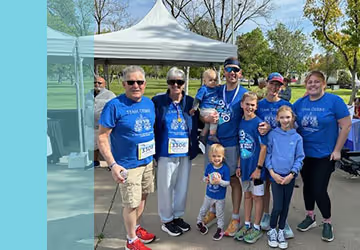
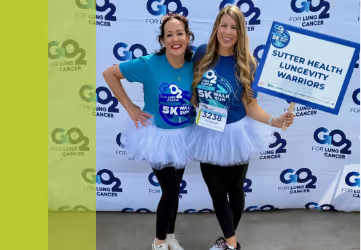
When Debbie P. learned that a small “ground glass” spot on her right lung, one that had been monitored for years, was actually adenocarcinoma, she suddenly found herself facing the unthinkable. “From my first appointment with the surgeon, he told me he would assign a nurse navigator,” she recalls. “Since then, my amazing nurse navigator has been with me at appointments and available for support and resources every step of the way.” After a successful surgery to remove her right lower lobe, Debbie faced several complications in recovery—pneumonia, medication reactions, and fluid that required thoracentesis. Through it all, she leaned on her care team and family for strength. One day, her nurse navigator, Tana, told her about GO2’s Sacramento 5K Walk/Run, and Debbie decided to give it a try. “I didn’t set out to be a team leader,” she says, “but as my friends and family started signing up, we created Team Debbie. It felt so special to give back to the community that gives so much to people like me.”
Moments that mattered
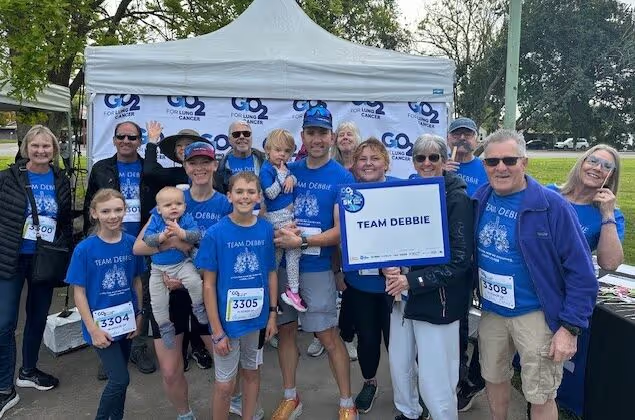
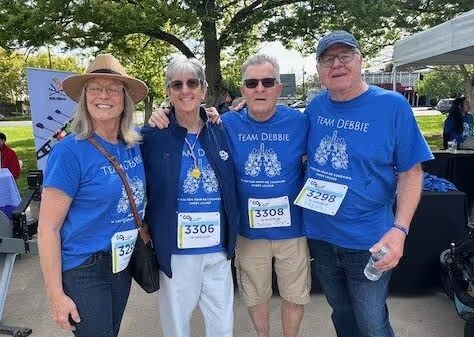
For Debbie, GO2’s 5K became far more than a race. It was a day of connection and hope. She remembers seeing her care team—surgeons, nurse navigators, and other medical professionals—show up to walk and run beside patients. “That meant so much,” she says. “I had just had a thoracentesis the week before, so I wasn’t in the best place physically or emotionally. But I felt surrounded by love from my family, my care team, and my GO2 community.” Her husband, Rob, was her rock through it all, driving her to appointments, helping organize the team, and hosting a “thank you” celebration after the event. Her children and grandchildren proudly wore their Team Debbie shirts (designed by her daughter), and her son even ran competitively in her honor. Seeing old friends and even reconnecting with a high school classmate who donated after seeing her Facebook post brought unexpected joy and encouragement. “All these moments gave me such a sense of not being alone,” Debbie says. “I realized I could also be part of the encouragers as I continue my journey.”
Building connections beyond the 5K
At the pre-race dinner in Sacramento, Debbie met others deeply involved in GO2’s mission. This included Mary, who later became her Phone Buddy.“I wanted to talk not just about the medical side of cancer, but about the emotional and personal challenges that come with it. Having someone who truly understands has made such a difference,” Debbie says.
Reflecting on Lung Cancer Awareness Month
This November marks a full year since Debbie’s diagnosis, making Lung Cancer Awareness Month especially meaningful. “It’s my opportunity to support others the way I was supported,” she says. “I want to do whatever I can to support someone else going through this because other people are supporting me.” Debbie encourages others to take full advantage of the programs available through hospitals and community organizations, from nurse navigators and wellness programs to exercise classes and emotional support groups. “You are not alone,” she adds. “Everyone’s diagnosis is different, but there are so many more options and resources now than there used to be. Each of these helps you heal in different ways.”
Join the movement
Debbie’s story is a reminder of the power of community, connection, and hope. This Lung Cancer Awareness Month, honor survivors like Debbie by joining a GO2 5K Run/Walk near you, or by starting your own team. Every step helps fund programs, research, and resources that ensure no one faces lung cancer alone. Find an event and join us!
June 30, 2025
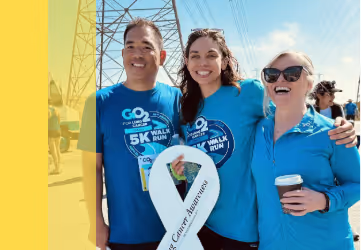
When Calli K. first heard the words “stage 3 (III) lung cancer,” her world stopped. A wave of fear, uncertainty, and disbelief washed over her. She was just several weeks shy of her 50th birthday, and the life she knew came to a screeching halt. But even amid that fear, something, or rather someone, became a lifeline. That someone was Jodi B., a program supervisor and nurse navigator for Sutter Health Lung Nodule and Cancer Screening Program in Sacramento, CA. They first spoke in December 2023 when Calli needed more than just a clinician, she needed an anchor.
A lifesaver in scrubs
[caption id="attachment_47317" align="alignright" width="400"]

Calli K. (left) is pictured with Jodi B. (right), who serves as the program supervisor and nurse navigator for Sutter Health’s Lung Nodule and Cancer Screening Program.[/caption]Calli had concerns about her assigned oncologist and was struggling with the anxiety of beginning treatment. In the face of that uncertainty, Jodi sprang into action. “She successfully reassigned me to an oncologist I had more faith in, which in turn alleviated my anxiety and set the stage for the fight of my life,” Calli said. “She is an angel on earth.”The role of an oncology nurse navigator often goes far beyond scheduling appointments or delivering lab results. It’s a deeply human connection built on trust, compassion, and shared strength. For Calli, Jodi didn’t just navigate her through treatment; she became a constant presence, a safe harbor when everything else felt stormy.
The spirit behind the care
When asked to describe Jodi in 1 word, Calli didn’t hesitate: “Lifesaver.”“Anything Jodi does makes me smile,” she said. “You can see how passionate she is about what she does, and that energy is contagious. It inspired and motivated me through the darkest days.”Jodi wasn’t just a clinical guide; she was emotional support, a shoulder to lean on, and a gentle voice when the noise of cancer grew too loud. “She was a safe space to land if I had any questions,” Calli shares. “She made me feel comfortable. She still does to this day.”The healing process is rarely linear, and emotional resilience is as critical as physical strength. Oncology nurse navigators like Jodi ensure patients never feel alone.
A shared motto, a deeper bond
Sometimes the universe leaves little signs that a connection is meant to be. For Calli and Jodi, that moment came in the form of a single sentence. It was one that had long shaped both of their lives.At the bottom of each of Jodi’s emails under her signature, Calli noticed something that stopped her in her tracks: a familiar quote. “I've learned that people will forget what you said, people will forget what you did, but people will never forget how you made them feel.” — Maya Angelou.It was Calli’s favorite quote. In fact, she wore it on a bracelet every single day.“I squealed when I saw it,” Calli said. “I couldn’t believe it. That quote has been my life’s motto for as long as I can remember. There it was, at the end of Jodi’s email. It gave me goosebumps. I even got her a bracelet with it, too.”For Jodi, the quote has been her compass since the beginning of her nursing career in 2011. “It’s always been my life quote on how to treat everyone I meet,” she says. “It eventually became my work motto, too. It’s how I show up for my patients, my team, and even strangers.”The unexpected discovery of their shared belief in leading with compassion deepened the bond between them. What began as a patient and a nurse had grown into something more. It was a connection grounded in empathy, authenticity, and the kind of mutual understanding that can’t be taught.“That quote says everything about who Jodi is,” Calli says. “And now, it’s something that connects us both in the most meaningful way.”
A calling from childhood
For Jodi, this work is more than a career; it’s a calling rooted in her family and upbringing.“My mother worked as an oncology nurse for 36 years,” Jodi said. “Growing up, I visited her unit and met her patients. Seeing how much they appreciated her compassion sparked something in me.”Those childhood visits planted seeds of purpose that would later grow into a life dedicated to helping others. Jodi became a fixture not only in hospitals but also in the community. She participates in cancer fundraisers and works to promote early detection and life-saving screenings.“I knew from a young age that I wanted to be that comforting, smiling presence for patients during their hardest moments,” she said.
Learning through vulnerability
While she guides others through their fear and pain, Jodi admits she’s learned just as much from her patients as they learn from her. One experience in particular left a lasting impact: a young mother newly diagnosed with stage 4 (IV) cancer.“I was trying to hide the tears I couldn’t hold back,” Jodi said. “But she saw them and showed me it was okay to be vulnerable. Since then, I have allowed myself to cry and mourn with my patients and their families. It’s a part of showing up for them—fully.”That emotional openness is part of what makes Jodi’s support so profound. It’s not just about the knowledge she brings to the table but also about authenticity and human connection. It’s in the hugs, the check-ins, the texts long after treatment ends.
The ripple effect of care

Jodi believes being an oncology nurse has shaped not only her career but her entire life.“It has given me tools and knowledge to help others, even those who aren’t my patients,” she said. “Whether it’s about cancer screenings or connecting people to community resources, I’ve learned how to advocate for all.”
Courage that inspires
Despite the emotional toll of the job, Jodi draws strength from the very people she supports.“My patients inspire me every single day,” she said. “Their courage to face something so awful and unknown—it’s beyond words.”For Calli, that courage was only possible because someone believed in her, stood beside her, and fought with her. That someone was Jodi.“You are without a doubt fulfilling your life’s purpose,” Calli said. “And I love you for it.”
The invisible thread
The relationship between a patient and an oncology nurse navigator is often invisible to the outside world, but within the cancer journey, it’s a lifeline. It's the steady hand when everything else feels like it's slipping away. It's the first text in the morning when a scan is looming, the squeeze of a hand before treatment starts, and the last hug when remission is achieved.For Calli and Jodi, that bond became something transformative. It is proof that in the fight for life, the people who stand beside you matter just as much as the medicine.
June 30, 2025
Ashley Vassallo is a 37-year-old mother of 2 young boys living in Northern California. Formerly a hospice social worker, she now works as a patient advocate focused on raising awareness of lung cancer in young women without a smoking history. Her favorite ways to recharge include pottery, caring for indoor plants, weightlifting, and rock climbing.

Ashley had spent more than a year searching for answers. At 34, she was a healthcare worker, a mom of 2, and someone who “did everything right.” But her body was sending clear signals that something was wrong: unrelenting fatigue, weight loss, shortness of breath, even joint pain so severe she couldn’t hold a pen at work. She saw medical professionals over 20 times, but again and again, they dismissed her concerns and chalked it up to stress, the pandemic, or postpartum exhaustion. At one point, she was hospitalized with what doctors called pneumonia, but the antibiotics didn’t help, and her symptoms only got worse. “I felt like I was dying,” she said. “But no one was listening. I knew in my gut it wasn’t normal. But I was juggling so much—a separation, 2 kids, a demanding job—that even I started to doubt myself.” It wasn’t until her new partner urged Ashley to demand a CT scan that she found the clarity she’d been fighting for. A trip to the ER—motivated mainly by not wanting to inconvenience someone else—finally led to the scan that showed what no one else had caught: lung cancer. Shocking as it may sound, Ashley’s first feeling was relief. “I remember thinking: finally! I’m not crazy. I’m going to get the care I need.”
A diagnosis and a decision to speak out

Ashley doesn’t have a targetable biomarker. Her PD-L1 was low. After initial treatment with chemo and immunotherapy, she had a lung removed, and later, she experienced a serious side effect called immunotherapy-induced hepatitis. She’s also been through radiation, multiple recurrences, and is now on a new drug being studied in a clinical trial.But it wasn’t just the treatment that challenged her; it was the isolation. “At first, I didn’t share anything publicly. I thought, if I talk about this, it’ll become too real. I didn’t want cancer to define me.” That changed after her lung surgery. Physically recovering and emotionally depleted, Ashley felt like the only young woman, maybe someone else was out there feeling the same way.” She created TikTok and Instagram accounts under the handle @onelunglady and started talking. Her first video—filmed in a moment of vulnerability, pain, and honesty—got 1 million views. “Suddenly, people were reaching out saying, ‘Yes! Me too.’ And I wasn’t alone anymore.”
Finding a path forward with LungMATCH
When Ashley was told she might need to explore clinical trials as the next treatment, she felt overwhelmed. “I didn’t even know where to begin. ClinicalTrials.gov made no sense. It was like reading another language.” That’s when she turned to LungMATCH, which supports people with lung cancer in navigating treatment options and identifying relevant clinical trials. “It was such a relief. I sent over my information, and one of the treatment and trial navigators walked me through the options, explained what they meant, and helped me understand what I might qualify for.” With the help of LungMATCH, Ashley ultimately enrolled in a phase 3 (III) clinical trial at her own hospital. “LungMATCH felt like a lifeline. Not just because it matched me with what I hope will be a very successful treatment, but because I didn’t have to do it all alone.”
Redefining what advocacy looks like

Ashley’s social media presence has become a lifeline—for her and for others. Through honest videos, practical advice, and raw glimpses into her daily life, she’s become a trusted voice for young people facing a disease still burdened by stigma. “I wanted to create the kind of content I wish I had seen before I was diagnosed,” she said. “If 1 person demands a scan because of something I shared, that could save their life.” “Storytelling is so important for this disease,” she said. “People need to see the face of lung cancer. That builds public sympathy. Until we have that, we’re never going to get the kind of attention and funding of a disease like breast cancer.” And while she’s become a public advocate, Ashley is quick to remind others that sharing is a choice. “You don’t owe anyone your story. Living it is enough.” For those who do choose to speak up, Ashley offers a reminder she’s had to give herself more than once: “Even if your voice shakes, even if you whisper, you still have a voice. And it matters.”
Creating community and hope
Now enrolled in a clinical trial, Ashley is cautiously hopeful. She describes the side effects as manageable but like “intense morning sickness.” What’s harder is the uncertainty. “Every recurrence brings a new debate. Is it cancer? Inflammation? Infection? No one can agree.” Still, she shows up—for her kids, her peers, and herself. Most recently, she’s helped launch No Mutation Nation, a new community space for people whose lung cancer does not have a targetable mutation. “We’re the biggest group in lung cancer, but the most invisible. I wanted to create a place where we don’t have to feel like the sad exception.” When asked what advice she’d give someone newly diagnosed, Ashley doesn't hesitate: “There’s so much hope. The statistics don’t reflect people like us, who are young and otherwise healthy. Connect with other people when you’re ready. Share if you want to. But most of all, advocate for yourself. And if you can’t, bring someone who will. You have a voice, and it’s an important one.”
June 16, 2025
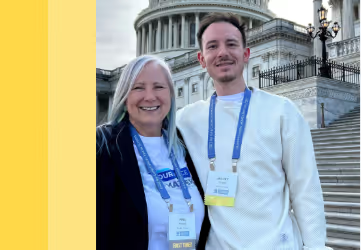
Rina A. grew up on a corn farm in Nebraska and now lives in Debary, FL, with her soulmate and husband, John. She has worked at Stetson University for 20 years and is currently the presidential liaison for philanthropic and strategic partnerships for the university.Her son, Michey, grew up in Orlando, FL, and now resides in Washington, D.C., where he serves as a senior government affairs policy professional at Revvity, a leading life sciences and diagnostics company. He is an American University graduate and is also an avid Orlando Magic basketball fan.

In September 2023, Rina Arroyo was recovering from a rough case of COVID-19 when she began to feel that something just wasn’t right. The cough lingered, and her lungs crackled at night with a sound “like a fireplace.” At first, doctors diagnosed her with long COVID, but Rina knew deep down that there was something more.After persistent follow-up, a compassionate nurse practitioner finally took her concerns seriously and promised Rina that she would help her find out what was wrong. In February 2024, a CT scan and biopsy revealed the news: metastatic adenocarcinoma consistent with a pulmonary origin—stage 4 (IV) lung cancer.That night, she had what she describes as “a dark night of the soul,” but by the next morning, she resolved that the only thing she could control was her mindset. She turned to meditation, faith, and a 200-hour course rooted in neuroscience and healing. “I decided that with the help of my healing collaborators, including my doctors and medicine, I would live.”That clarity deepened when she met with her oncologist and nurse navigator. Based on her profile—someone who had never smoked and was otherwise healthy—her oncologist suspected a genetic driver. He told her about targeted therapies that work for many patients with specific mutations. “I looked at him and said, ‘I know I have a genetic mutation. And I know I will be healed.’”She was right. Genetic testing confirmed the presence of a RET mutation, a rare but targetable biomarker in lung cancer. The cancer had spread throughout her lymph nodes, lungs, and spine, and there were some spots in her hips and knees. By April 2024, she began taking Retevmo (selpercatinib), a targeted therapy approved for RET+ lung cancer. Within just 1 day, an affected lymph node began to shrink. Soon after, her lungs stopped crackling. Her body began to heal.By September 17, 2024, exactly 8 months after first seeing the term “metastatic” in her patient portal, her scans showed no evidence of disease in her lungs or lymph nodes, and the large tumors in her spine were almost completely healed. “I felt lucky,” she says. “And I don’t take that for granted.”
Advocacy as a calling
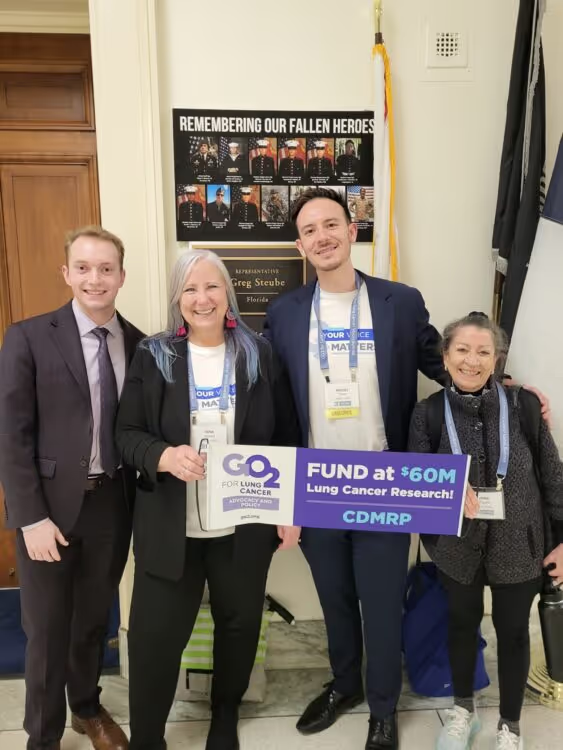
Rina could have stopped there. Instead, with the help of her son Michey, she turned her recovery into a mission.When Rina told Michey about her diagnosis, he immediately responded: “You’re not alone. You need to find your people.” Michey works in government affairs at a life sciences and diagnostics company that works with rare diseases and has seen firsthand the power of patient advocacy. Together, they connected with GO2 for Lung Cancer and traveled to Washington, D.C., for the Lung Cancer Voices Summit in early 2025.On Capitol Hill, Rina and Michey met with their congressional offices to advocate for lung cancer research funding, access to genomic testing, and better legislation for patients. Their approach was a balance of heart and strategy. Rina shared her personal journey with grace and hope, while Michey used his policy expertise to speak directly to the legislative challenges they faced—including the impact of tariffs, federal funding cuts, and lack of insurance coverage for genomic sequencing.“Genetic testing is the next frontier of science. It’s how we’re going to find, treat, and cure diseases that were once considered untreatable. But if the testing isn’t covered, you can’t know what treatment is right for you,” Michey explains.Together, Rina and Michey made a compelling case for continued investment in research. “I am only able to benefit from Retevmo (selpercatinib) because the investment was once made in the research that discovered it,” Rina says. “I want that same experience for everyone facing a lung cancer diagnosis. I also hope for a continued investment in the treatments I might need if this drug stops working for me. That isn’t political. It’s human.”“We also have to learn to speak the language of the current administration,” Michey said. “They care a lot about fiscal responsibility and chronic diseases. I made the case that lung cancer is itself a chronic disease these days, and treating it as such represents an opportunity to cut long-term costs and ‘make America healthy.’ Cancer isn’t a death sentence anymore. And we need to treat it that way.”For Rina, the Voices Summit was her first time meeting other people with lung cancer. It was also the first time she spoke publicly about her diagnosis. “It changed my life in such a powerful way,” she says. “I wasn’t alone anymore.”They left Washington energized and determined to continue the work—keeping in touch with their officials, meeting with local offices, staying active with the RET Renegades community, and helping raise awareness however they could. “It gives me so much courage to have Michey with me,” Rina says. “We make a great team.”
The power of support
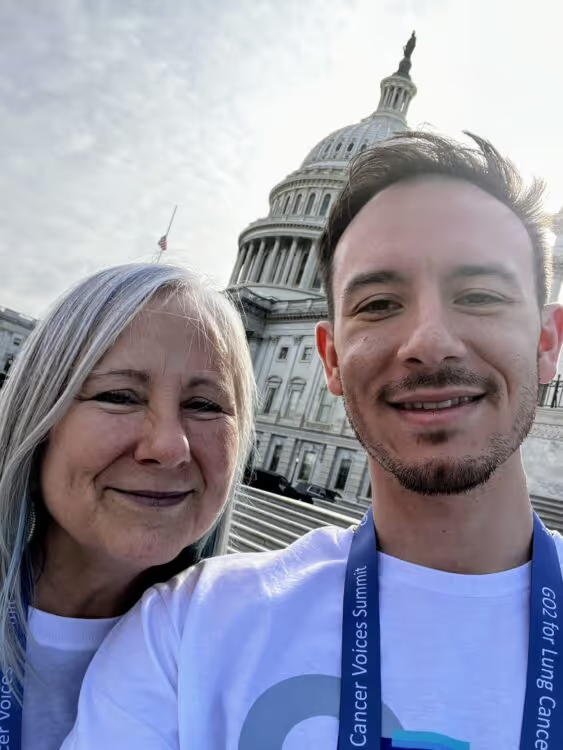
Behind Rina’s strength is a powerful circle of support. Her family, including Michey, her husband, parents, and other relatives, rallied around her from the beginning. Her workplace, too, stepped up in remarkable ways. As a university administrator, Rina was open with a small circle of close colleagues and found unwavering encouragement from her president, senior leadership team, and trusted friends.“They were my coaches on the mind journey,” she said. “They helped me keep going when I was afraid. They let me lead with my intuition and reminded me that I was still me, not just a diagnosis.”One of her mentors gave her the advice that helped shift everything: “The only thing you can control is your journey. So own your effing journey, girl.”Rina took that advice to heart. She embraced her emotions, stayed grounded in gratitude, and made a conscious decision not to let cancer define her. “I didn’t want to become the disease. I needed to stay healthy in my mind.” One dear friend greeted her every morning on WhatsApp with a positive inspiration for each day. “She never let me doubt that I was healed—from day 1.”Michey also tried to see the opportunity in his mom’s diagnosis. “We were so scared at first, of course, but those emotions spur growth. We all face difficult things in life; it’s how you react that tells you who you are.”
Advice to others

For others facing a lung cancer diagnosis, Rina urges them to “be your own advocate. Listen to your body. Ask for biomarker testing. And take care of your mind the same way you care for your body. It matters.”She also urges lawmakers and medical systems to recognize the urgency of timely diagnoses and access to genomic profiling. She recently lost a friend with stage 4 (IV) lung cancer who was not able to get the testing she needed in time. “That’s why I am becoming a lung cancer advocate,” Rina said. “So everyone has a chance at their own miracle pill.”Because, as she puts it, “You can’t always control what happens. But you can always own your response to it.”
September 23, 2024
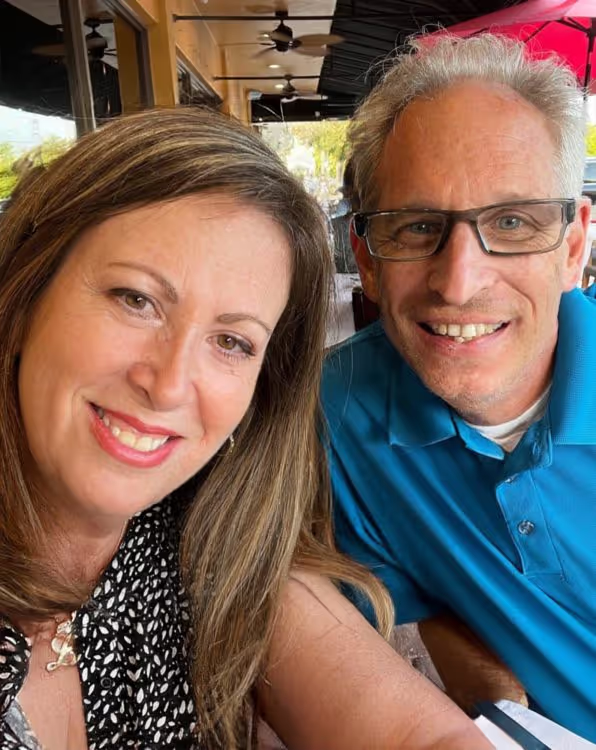
I was diagnosed in June 2021 with stage 4 (IV) NSCLC. I did not have any real symptoms until a few days before I went to the emergency room in distress. It took more than a month for my cancer to be typed and staged. I had non-small cell lung cancer at stage 4 (IV)! How had it been that just 2 weeks prior to my trip to the emergency room, I had raced my then 16-year-old son home from a long bike ride, and won? As a non-smoker, I was blown away that I had lung cancer at all, let alone stage 4 (IV).After being diagnosed I had biomarker testing that came back with encouraging news – I have an EGFR mutation that allowed me to try a targeted therapy. Knowing I could avoid chemo and radiation (for now) was a huge relief. In researching my cancer, I learned that it is critical for patients to understand their diagnosis and treatment plan, as well as actively advocating for themselves. I feel that I am a partner in my own treatment and cancer journey.
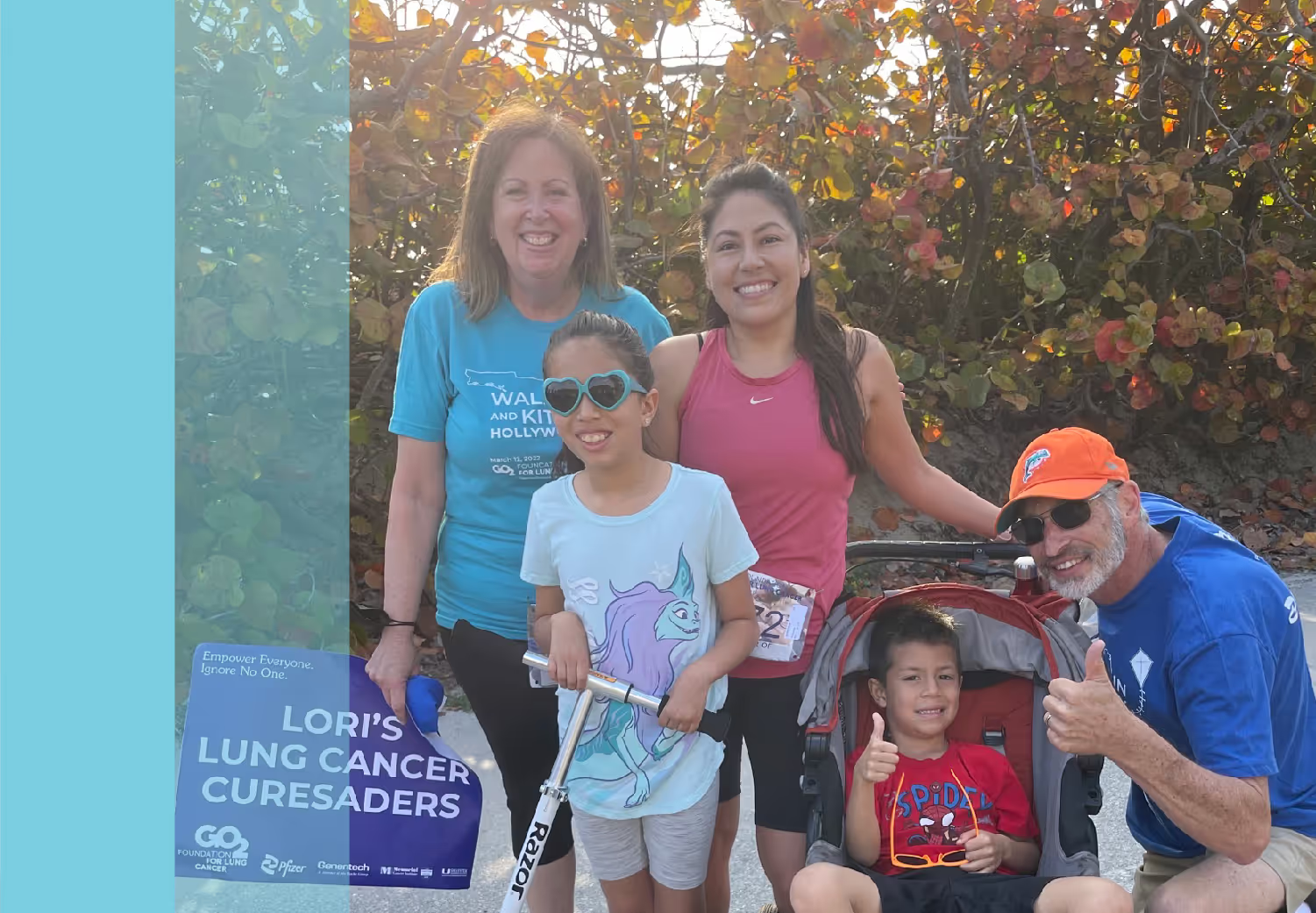
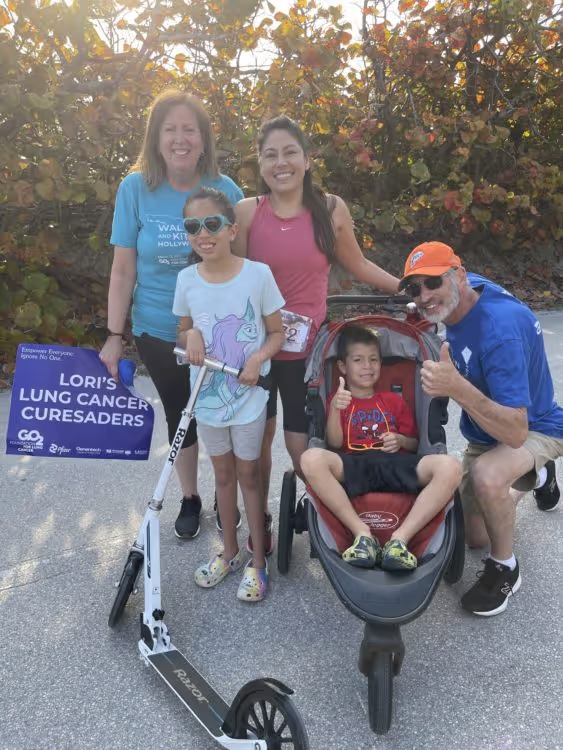
I have decided to take a new path after my diagnosis. I spend time with my family and doing things I’m passionate about. Every day is a gift, and I intend to enjoy every one of them. I also wanted to find a way to channel my energy into helping myself and others. Through the years I have raised a great deal of money for the Foundation Fighting Blindness and started initially with their walk. Once I digested all of what I learned after my diagnosis, I looked to find an organization that I could align with to help raise awareness and funds. I did my research and found GO2. I have attended the Hollywood, FL Walk/Run and Kite Fly twice. I also was able to advocate for more federal research funding with GO2 at the Voices Summit.My advice for people who are newly diagnosed is not to panic. Find your doctors from people and organizations that you trust. Don’t rely on statistics. You are an individual with your own health circumstances. There is real hope and a community of people waiting to support you.
June 17, 2024
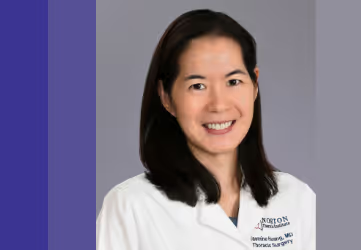
Jasmine Huang, MD, is a thoracic surgeon who focuses on thoracic oncology, particularly the surgical treatment of lung cancer. As part of her responsibilities, she performs lung resection surgeries on early-stage lung cancer patients—a pathway to a cure.

Lung cancer, if found early, can be curable. That’s a big reason why Dr. Huang, the director of education and program development at Norton Thoracic Institute, St. Joseph’s Hospital and Medical Center, and co-director of the Norton Thoracic Institute Lung Cancer Program, is passionate about raising awareness about lung cancer. “Unfortunately, lung cancer is the leading cause of cancer death in the U.S., and I don't think a lot of people are aware of that,” said Dr. Huang. “I've become very actively involved in educating patients and the public. We have a very robust lung cancer screening program with the hope that we can catch lung cancer early and offer people treatment so that they could potentially be cured.” Huang knows it takes a community to make a difference, which is why she’s the national chair of GO2 for Lung Cancer’s Summer Raise. Summer Raise is GO2’s annual national fundraiser, and it’s your opportunity to join others in the lung cancer community for fun and fundraising to confront lung cancer together.
Building community while raising awareness
The 5th Annual Summer Raise just wrapped up on June 22, with participants from across the country raising nearly $30,000 for the cause. “Whether you’re walking, swimming, hiking, taking a Zumba class, or something else, Summer Raise is all about getting out there, moving, and making it fun,” said Dr. Huang. Your participation and fundraising through GO2 events, like Summer Raise, help accelerate lung cancer research, provide one-on-one assistance, and navigate treatment for people with lung cancer and their care partners. These efforts accelerate cures and change this disease from one of stigma to one of hope. “GO2 is an amazing organization that puts patients first. They really help move forward knowledge and research in lung cancer with the idea that we can hopefully come up with a cure for cancer and improve people's lives.” Dr. Huang has advice for healthcare facilities looking to participate in Summer Raise and other lung cancer awareness events. “There are different things we have done to help get people involved,” she said. “Having informational tables outside the cafeteria, in our office lobby, and at the front desk can pique people’s interest.”
May 28, 2024
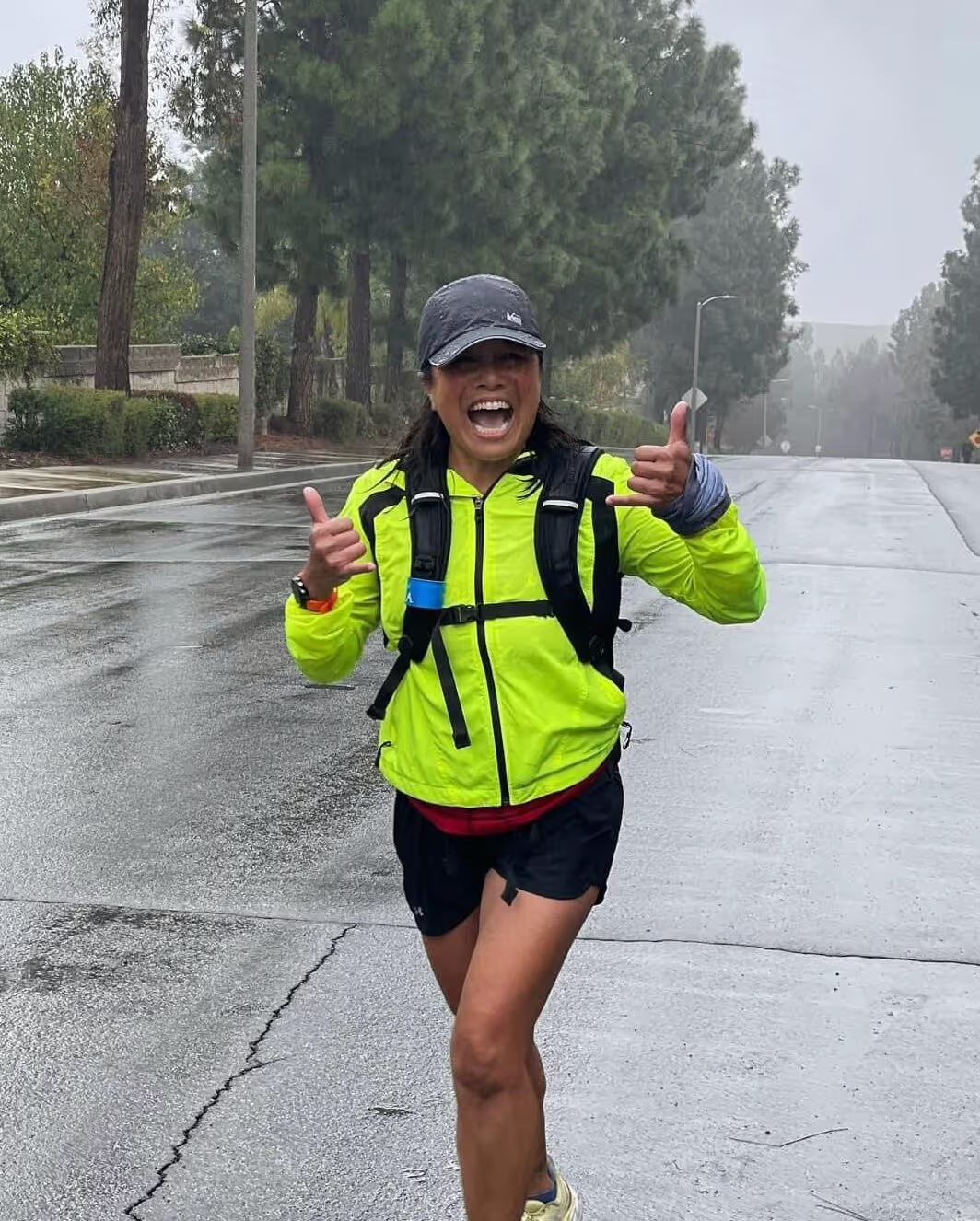
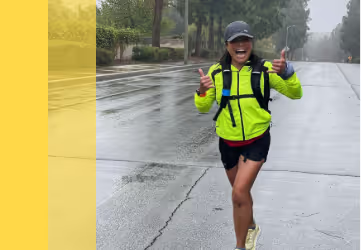
An avid runner and hiker, Grace never thought she would be someone who could get lung cancer, even though her father was diagnosed with the disease. Her family was surprised at her dad’s diagnosis and shocked when her mother received her own lung cancer diagnosis shortly after. At that point, Grace decided to get screened. They found a suspicious spot but assumed it was related to her asthma. It was too close to her heart to do a biopsy. A few months later, Grace was training to climb Mt. Whitney on California’s San Gorgonio Mountain when it became harder and harder for her to catch her breath. First responders evacuated her by helicopter from the backcountry. When she reached the hospital, her healthcare team did another scan and saw that the spot on her lung had grown, so they decided to go ahead with a biopsy. The biopsy showed it was cancer, and they ended up removing her left lung’s upper lobe. Grace grew up in Los Angeles. She is the youngest of 8 children, but none of her siblings have been diagnosed with lung cancer. Doctors can’t figure out why her father, mother, and she have had the disease. Grace wonders if it is from the smoggy Los Angeles environment or if it is genetic. Despite her lung cancer diagnosis, Grace continues to be active. Within four months of her surgery, she was back to running marathons! Her thoracic surgeon told her that, typically, people who have that type of surgery don’t do strenuous activity for at least a year—but she was determined to continue running races. Grace signed up to run the New York City marathon this November as part of GO2 for Lung Cancer’s endurance team. Incredibly, it will mark her 40th marathon. Do you have a family history of lung cancer like Grace? If so, you may be able to help us discover the origins of inherited lung cancer.Learn more. You, too, can participate with GO2 for Lung Cancer’s endurance team to help increase lung cancer survival by raising funds to support cutting-edge research, legislative advocacy, and patient support services through GO2 for Lung Cancer. How to join.
April 9, 2024
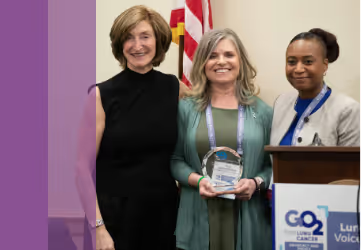
We are excited to welcome the White Ribbon Project as a 2024 5K walk/run partner. Representatives from the White Ribbon Project will be on-site at our 5Ks to share their important mission and distribute white ribbons to community members who would like to help raise awareness about the disease. We started our partnership at the Dallas 5K on March 30 and welcomed the White Ribbon Project to our 5K in Sacramento on April 6.

The White Ribbon Project is a national nonprofit organization that promotes awareness about lung cancer by changing public perception of the disease. People with a connection to lung cancer make or are given large, white, wooden ribbons to start conversations within their communities about lung cancer and the fact that anyone with lungs is at risk for the disease. The project educates people about early detection, treatment, and survivorship, and the ribbons are used as a symbol of unity for everyone facing the disease. GO2 honored the White Ribbon Project’s co-founder, Heidi Nafman-Onda last year with the Volunteer Leadership and Advocacy Award for her outstanding leadership at GO2’s 2023 Lung Cancer Voices Summit in Washington, D.C.

March 19, 2024
Author: Meg Fay, BSN, RN, Nurse Manager, Excellence in Healthcare Delivery, GO2 for Lung Cancer
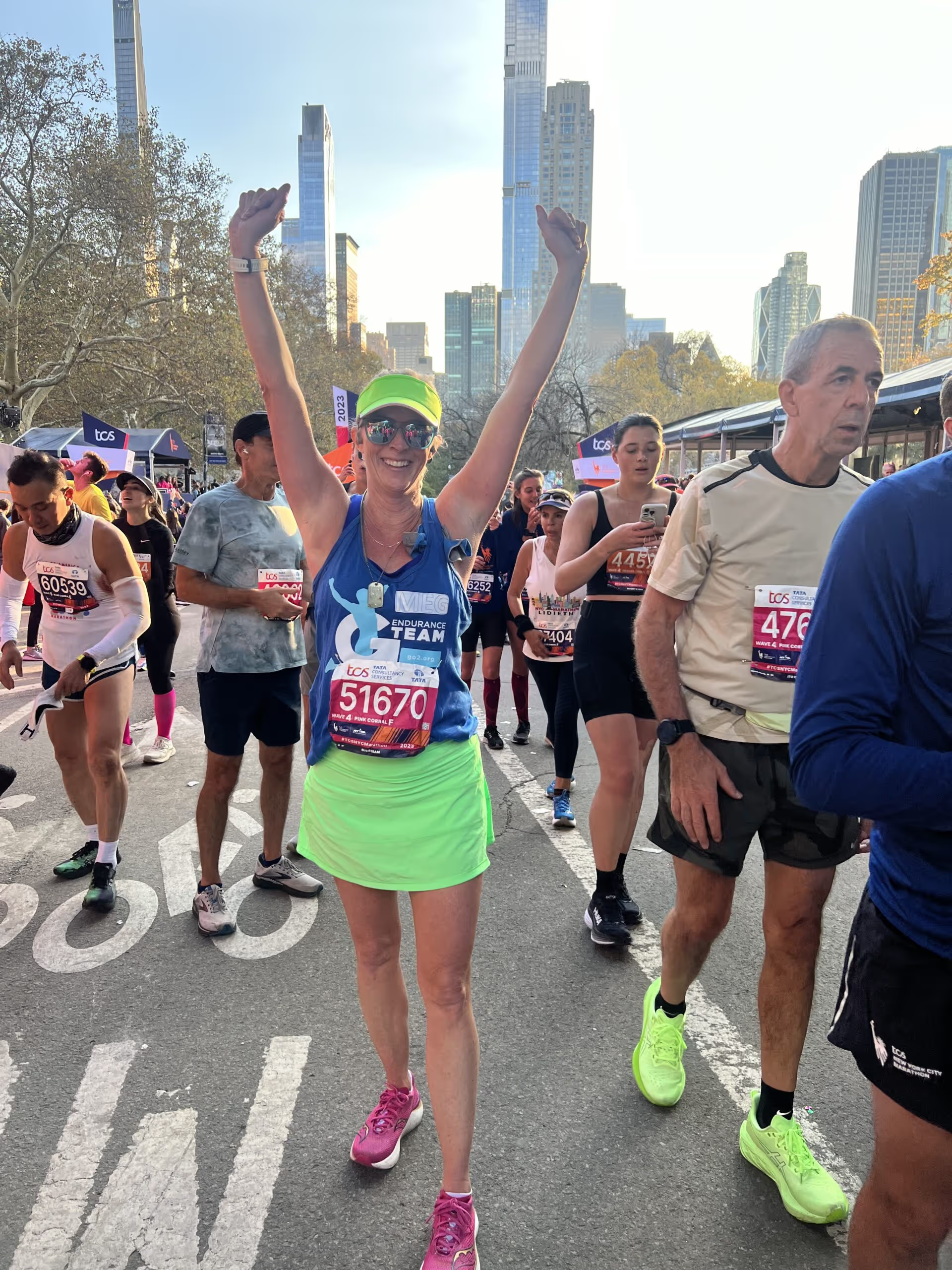
My name is Meg, and I had the pleasure of experiencing the NYC Marathon 2024 as part of the GO2 Endurance Team. Coach Seth guided our team, offering multiple training programs that we could tailor to our individual needs and training webinars on everything from nutrition to injury prevention and beyond. We could follow along with our programs on the Final Surge app, which was fantastic and easy to use. We also had access to a private Facebook group, connecting us to others training for marathons at the same time—at all levels of fitness, age, and experience.If you’ve ever trained for a marathon or any physical event, you know that things never go exactly as planned. It is all about the big picture and hitting that final goal. Missing a workout or run here or there is both normal and okay! Access to Coach Seth and the rest of the team in training was a helpful and supportive reminder that others were working, too, even though we might not see each other.
My “why”
There were many reasons I wanted to join the GO2 Endurance Team to run the New York City Marathon, beginning with the fact that lung cancer has affected my family in many ways. I lost my aunt to lung cancer in 1991. My mom was diagnosed with lung cancer in 2014, and in November 2024, she’ll be a decade out! She is living large and enjoying life to the fullest. My uncle on my father’s side is currently a stage 3 (III) survivor and is almost two years out from diagnosis.I had been working in the business world for over a decade when I decided to return to school to become a nurse. I immediately began working on a floor with patients recovering from lung cancer surgery. I found my way into a nurse navigator role, which allowed me to work very closely with lung cancer patients and their families, especially at the beginning of their journey. I found passion and fulfillment in educating and caring for these patients and their families.Luckily, a role supporting people working with lung cancer patients opened at GO2 for Lung Cancer in 2022, and I’ve been lucky enough to have worked here since then. My job is more than a job. Funding the mission to relentlessly confront lung cancer on every front, every day, for everyone is a calling. Fundraising can be uncomfortable and challenging, but a clear purpose makes it easy. GO2 was there to support us in our fundraising efforts at every step—with reminder emails, helpful tips, and ideas for what was working for other team members.My road to NYC in November 2024 was bumpy as I dealt with unexpected life changes and a cancer diagnosis early in the year. After surgery, treatment, and finally being cleared to run again in late June, I felt fortunate to have so much support from GO2 getting me to that finish line!