
Groundbreaking Open-Access Textbook Sets New Standard for Lung Cancer Navigation and Care
January 5, 2026
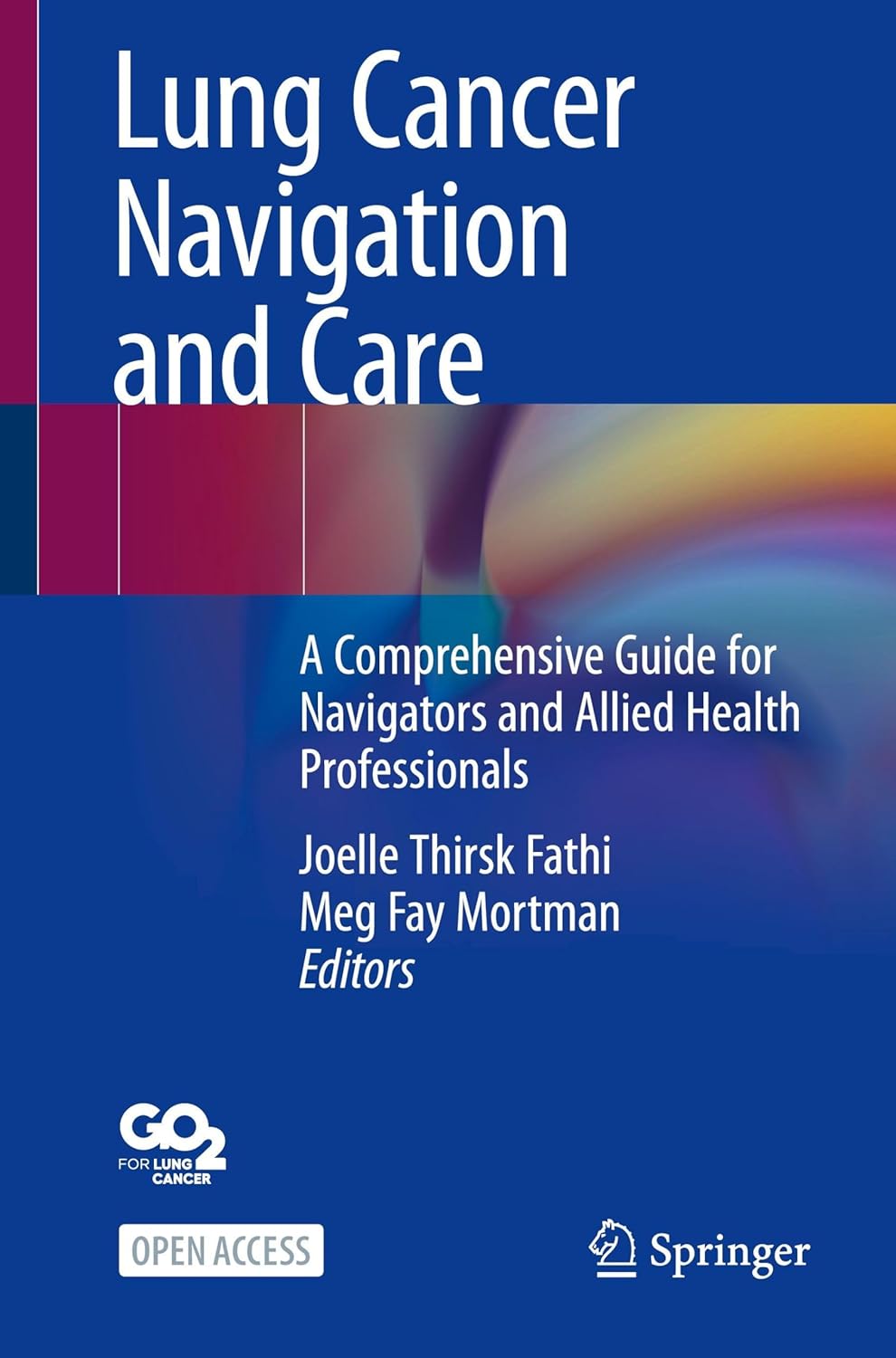
A groundbreaking new open-access textbook, “Lung Cancer Navigation and Care: A Comprehensive Guide for Navigators and Allied Health Professionals,” is now available. As the first site-specific, comprehensive clinical guide for lung cancer navigation, the textbook equips navigators and allied health professionals with foundational knowledge, evidence-based practices, and practical tools to elevate the quality of lung cancer care and improve outcomes for people at risk for or living with the disease.
The textbook is co-edited by GO2 for Lung Cancer’s (GO2) Joelle Fathi, DNP, RN, ARNP, FAAN, Chief Healthcare Delivery Officer, and Meg Fay Mortman, RN, BSN, ONN-CG, Nurse Manager. It features 22 chapters written by 41 subject matter experts, including GO2 Global Advisory Council members Dr. Hossein Borghaei and Dr. Debra Dyer.
Lung cancer remains the leading cause of cancer-related deaths in the United States and worldwide. The new guide responds to the urgent need for timely, evidence-based, person-centered care, particularly for historically marginalized communities disproportionately affected by the disease due to social determinants of health.
Each chapter is authored by multidisciplinary experts and provides in-depth evidence-based and current content, real-world vignettes, key takeaways, curated readings, and actionable resources. Together, they offer a practical roadmap to guide patients through screening, diagnosis, treatment, survivorship, and supportive care.
“This textbook addresses a significant gap in lung cancer care,” said Fathi. “For the first time, there is a comprehensive, evidence-based guide created specifically for lung cancer navigators and allied health professionals. This is a vital tool for the professionals supporting patients every day.”
The guide directly addresses the disproportionate impact of lung cancer on Black, Indigenous, and other communities of color. These are populations that face higher risk, later-stage diagnoses, reduced access to innovation, and poorer outcomes. It highlights how navigation, particularly when delivered by culturally aligned professionals, plays a crucial role in closing these gaps and advancing equitable care.
Mary M. Pasquinelli, DNP, APRN, FNP-BC, CTTS, University of Illinois Chicago, who has been nationally recognized for her leadership in advancing early detection and equitable access to lung cancer screening, emphasized the importance of this resource. Under her guidance, UI Health’s lung cancer screening program has become a national model for inclusive, community-based care, ensuring more cancers are found at earlier, treatable stages.
“This guide equips clinicians and navigators with essential tools,” Pasquinelli said. “They can bridge the gap between rapidly evolving science and what happens in care delivery. It will directly improve the timeliness, quality, and equity of lung cancer care.”
The book also centers on the lived experiences of patients and families, an indispensable foundation of effective navigation.
“Through my experience supporting my mother during her lung cancer care, I saw how impactful nurse navigators can be,” said Amita Jain, lung cancer survivor and patient advocate. “Although we did not change her medical plan, the guidance and information they provided were invaluable to our family. This resource will help ensure patients and caregivers receive clear communication, support, and dignity throughout the cancer journey.”
As advances such as biomarker testing, targeted therapies, precision medicine, minimally invasive surgery, and updated screening guidelines rapidly transform lung cancer care, effective navigation is essential to ensure all patients benefit equitably.
“We created this resource to empower the professionals who are transformational partners in the screening and cancer care experience—navigators, nurses, nurse practitioners, social workers, community health workers, and other allied health professionals,” Fathi added. “Our hope is that this guide helps unify practice, drive equitable outcomes, and accelerate the integration of life-saving innovations into everyday care.”
Key features of Lung Cancer Navigation and Care
- The first and only site-specific comprehensive guide dedicated to lung cancer navigation
- Expert-authored chapters spanning the full care continuum, from screening high-risk populations through survivorship
- Practical tools, including vignettes, key takeaways, curated readings, and actionable resources
- Strategies for addressing social determinants of health and reducing disparities in lung cancer outcomes
- Guidance for integrating navigators and allied health professionals into multidisciplinary care models
- Open-access format, ensuring global availability and equitable dissemination
Ideal for clinical teams, academic programs, and community-based organizations, “Lung Cancer Navigation and Care: A Comprehensive Guide for Navigators and Allied Health Professionals” provides the latest evidence, comprehensive guidance, and practical insights to support high-quality, patient-centered care. Access the textbook today.