The problem: health equity in rural, underserved communities
The Alabama Lung Cancer Awareness, Screening, and Education (ALCASE) project was created to study and address issues of healthcare inequality in the predominately African American communities of Alabama’s rural Black Belt by bringing educational awareness and medical referrals to these rural communities through trusted community outreach.
The Alabama rural Black Belt is one of the most disadvantaged regions of the United States. Residents of the region experience high rates of unemployment, poor access to education and healthcare, substandard housing, and high rates of crime. Additionally, members of these rural communities have a history of distrust with the medical community, due to experiments on the Tuskegee Airmen between 1932 and 1972.
The ALCASE project
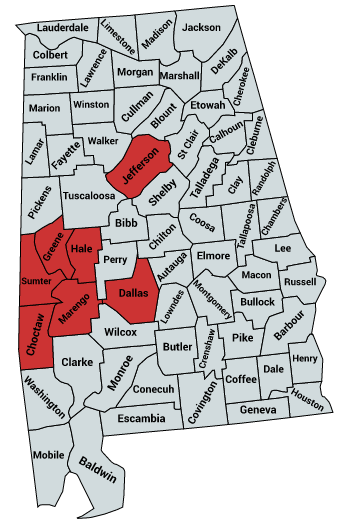
ALCASE targeted 7 counties in Alabama. Six of these counties (Choctaw, Marengo, Greene, Hale, Sumter, and Dallas) are largely rural, primarily underserved, predominantly African American areas with higher smoking rates and greater than average mortality from lung cancer. Jefferson County, home to the greater Birmingham area, is included as the seventh ALCASE county.
The 3 main goals of ALCASE were to:
- Increase awareness of lung cancer risk and screening
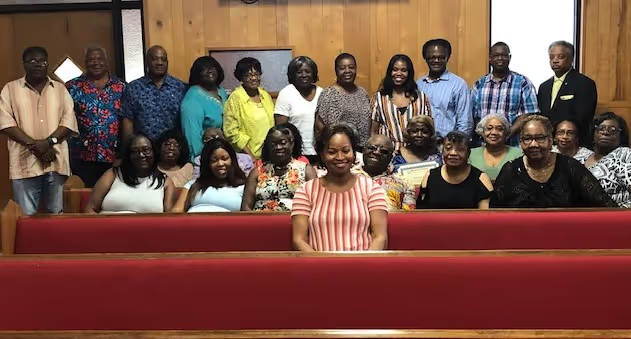
Nearly 190 county coordinators and volunteer community health advisors (CHAs) were deployed to educate family, neighbors, and other community members. - Increase access to quality lung cancer screening
Former ALCASE Manager Kathy Levy, and residents of Choctaw County, recruited screening centers to join GO2 for Lung Cancer’s Centers of Excellence network. - Assist those at high risk for lung cancer through the screening process
ALCASE team members worked with these individuals to find the best way to help each person.
ALCASE also included outreach to educate and engage primary care doctors in the region; transportation assistance for those being screened; and sending follow-up surveys to learn more about the lung cancer screening experience.
Learn more about risk and screening with our reader-friendly brochure.
What did we learn?
Members of the ALCASE project showed the benefit of using multiple methods to support increased awareness of and interest in lung cancer screening, particularly when educational messaging through Community Health Advisors (CHAs) was used. Clear guideline-based messages from healthcare providers about recommended screening are important for increasing retention within the project. And COVID-19 related implementation challenges impacted screening recruitment and retention for the program. Future research is warranted to further explore the use of CHAs in lung cancer screening.
These findings were first reported in the Journal of Primary Care & Community in 2023.
To learn more about ALCASE, contact research@go2.org.
ALCASE leaders
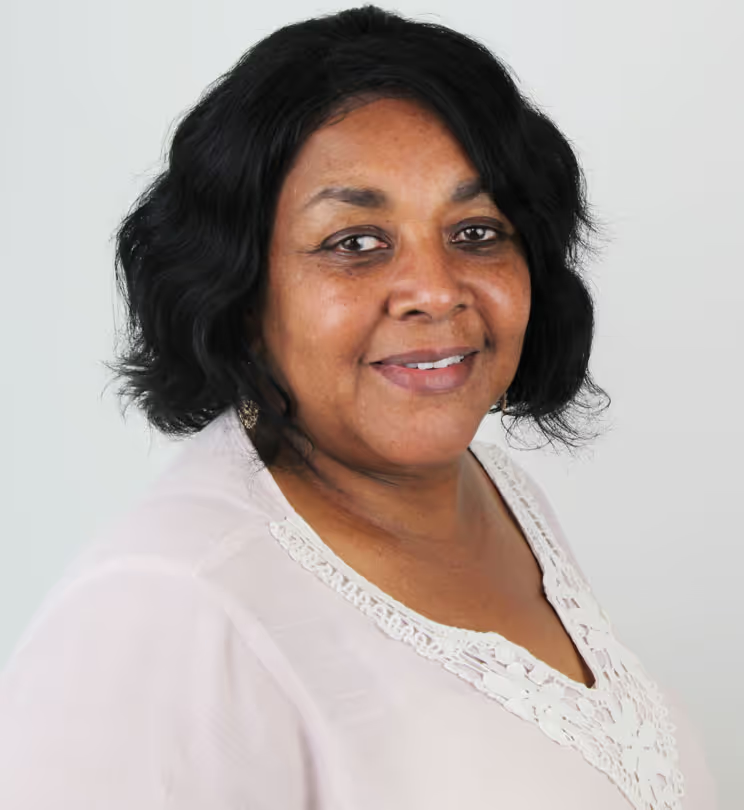
Kathy Levy
Project Manager
Kathy was part of the GO2 for Lung Cancer team and was the ALCASE project manager. She received her BA from Faulkner University in Montgomery, AL, and has 30 years of experience in healthcare and community relations. She previously worked at the University of Alabama Birmingham as Community Outreach Coordinator.
The ALCASE Project benefitted from Kathy’s community awareness expertise that helped patients navigate through health issues and learn about cancer-related health disparities.
Find hope, knowledge, direction, and connections through in-depth conversations with healthcare experts, people with lung cancer, and caregivers.
Our in-person moderators, GO2 Chief Patient Officer Danielle Hicks and GO2 board member Bonnie J. Addario, represent the voices of people with lung cancer and caregivers. GO2’s Manager, Patient & Support Services, Michele Zeh, moderates the online chat to help your questions get answered.
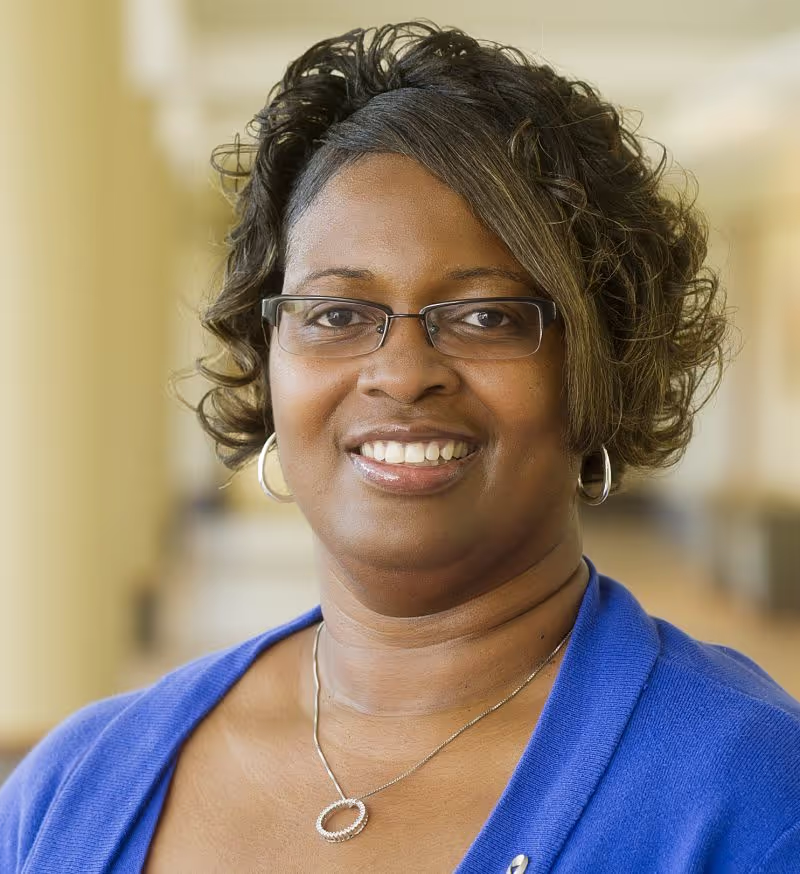
Claudia M. Hardy
MPA
Claudia is the Program Director at O’Neal Comprehensive Cancer Center at the University of Alabama at Birmingham (UAB) Office of Community Outreach and Engagement. She also serves as the Community Health Educator for the cancer center as part of the National Outreach Network for the National Cancer Institute.
With over 25 years of experience as a senior level administrator, consultant, and strategist in managing community-based health disparities programs and community engagement, Claudia provided strategic planning and guidance to the ALCASE program. She has utilized a Community Health Advisors (CHA) model in much of her work, training over 1,500 CHAs across the country. Claudia also has extensive experience serving on nonprofit boards of directors with organizations, including Susan G. Komen, the American Cancer Society, and the UAB National Alumni Society. Claudia holds a BA in Communication Arts specializing in Public Relations and a Master of Public Administration (MPA) specializing in organizational management and behavior from UAB.
Find hope, knowledge, direction, and connections through in-depth conversations with healthcare experts, people with lung cancer, and caregivers.
Our in-person moderators, GO2 Chief Patient Officer Danielle Hicks and GO2 board member Bonnie J. Addario, represent the voices of people with lung cancer and caregivers. GO2’s Manager, Patient & Support Services, Michele Zeh, moderates the online chat to help your questions get answered.
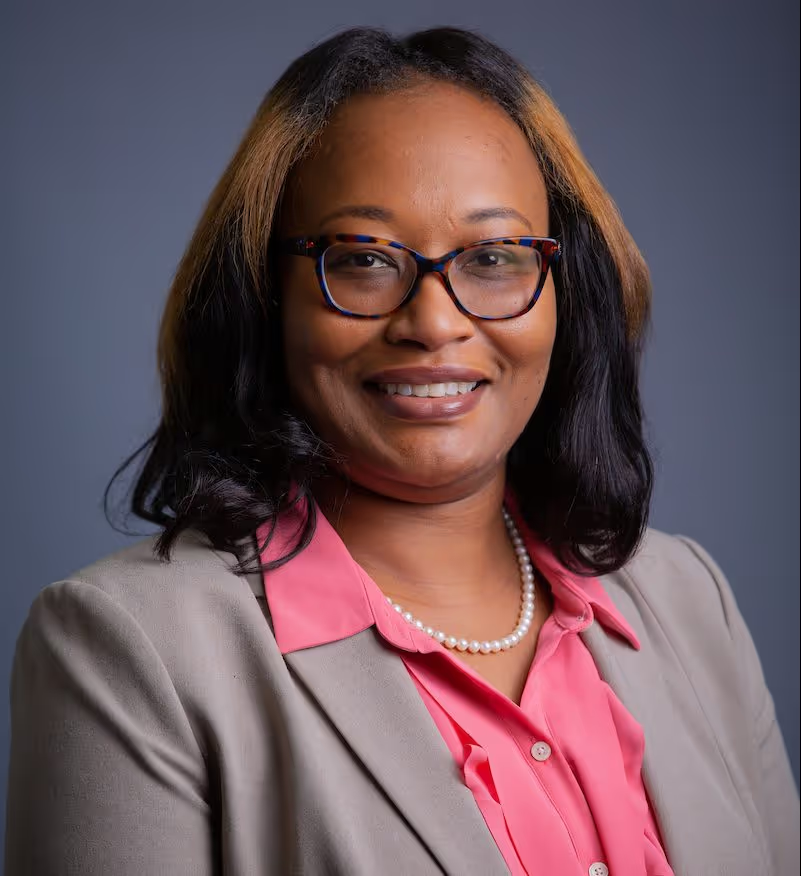
Tara R. Bowman
Tara is a Program Manager in the Office of Community Outreach and Engagement at the O’Neal Comprehensive Cancer Center at the University of Alabama at Birmingham (UAB). She received her Bachelor of Social Work degree from Talladega College.
Tara is responsible for the adaptation, development, and implementation of several cancer outreach and research programs that focus on increasing cancer screening and healthy lifestyle efforts among the underserved in urban and rural communities in Alabama. She works tirelessly with individuals to lessen and remove barriers related to cancer screenings.
Tara supported project management for the ALCASE project and managed county coordinators and community health advisors. In addition, Tara also provided community-based patient navigation for cancer screenings.
Find hope, knowledge, direction, and connections through in-depth conversations with healthcare experts, people with lung cancer, and caregivers.
Our in-person moderators, GO2 Chief Patient Officer Danielle Hicks and GO2 board member Bonnie J. Addario, represent the voices of people with lung cancer and caregivers. GO2’s Manager, Patient & Support Services, Michele Zeh, moderates the online chat to help your questions get answered.
ALCASE county coordinators
Supervising nearly 200 CHAs:
- Tara R. Bowman, Jefferson County
- Dale Bell, Dallas County
- Glenda James, Sumter County
- Darlene Robinson, Hale and Greene Counties
- Delois Walton, Choctaw and Marengo Counties
ALCASE in the community

How was this research funded?
This project, in partnership with the University of Alabama at Birmingham’s O’Neal Comprehensive Cancer Center, was made possible with a grant from the Bristol Myers Squibb Foundation.
