
Breathing Again: Natalie’s Unexpected Journey Through Lung Cancer and Transplant
January 1, 1970
Natalie lives in Atlanta with her husband and her dog Hershey. She loves to travel with her family and friends and is working her way through her restaurant bucket list. In her spare time, she works with different organizations by volunteering her time and speaking/advocating for lung cancer. She recently joined a Citizen Scientist Program, which teaches people about the lung cancer ecosystem and key aspects of research like ethics, data analysis, and patient-centered study design. Natalie hopes to start a new career involving cancer research one day.
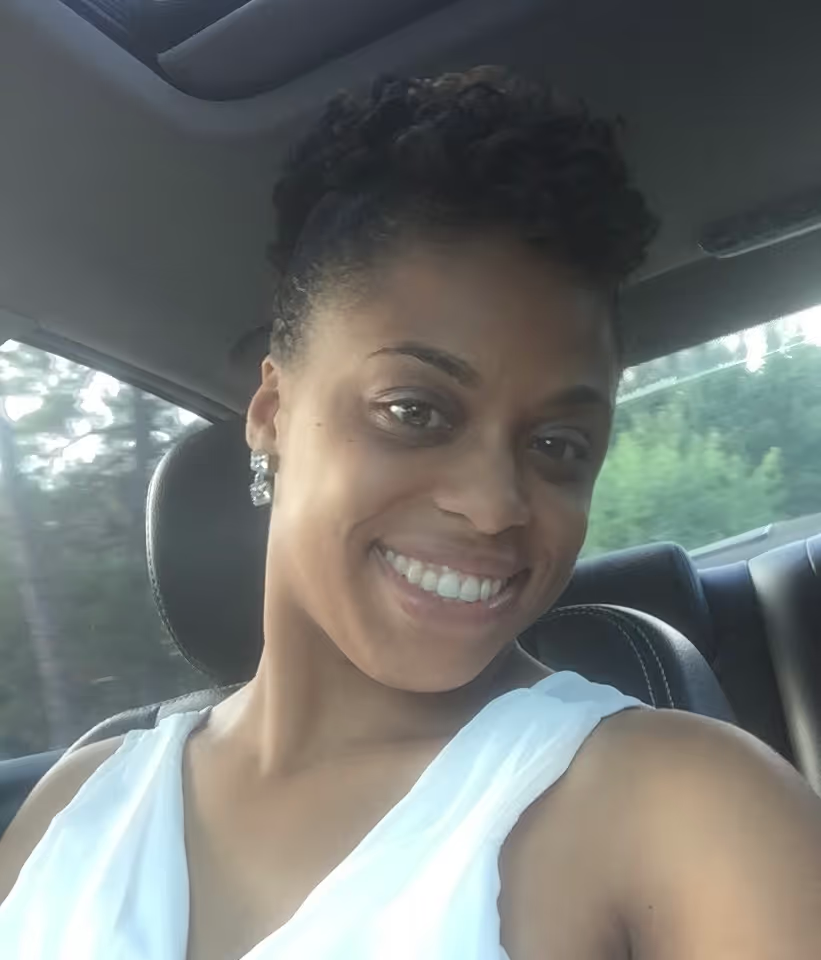
When Natalie first developed a stubborn cough and persistent fatigue, she wasn’t sure what was causing it. Over the next 6 months, her search for answers led her through a series of doctors and shifting diagnoses: allergies, bronchospasms, and even malaria. All the while, her cough persisted, and her energy levels continued to decline. Only after she insisted on a referral to a pulmonologist did the truth start to surface. Multiple biopsies, and even a phone call initially assuring her it wasn’t cancer, eventually led to a stage 4 (IV) lung cancer diagnosis. “It was such a rollercoaster,” she recalled. “They told me it wasn’t cancer, and then weeks later said it was. By the time I saw the oncologist, she looked at us and said, ‘This is already stage 4 (IV). Did you not know?’ And we didn’t. We were blindsided.”
Learning to advocate and adjust
After her diagnosis, Natalie had to adjust to a new reality. She never imagined that lung cancer could strike someone in their thirties. “I thought you had to be a lifelong smoker, or 80 years old,” she admitted. Biomarker testing showed no targetable mutations, something that surprised her care team, given her age. She began chemotherapy combined with immunotherapy, a combination that gave her years of stability. “I was still able to work and travel,” she said. “It was rough at times, but I could live a normal life.” Eventually, though, her cancer began to progress. Natalie tried additional types of chemotherapy and enrolled in 2 different clinical trials, including one that required frequent flights out of state. Neither trial worked. “I didn’t know anything about clinical trials before,” she said. “But at that point, I felt like, what do I have to lose?”
A radical option
That’s when her pulmonologist suggested something she never expected—a double lung transplant. The criteria were strict: the cancer had to remain confined to the lungs, and she had to be healthy enough to withstand the surgery. Natalie was both. “When I met the surgeon, he looked at me and said, ‘Your lungs are trash,’” she laughed. “He didn’t say it cruelly; it was just the truth. At that point, it was either keep buying time with more chemo or try something much more radical.”
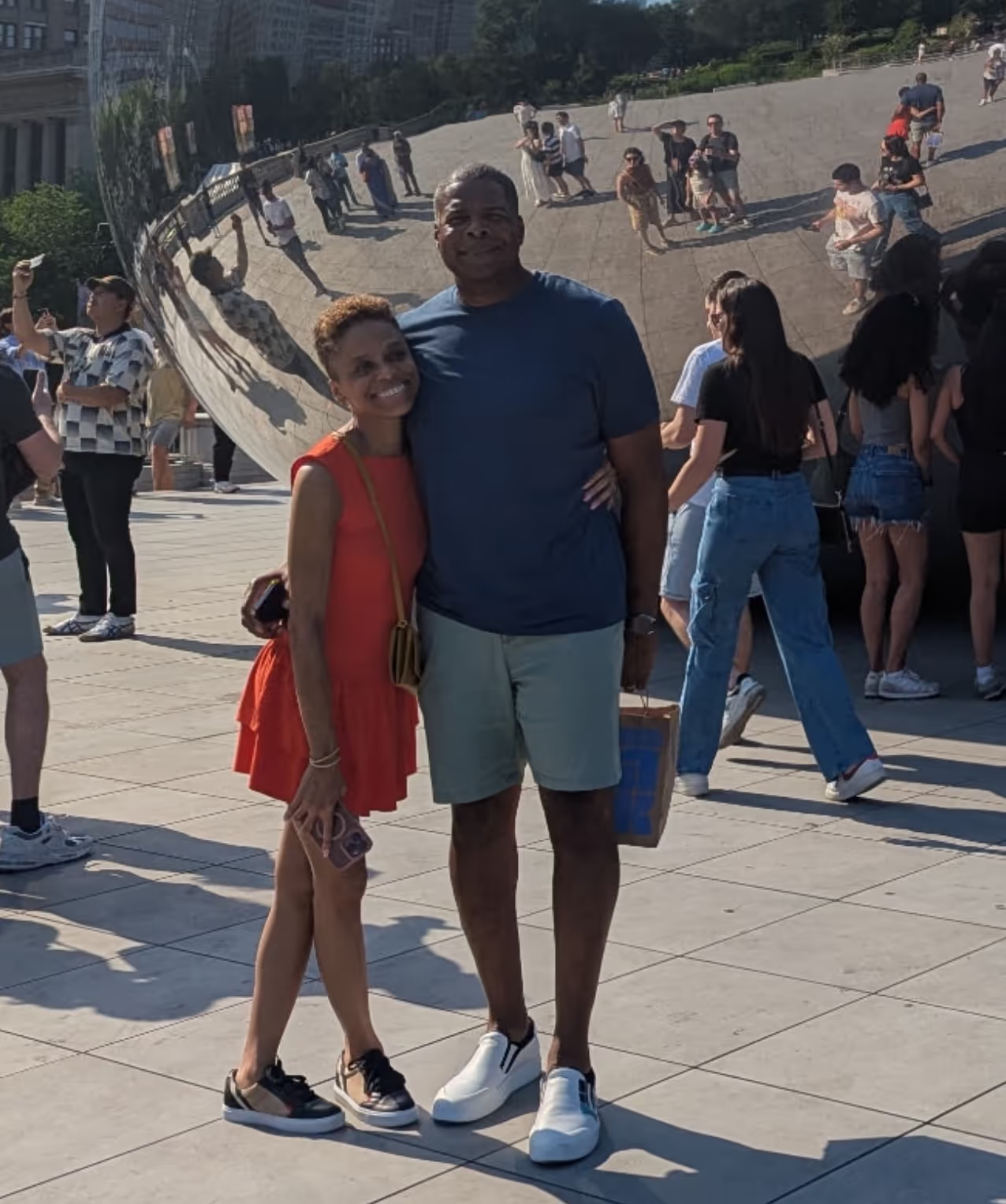
After weeks of intense testing, she was accepted into the program with the condition that she relocate from Atlanta to Chicago for a full year. Housing and expenses were her responsibility. “It wasn’t easy. My husband and I had to figure it out, but we didn’t really have a choice. I really felt like the transplant was my only option to possibly feel better.” On November 15, Natalie had the transplant. “It was the worst procedure I’ve ever had in my life,” she said, “the worst that I could even imagine. They told me later they had to call in another surgeon because my lungs were so diseased, they were basically yanking them out of my chest.” The recovery was grueling, with months of pain and complications, but the transplant improved her life in incredible ways too. Her cough disappeared immediately. “Before, I was coughing 200–300 times an hour, to the point of breaking ribs. After the transplant, that was gone. My new lungs worked at nearly 100 percent. That alone changed my quality of life in a huge way.”
An unexpected recurrence
Unfortunately, Natalie’s lung transplant was not the cure her doctors had predicted. Just 2 months after her surgery, scans revealed cancer had returned, this time in her spine. “At first, I was devastated,” Natalie said. “I thought, I just went through all of this, and for what? Now it’s back. But then I reminded myself: without the transplant, I might not even be here. And I’m breathing and breathing well. That’s a gift.” She returned to chemotherapy and added radiation to help manage pain. More recently, she begun a bone-strengthening shot that has given her renewed hope. “I’ve spoken with others who say it eliminated their lesions,” she said. “You just never know, but it’s something to hope for.”
Living between 2 worlds

Relocating for the transplant created its own challenges. Even though her husband and 2 best friends have spent the last year alternating visits to take care of her, she has still attended many appointments alone and navigated her health needs in a new city at least partly solo. “They’re incredible,” Natalie said. “Being sick shows you how loved you are. That’s a silver lining, but it’s changed me too. I don’t want to say that it’s made me stronger, but I can do a lot more on my own now. Sometimes you just don’t have a choice.” She is also quick to point out the importance of caregivers. “People don’t realize how much this takes out of caregivers too,” she said. “My husband carries so much of this with me. We need to check in on caregivers just as much as patients.”
Lessons learned
Natalie is candid about the ups and downs of life with advanced lung cancer. “It’s not going to be smooth—it’s a rollercoaster,” she said. Her advice:
- Advocate for yourself.
- Take small wins. “If I washed dishes today, that’s a win. Don’t just look at the big picture.”
- Prioritize mental health. “People focus so much on physical health, but this takes a huge toll mentally. Therapy and support matter just as much.”
- Acknowledge the invisible. “People look at me and say, ‘you don’t look sick.’ But stage 4 (IV) looks different for everyone.”
She also raises awareness about safety. “Many of us are on opioids for pain. I asked my doctor for Narcan, just in case. Everyone should carry it. You never think it will happen, but you don’t want to be unprepared.”
Gratitude and hope
Despite everything, Natalie continues to find gratitude. She works out 3 times a week, takes walks when she can, and leans on her community. Though she is still adjusting to life managing care for both her transplant and cancer, she holds onto perspective. “I may not have the story I thought I’d have,” she said. “But I’m here. I’m breathing. And I want people to know there are options, even unlikely or imperfect ones. And there’s always hope, even when it feels complicated.